
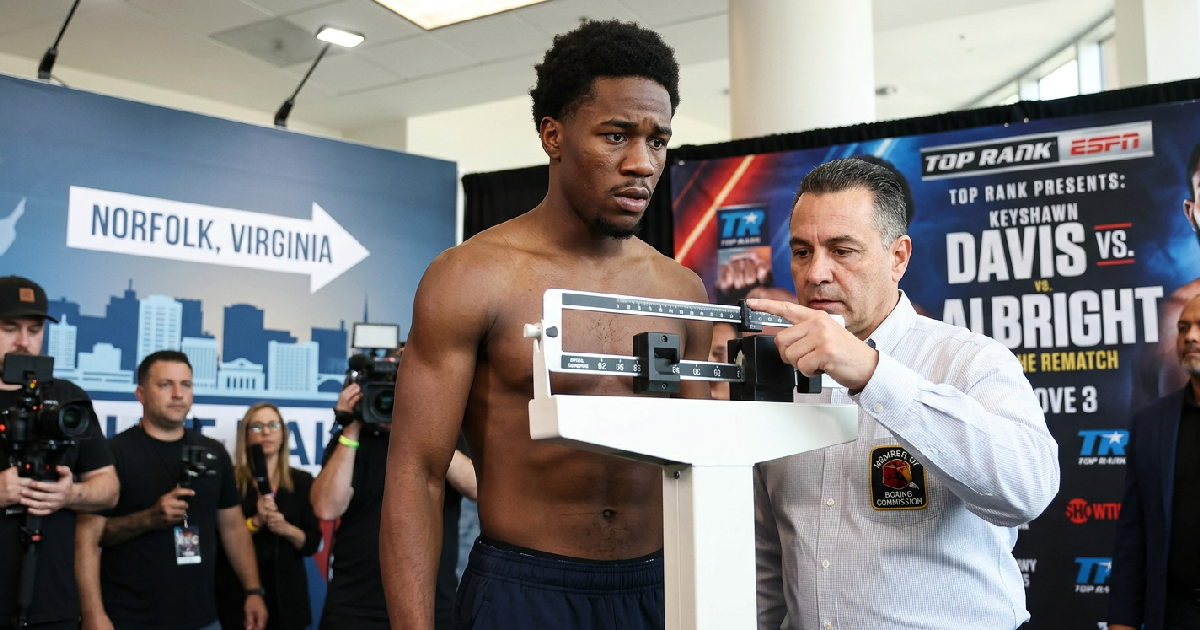
Keyshawn Davis reportedly struggled with the scales ahead of his scheduled rematch with Nahir Albright, raising fresh questions about the lightweight prospect’s professional discipline. According to reports from the weigh-in at Norfolk, Virginia, the local favorite failed to hit the prescribed limit for the contest, while Albright successfully met his contractual obligations. This development has cast a shadow over the event, as it reportedly marks a recurring theme for the American fighter in recent competitive outings.
The atmosphere at the final face-off turned visibly tense as both men occupied the stage. Witnesses noted that Albright appeared to confront his opponent regarding the scale failure, leading to a heated exchange of words. For Davis, this incident is particularly sensitive given his history of weight-related issues, which have previously impacted his standing in the divisional rankings and led to the cancellation of at least one major defense in the past. Even a minor excess on the scale is often viewed by purists as a sign of poor preparation or a body that has outgrown its current weight class.
Top Rank Management Addresses Scale Issues
Promoter Bob Arum has reportedly addressed the situation with a mix of pragmatism and concern regarding his fighter’s future path. For a boxer aiming to be recognized among the top 10 most dangerous boxers, the inability to hit a target weight consistently can derail momentum. Management is reportedly weighing whether a permanent move to a higher weight class is necessary, though such a transition typically involves navigating a significant jump in poundage that brings its own set of risks for a developing athlete.
The promotional team at Top Rank is reportedly frustrated that this issue has resurfaced during a homecoming event for the Norfolk native. While there is often a period allowed for a fighter to shed a final fraction of weight to satisfy local commissions, the repetition of the error suggests a systematic problem. In a sport where the fallout from boxing’s business complexities demands absolute reliability from its stars, these lapses can influence how a fighter is matched and marketed in the future.
Analysts Question Performance Impact
Boxing commentators and former champions have grown increasingly critical of the weigh-in drama surrounding the Virginia prospect. There is an ongoing debate regarding how much the physical toll of a difficult weight cut will manifest during the actual rounds of the fight. If a fighter is forced to endure a grueling final few hours to satisfy the scale, it often impacts their late-round stamina and punch resistance against a motivated opponent like Albright.
As divisional rankings reveal new leaders across both the men’s and women’s sectors, the margin for error at the top of the sport has never been thinner. Analysts suggest that the version of Davis that enters the ring after a troubled weigh-in may not be the same one seen in previous clinical performances. The psychological pressure of missing weight in front of a home crowd could also play a factor in his approach once the opening bell rings.
Future Implications for the Norfolk Prospect
Despite the criticism, the camp surrounding the young prospect remains confident in his ability to deliver a dominant performance. In brief remarks following the incident, Davis reportedly remained dismissive of the pressure, suggesting that his power would resolve any lingering doubts. However, the reality of the situation remains that promoters and sanctioning bodies are increasingly wary of fighters who cannot consistently meet their professional requirements.
Should these issues persist, a move to the 147-pound limit appears to be a matter of “when” rather than “if.” Moving up avoids the physical strain of an extreme cut but places the fighter against naturally larger opposition who can often absorb more punishment. Whether the Norfolk fighter can maintain his speed and explosive power against those larger frames is a question that will likely define the next chapter of his career.
Frequently Asked Questions
What happened at the weigh-in for the Davis vs. Albright rematch?
Reports from the scene indicate that Keyshawn Davis failed to make the contracted weight limit on his first attempt. While his opponent Nahir Albright successfully met the weight requirements, the session was marked by a verbal confrontation between the two athletes.
Have weight issues affected Keyshawn Davis in the past?
Yes, Davis has reportedly struggled with the scales in previous bouts. These issues have led to significant concerns from his promotional team and have previously resulted in the cancellation of scheduled title defenses when he was unable to meet the lightweight limit.
What are the potential consequences of missing weight?
Beyond financial penalties or the loss of title eligibility, missing weight often forces a fighter to undergo a move to a heavier division. This can be challenging as it requires the athlete to adapt their style and physical conditioning to compete against naturally larger and stronger opponents.