
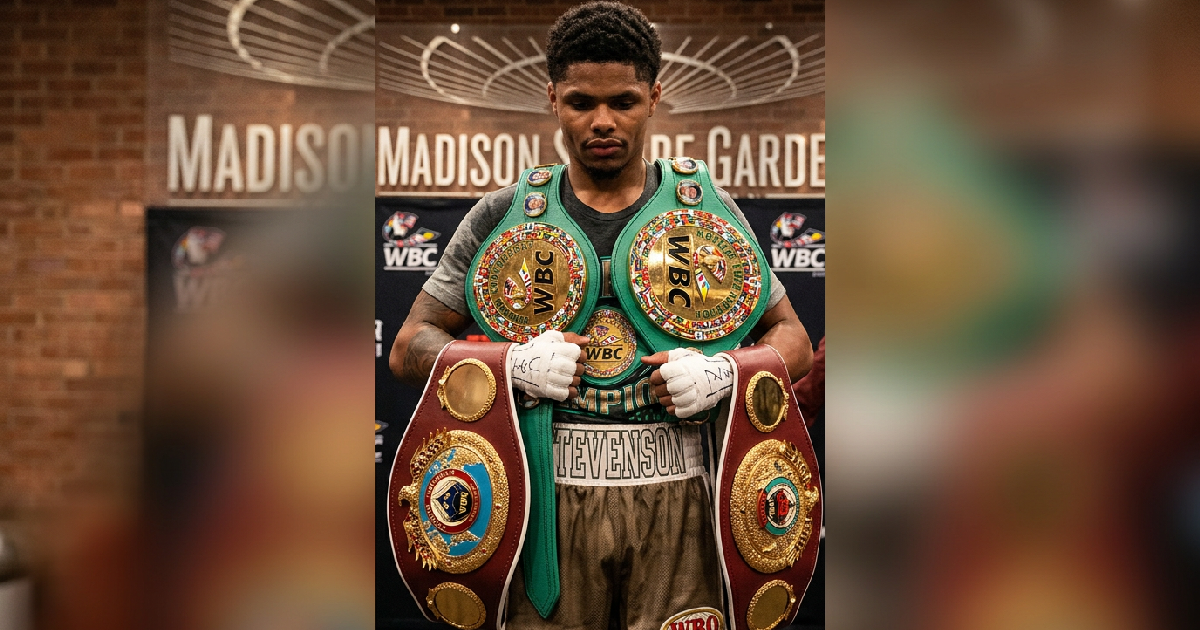
Shakur Stevenson has fired back at the World Boxing Council (WBC) after the sanctioning body stripped him of his lightweight title following his move to the junior welterweight division. Speaking with his mentor Andre Ward, the four-division champion claimed the decision was fueled by a dispute over sanctioning fees and historical tensions involving Terence Crawford.
The WBC officially declared the title vacant on Wednesday, February 4, 2026. This move came just days after Shakur Stevenson defeated Teofimo Lopez at Madison Square Garden on January 31 to capture the WBO and Ring magazine junior welterweight belts. While the WBC cited rules against holding titles in multiple divisions, the 28-year-old fighter offered a different perspective on the fallout.
According to the Newark native, the fracture began when the WBC requested significant payments for the Lopez bout. He noted that the organization allegedly asked for triple the amount he paid for his previous fight against William Zepeda. “I’m not paying nobody that much money if you don’t have nothing to do with my fight,” Stevenson told Ward during the interview.
Dispute over sanctioning fees and multi-division rules
The core of the disagreement rests on whether the WBC had a right to collect fees for a fight where their title was not on the line. Stevenson argued that because the Lopez fight was a WBO-sanctioned event at 140 pounds, the WBC’s financial demands felt like an attempt to rob him.
He stated he chose to be on the “right side of things” rather than pay for a belt that did not apply to that weight class.
The WBC’s official stance focuses on its regulations regarding champions holding titles across different governing bodies. In a statement, the organization explained that because Stevenson became the reigning WBO Super Lightweight World Champion, he could no longer keep the WBC lightweight strap. This protocol is common in boxing, though com/shakur-stevenson-devin-haney-fight-update-welterweight-move/”>Shakur Stevenson dismissed an immediate move to higher weights in the past before shifting his focus to Lopez.
WBC President Mauricio Sulaiman also highlighted a communication breakdown as the primary reason for the vacancy. Sulaiman claimed that despite multiple attempts to reach Stevenson’s team via WhatsApp, phone calls, and emails, he received no written request regarding the fighter’s plans. He alleged the camp “simply disregarded” the organization’s attempts to resolve the status of the 135-pound title before the January 31 bout.
Allegations of proxy tension with Terence Crawford
The most striking claim from the fighter involves his close associate, Terence “Bud” Crawford. Stevenson suggested that the WBC’s aggressive move to strip him was actually a way of taking out frustrations they held toward Crawford. He believes the timing of the financial demands coincided with recent disagreements between the WBC and Crawford, leading to what he views as unfair treatment.
“I just don’t respect it,” Stevenson said, referring to the way the organization handled the situation. He questioned why his personal relationship with Mauricio Sulaiman and the WBC board was ignored in favor of what he described as a vendetta. While he admitted his team might have been slow to respond to emails while he was in training camp, he felt the stripping was inevitable.
This public breakdown in athlete-governing body relations is not isolated in the sport. Other fighters have recently voiced similar frustrations with administrative politics. For instance, Robeisy Ramirez calls out Mauricio Sulaiman over similar disputes regarding canceled bouts and sanctioning decisions, suggesting a growing rift between elite talent and the WBC leadership.
Legacy over belts in the junior welterweight era
The vacancy at 135 pounds creates a new opening for contenders who have been waiting for a shot at the green belt. However, Stevenson seems unbothered by the loss of the physical strap. He remains a prominent figure in the pound-for-pound conversation, and his victory at Madison Square Garden has solidified his standing as a major player in the 140-pound landscape.
This controversy has also drawn mixed reactions from the boxing community. Despite his success in the ring, fans roast Shakur Stevenson occasionally on social media, debating his defensive style and his recent claims about his career trajectory. Nevertheless, holding the WBO and Ring magazine titles ensures he remains at the center of the division’s biggest potential matchups.
By prioritizing his financial independence over the WBC lightweight title, Stevenson is signaling a shift in how modern stars navigate boxing politics. He appears more concerned with high-profile legacy fights than conforming to the strict rules of every sanctioning body. His focus now remains firmly on the junior welterweight division as he looks toward future defenses of his newly acquired titles.