While the glory in professional boxing is often reserved for those landing the punches, the sixty seconds of respite between rounds can be just as decisive. Legendary trainers like Teddy Atlas, Freddie Roach, and Naazim Richardson have demonstrated that the right words can reshape a fighter’s psychology when physical strength begins to fail.
These interventions range from tactical adjustments to raw, emotional appeals designed to pull a performance out of a struggling athlete.
Teddy Atlas and the fireman psychology
The corner team functions as the primary support system, acting as the eyes and ears for a fighter whose vision may be clouded by the heat of battle. Their responsibilities include treating injuries, managing hydration, and offering strategic guidance to exploit an opponent’s weaknesses.
In a sport where athletes face significant brain health concerns, the corner also carries the ethical weight of deciding when a boxer can no longer safely continue. Here are some of the most memorable corner moments that have left a permanent mark on the sport’s history.
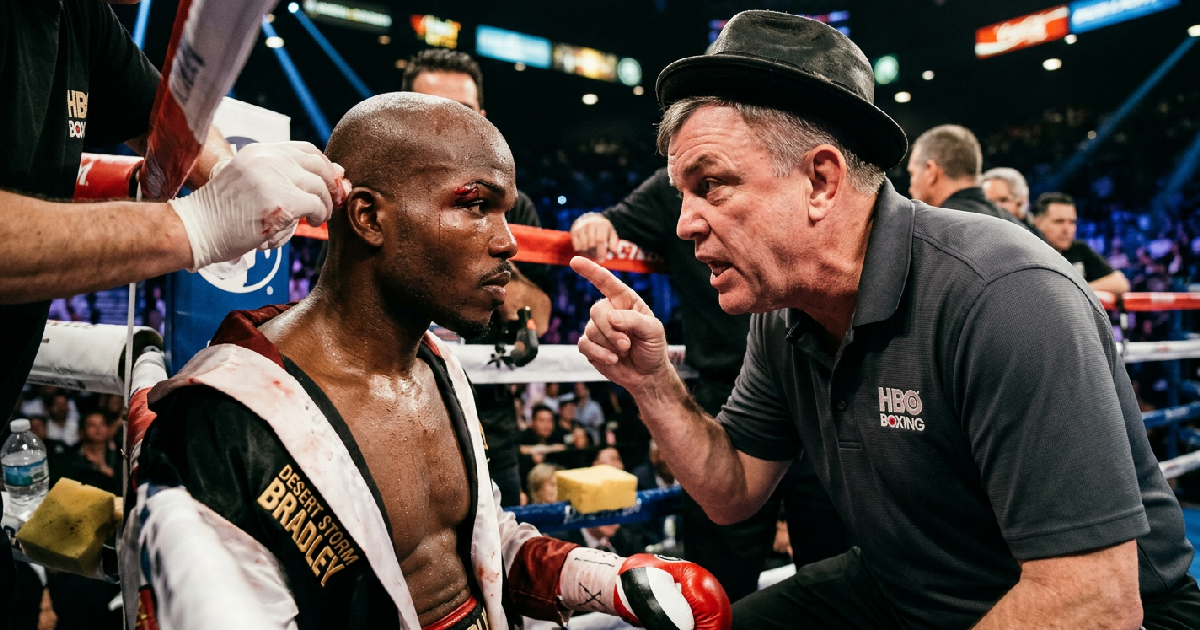
Few trainers utilize metaphors and personal narratives as effectively as Teddy Atlas. During a 2015 bout against Brandon Rios, Timothy Bradley had started well but required an extra push to close the show. Atlas delivered his now-famous “fireman” speech, telling Bradley, “We are firemen. The heat doesn’t bother us. We live in the heat.”
Atlas insisted that flames do not intimidate them because they control and eventually extinguish them. Inspired by this vivid imagery, Bradley dominated the remainder of the contest to secure a ninth-round technical knockout.
Key details
Atlas is also remembered for his high-stakes approach to motivation during Michael Moorer’s 1994 heavyweight title clash with Evander Holyfield. Battling self-doubt in only his second fight with Atlas, Moorer was told in no uncertain terms to start backing Holyfield up.
Atlas warned him, “Otherwise, don’t go back to this f***ing corner, do you hear me?” This blunt honesty propelled Moorer to become the first southpaw heavyweight champion in history.
In a later 1997 bout against Vaughn Bean, Atlas even brought a mobile phone into the corner, telling Moorer his ex-wife was on the line because their young son was crying while listening to the fight.
Invoking family history for Alexander Povetkin
In 2011, Alexander Povetkin faced Ruslan Chagaev for the WBA heavyweight title and began to struggle with motivation after the opening rounds. Atlas chose to share a personal story regarding his late father to bridge the gap in Povetkin’s resolve.
He told the fighter, “We can bring your father back tonight,” explaining that when people spoke of the new world champion, they would inevitably be thinking of his father. Povetkin channeled that emotional energy to overcome Chagaev and claim the title.
Freddie Roach and the final round gamble
Trainer Freddie Roach is known for his ability to simplify complex tactical situations into direct orders. During James Toney’s fight against Vassiliy Jirov, Roach felt the scoring was dangerously close, despite some viewing the official cards as a “joke.”
Before the final round, Roach instructed Toney to “put this guy on his ass” and warned him not to let Jirov out-hustle him. Toney responded by dropping Jirov in the final 20 seconds of the 12th round, creating one of HBO’s most celebrated highlights.
The success of the corner often depends on the trust built over years of training and shared sacrifice. When a trainer like Roach or those who coached icons like Roberto Duran during his legendary career offer specific advice, the fighter must be able to execute it under extreme duress.
That psychological bond allows a coach to demand the impossible from an exhausted athlete in the final three minutes of a championship bout.
Naazim Richardson and the duty of protection
While most corner moments focus on winning, Naazim Richardson provided a masterclass in fighter safety during Shane Mosley’s 2010 fight against Floyd Mayweather. After Mosley took a heavy beating in the early rounds, Richardson adopted a stern, paternal tone before the 11th. He told Mosley, “Shane, I know you…
Don’t make me do something I don’t want to do.” He demanded that Mosley “give me something,” noting that the fighter’s hand speed had dropped as he waited too long for a opening.
Richardson also tested Mosley’s cognitive state by making him repeat specific instructions, ensuring he was still fit to compete. Although Mayweather ultimately won by TKO, Richardson’s intervention remains a benchmark for responsible corner work. This contrasts with other moments in history where advice was questioned, such as when Floyd Mayweather Sr.
told Oscar De La Hoya that Shane Mosley was “getting tired” after only one round in their 2007 rematch—a claim commentator Jim Watt called “shocking advice.”
Strategic whispers and spiritual pleas
Virgil Hunter earned the moniker “the fight whisperer” for his quiet, intense delivery between rounds. During Brandon Gonzalez’s performance against an unnamed opponent, Hunter was caught whispering, “He’s ready to be whooped, man… don’t let it get away.” Despite Gonzalez piling up rounds through this encouragement, the fight ended in a controversial draw.
Hunter’s style focused on keeping his fighter’s mind centered without the high-volume theatrics often seen in professional corners.
Hunter’s most passionate moment occurred during Andre Ward’s 2017 rematch with Sergey Kovalev. Before the final round, he gave Ward a lengthy talk, urging him to “trust God” and “go like a dog” to close the show. Commentator Max Kellerman likened the intensity of this speech to Angelo Dundee’s 1981 “You’re blowing it, son!”
alert to Sugar Ray Leonard. These moments prove that while the physical battles are fought with gloves, the outcome is often determined by the voices in the corner. Understanding the astute nature of boxing’s greatest minds helps fans appreciate that the sport is truly a “sweet science” of both mind and body.