Panamanian boxing legend Roberto Duran has reflected on the most infamous moment of his professional career, describing his 1980 rematch against Sugar Ray Leonard as “bad.” Speaking with One On One Boxing, the former four-weight world champion indicated that he believes he was coerced by his manager into taking the bout while physically compromised.
The contest, held on November 25, 1980, in New Orleans, remains a defining point of his legacy.
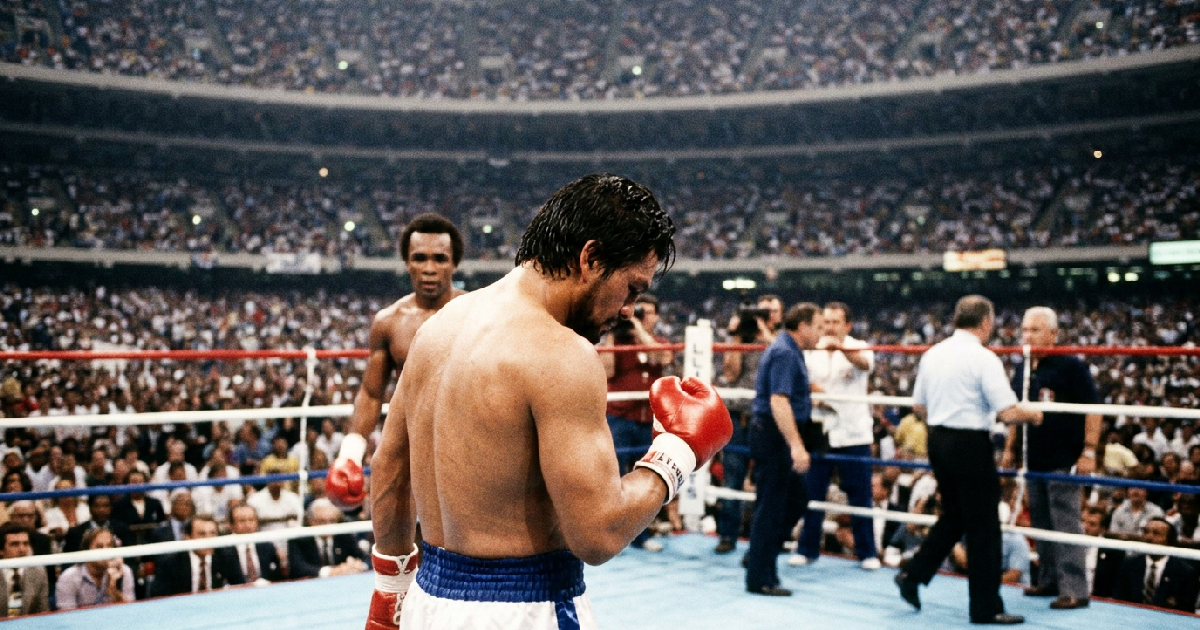
The fight is notoriously remembered for the eighth round when Roberto Duran turned his back and waved his hands, signaling he would not continue. While the phrase “No Mas” became synonymous with the event, Roberto Duran has long insisted he never uttered those words.
He maintains the story was fabricated by broadcaster Howard Cosell, a claim supported by Sugar Ray Leonard, who later told TMZ Sports he never heard the words himself.
The eighth-round stoppage at 2:44 marked a stunning reversal of fortune for Roberto Duran, who had defeated Sugar Ray Leonard just five months earlier. In their first meeting in Montreal, the Panamanian had captured the WBC, Ring, and Lineal Welterweight Titles via a unanimous decision.
However, the second encounter Saw Sugar Ray Leonard utilize movement and taunting to frustrate the champion, leading to the technical knockout victory.
Roberto Duran claims manager Carlos Eleta ignored physical injuries
In his recent interview with One On One Boxing, Roberto Duran pointed to the influence of his former manager, Carlos Eleta, as the reason for the disastrous rematch. Roberto Duran claims that he was forced into the ring shortly after sustaining major injuries in a car accident.
He described a harrowing physical state, alleging his “mouth was smashed up” and his arm was broken during the build-up to the New Orleans fight.
“I believe that Carlos Eleta just wanted money out of Roberto Duran,” the legend stated. He further detailed that he was still experiencing swelling and bleeding in his mouth when the fight took place. “I broke my [arm]… I still have a hole here,” he added, pointing toward his right elbow to demonstrate the lasting damage from the accident.
While the car accident is a central part of Roberto Duran’s recent recollection, other reports from the 1980 period highlight a chaotic training camp. After beating Sugar Ray Leonard in June 1980, Roberto Duran reportedly partied heavily and reached a weight of approximately 190 lbs.
This forced a drastic and punishing weight cut to meet the welterweight limit, which many historians believe contributed to his early exit from the bout.
Stomach cramps and frustration lead to mid-fight retirement
The immediate aftermath of the “No Mas” fight was filled with conflicting explanations for why the man known as “Hands of Stone” quit. Initially, Roberto Duran cited severe stomach cramps, claiming he had overeaten on the day of the fight to compensate for his extreme dieting. This physical discomfort, combined with Sugar Ray Leonard’s elusiveness, appeared to break his competitive spirit.
Sugar Ray Leonard’s strategy was designed specifically to exploit his opponent’s lack of conditioning, utilizing the “Ali Shuffle” and “Bolo punches” to mock the champion. This showboating frustrated Roberto Duran, who found himself unable to engage the challenger in a toe-to-toe brawl. At the time of the stoppage, judges had Leonard leading comfortably on all three scorecards: 68-66, 68-66, and 67-66.
The psychological toll of that night was immense, and it took years for Roberto Duran to rehab his image among boxing fans. Modern fighters face different but equally challenging pressures, such as when Shakur Stevenson dismisses immediate Devin Haney fight talks to focus on his own career trajectory.
For Roberto Duran, the pressure was not about timing, but about the relentless demands of a management team seeking immediate profit.
Legacy of the No Mas fight and Duran’s later career
Despite the “No Mas” incident being labeled the darkest day of his career, Roberto Duran eventually found redemption in higher weight classes. He went on to face other icons like Marvin Hagler and Thomas Hearns at middleweight and super-welterweight. While he suffered defeats in those specific encounters, his longevity allowed him to compete professionally across five different decades before finally retiring in 2001.
Interestingly, despite his clear regret over the Sugar Ray Leonard rematch, Roberto Duran has been known to name other opponents as his most difficult challenges. For instance, Duran identifies most astute fighter encountered as Ken Buchanan, whom he fought in 1972. This suggests that while the Leonard rematch was “bad” for his career and health, his respect for tactical skill remains with other peers.
The health risks associated with fighting while injured or improperly prepared remain a major talking point in the modern era of the sport. The physical toll Roberto Duran describes is often echoed by today’s champions who advocate for better safety protocols. This is particularly evident when Usyk raises brain health concerns following high-impact bouts, highlighting a shift in how fighters view their own long-term well-being.
Management pressure and the quest for a payday
The admission that Carlos Eleta pushed for the fight solely for financial gain provides a cautionary tale for modern boxing. Roberto Duran’s career was often subject to the whims of those who managed his contracts, a common theme for legendary fighters of that era. He later admitted that “misbehaviours” also played a part in his downfall, but the role of management remained a primary grievance.
The “No Mas” fight serves as a historical reminder of how quickly a fighter’s reputation can be damaged by a single decision. While Roberto Duran eventually recovered his standing as one of the greatest of all time, the scars from 1980—both literal and metaphorical—stayed with him. His recent comments confirm that he views the fight as an event that simply should never have taken place.