
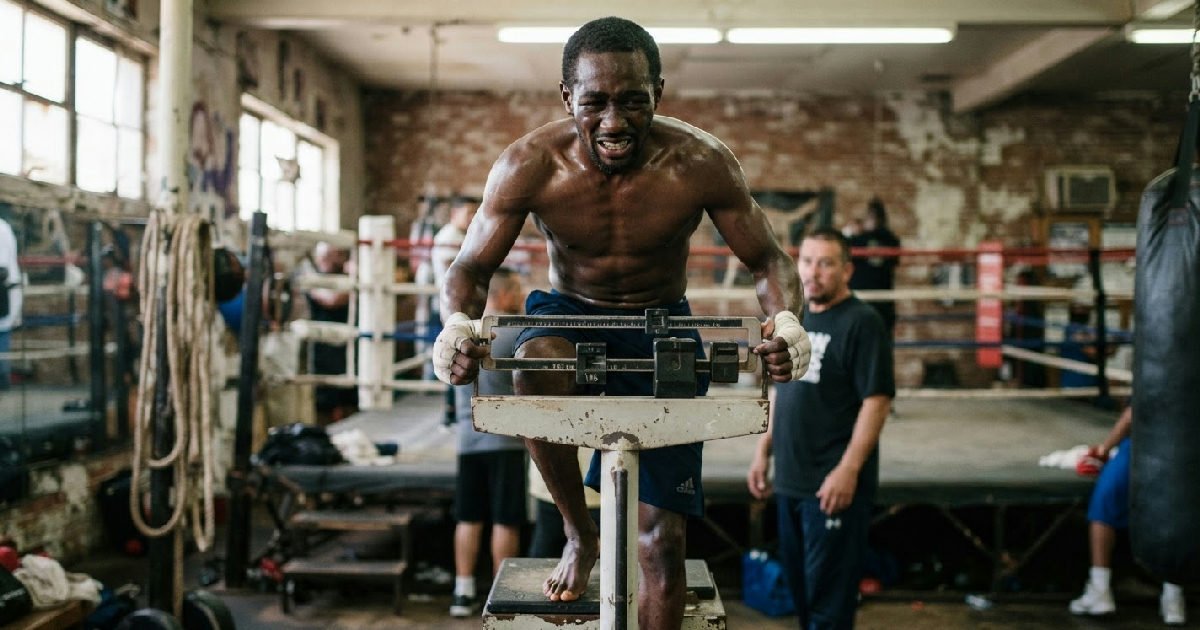
Terence Allan “Bud” Crawford, the celebrated American professional boxer, recently disclosed a harrowing experience, stating he “almost died” during a 135-pound weight cut early in his career. This stark revelation about his extreme Terence Crawford weight cut has once again brought the severe health risks associated with aggressive weight management in boxing into sharp focus.
The incident, which occurred in Texas under brutal conditions, saw Crawford push his body to its absolute limits, battling both the scales and intense heat.
Terence Crawford weight cut: A dangerous descent to the lightweight limit
His admission, made during an interview with popular online streamer Adin Ross and later highlighted on the DH12 Above the Rim podcast, offers a rare glimpse into the hidden tolls fighters often endure. Crawford’s candor serves as a powerful reminder of the physical and mental sacrifices inherent in a sport where competitive advantage can literally be a matter of pounds.
The incident Crawford described as “almost dying” occurred in Texas, under brutal conditions. He recalled the temperature being “like 100 and something degrees” as he desperately tried to shed the final pounds. “I just kept working out, kept moving, not drinking no water,” Crawford explained, detailing his desperate efforts to meet the mandated weight.
His body ultimately rebelled despite his best efforts. Even after hitting the target weight, arriving “2 lbs under when I got on the scale,” his system completely shut down. The moment he tried to rehydrate with water and Pedialyte, his body “crashed.” He genuinely feared he would “have to go to the hospital” due to the severity of his condition.
While Crawford didn’t explicitly name the opponent for this specific fight, research suggests this critical event likely happened during his bout against Thomas Dulorme. It paints a stark picture of the lengths fighters go to meet weight class demands, sometimes risking everything for a competitive edge. Even a fighter with the discipline of boxing legend Crawford has faced such perils.
Crawford also noted that he was “killing myself to make that weight” at 135 pounds, a struggle that continued even after moving up a division. “It was the same way with 140,” he confirmed, indicating persistent challenges despite the change. This enduring battle with the scales deeply informed his later career decisions.
The mechanics of a critical collapse
The physiological process during such an extreme weight cut involves severe dehydration, which can lead to organ shutdown. Crawford’s experience highlights how rapidly a fighter’s body can deteriorate when pushed beyond its natural limits. This physical collapse is a stark warning for all combatants.
The immediate aftermath of a severe weight cut often presents its own dangers. Attempting to rehydrate quickly after prolonged fluid restriction can shock the system, as Crawford experienced. His body’s rejection of water and Pedialyte underscored the profound stress his organs were under, emphasizing the fragile line between competitive readiness and grave medical emergency.
The relentless pressure of weight divisions
Terence Crawford started his professional career at 135 pounds in March 2008, a division where he quickly made his mark. He held the WBO and Ring magazine lightweight titles from 2014 to 2015, showcasing his talent even under strenuous physical demands. His final lightweight appearance came against Raymundo Beltran in November 2014.
In that bout, Crawford successfully defended his WBO lightweight title with a dominant unanimous decision. Judges scored the fight 120-108 and 119-109 twice, underscoring his performance despite the rigorous weight cut. He came into the ring nearly 20 pounds heavier than his weigh-in weight for that fight.
After conquering the lightweight division, Crawford moved up to 140 pounds, the light welterweight division, where he again became an undisputed champion in 2017. However, the struggles with weight continued to plague him. He found relief and better performance by climbing even higher in the weight classes.
He later found his “perfect weight” at 168 pounds, the super middleweight division. This allowed him to focus more on training and less on extreme calorie and fluid restriction. This strategic move enabled him to secure even more undisputed championships, retiring with an undefeated record and 18 major world championships across five weight classes.
Evolution of a champion’s physique
Crawford’s journey up the weight classes marked a significant transformation in his physique and fighting style. By February 2025, reports indicated Crawford weighed 186 pounds, a full 51 pounds above the lightweight limit where he once nearly collapsed. This physical evolution demonstrates the benefits of competing at a more natural body weight.
Moving up in weight allowed Crawford to get “more out of training” and improve his overall nutrition and recovery. He experienced being “stronger, more energized” and better able to recover, directly attributing these improvements to not having to cut so much weight. This shift directly enhanced his longevity and performance at an elite level.
Weight cutting’s grave health risks for boxers
Crawford’s story is a vivid illustration of the serious health risks inherent in rapid weight reduction, a common practice in combat sports. Medical experts frequently highlight the physiological dangers, which include increased blood viscosity and a heightened risk of ischemic heart disease and stroke. These conditions can have long-lasting, detrimental effects on a fighter’s health.
Severe dehydration, often a cornerstone of extreme weight cuts, also increases the likelihood of acute cardiovascular problems and kidney failure. The body’s ability to regulate temperature can become dangerously impaired, potentially leading to heat stroke. Brain vulnerability is another significant concern, as reduced cerebrospinal fluid volume can dramatically increase concussion risk, impacting a fighter’s long-term neurological health.
Beyond the physical toll, the psychological effects of rapid weight loss are equally concerning. Studies show that these extreme reductions can cause confusion, decreased short-term memory, and reduced vigor. Fighters often report impaired concentration and lower self-esteem, alongside feelings of rage, fatigue, depression, and isolation, all of which compromise their performance and increase injury susceptibility.
Tragic precedents and regulatory challenges
The boxing and MMA worlds have witnessed tragic outcomes directly linked to extreme weight cutting. In 2015, MMA fighter Yang Jian Bing died due to complications from his weight loss attempts. Similarly, Muay Thai fighter Jordan Coe succumbed to suspected heatstroke in 2016 before a fight, and Perth teenager Jessica Lindsay died in 2017 during preparations for a Thai boxing bout, reportedly from dehydration.
These fatalities, alongside non-fatal but severe incidents like CJ Hancock’s heart stopping and kidney failure, or Jim Miller experiencing blood in his urine, underscore the dire consequences.
Regulatory bodies like the Association of Boxing Commissions (ABC) and the World Boxing Council (WBC) have attempted to mitigate risks with rules such as mandatory pre-fight physicals, rehydration protocols, and same-day weigh-ins. Yet the problem persists, highlighting the ongoing debate about regulatory effectiveness and the persistent dangers fighters face.
The ABC even ruled in 2018 that weight cutting exceeding 10% of a fighter’s body weight constitutes “cheating.” This can lead to reduced rankings and a 12-month ban from championship bouts. Despite these efforts, dangerous weight cutting practices remain standard, highlighting the need for more comprehensive solutions and stricter enforcement across the combat sports industry.
Shifting perspectives on fighter well-being
Crawford’s candid admission provides a critical data point in the ongoing discussion about fighter well-being and the sport’s inherent demands. His experience, coupled with numerous other documented incidents, forces a re-evaluation of traditional weight-making practices. It raises questions about how much risk athletes should be expected to undertake for competition.
The mental and physical toll on athletes subjected to these extreme measures is immense, affecting not just their performance but their long-term health. His story serves as a powerful testament to the hidden struggles that even the most successful fighters face. This honesty can help drive conversations toward safer practices.
This revelation holds significant implications for younger fighters entering the sport, who often look to champions like Crawford for guidance. It emphasizes the importance of education and responsible weight management from the outset of a career. Promoting healthier approaches could redefine how future generations of boxers approach their craft and could impact current matchmaking standards.
Beyond the weigh-in scale: a call for change
The enduring challenge of weight cutting requires a concerted effort from promoters, trainers, regulators, and athletes themselves. While existing rules aim to protect fighters, their effectiveness is often debated. More research into optimal weight management strategies could lead to safer, evidence-based protocols.
Ultimately, the goal is to create an environment where competitive integrity does not come at the cost of a fighter’s life or long-term health. Crawford’s near-fatal experience serves as a powerful reminder that while the spectacle of boxing enthralls, the well-being of its athletes must always remain paramount. The sport has a responsibility to protect its stars.
The conversation needs to move beyond simply meeting the number on the scale to prioritizing the fighter’s health and optimal performance. This shift would ensure the sport remains compelling while safeguarding its most valuable assets: the athletes themselves. It’s a complex issue without easy answers, but one that demands continuous attention.