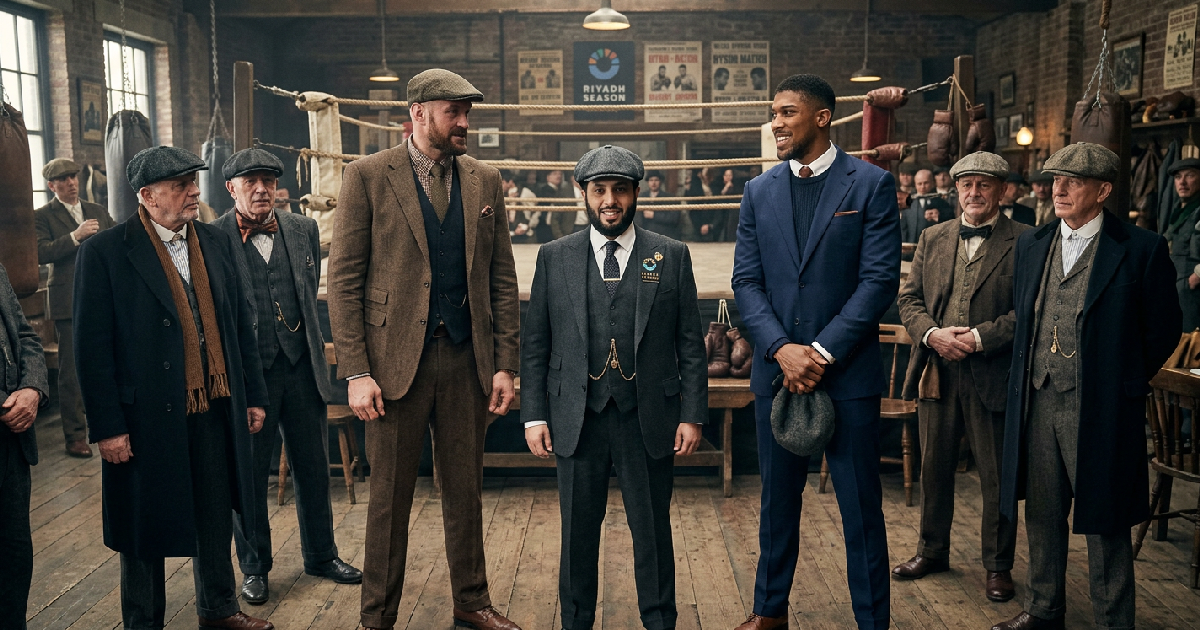
Turki Alalshikh, the chairman of Saudi Arabia’s General Entertainment Authority, has signaled his growing influence over the heavyweight division by releasing a viral AI-generated image portraying himself as the centerpiece of a Peaky Blinders-inspired collective. The digital artwork, which appeared on social media recently, features Alalshikh flanked by heavyweight rivals Tyson Fury and Anthony Joshua, alongside powerbrokers Eddie Hearn, Frank Warren, and Bob Arum. The post effectively brands the Saudi official as the primary force in a sport that has historically struggled with fragmentation and promotional infighting.
The image serves as a visual marker for the ongoing cooperation between the world’s most powerful promoters. By costuming the sport’s biggest names in the signature flat caps and heavy overcoats of the Birmingham-based crime drama, the image positions the Riyadh Season architect as a central figure who has reportedly helped bring order to the chaotic negotiating table. The cinematic aesthetic was further enhanced by the use of “Red Right Hand” by Nick Cave, the dark, atmospheric theme song associated with the television series.
Establishing Heavyweight Stability
For decades, boxing fans have grown cynical about the sport’s inability to deliver its most significant matches due to promotional rivalries and network conflicts. However, the influence of Saudi investment has managed to bypass many of these traditional roadblocks. The AI image, set against a gritty backdrop of cobblestone streets, visually reinforces Alalshikh’s role as a benefactor capable of seating veteran rivals like Top Rank’s Bob Arum and Queensberry’s Frank Warren in the same room.
This digital branding comes at a pivotal moment for the heavyweight division as momentum builds toward a potential domestic mega-fight. Reports suggest move towards a major clash between the two British stars, provided they both navigate their upcoming schedules successfully. Tyson Fury continues to build on his form following his recent activity, while Joshua remains focused on staying active to ensure both men enter potential future negotiations with their reputations intact.
Strategic Digital Branding Pays Off
The choice of AI-generated imagery highlights the unique way Riyadh Season engages with a younger, digitally native audience. Traditionally, boxing promotion relied on face-to-face press conferences and physical posters. Alalshikh’s approach is more conceptual, treating the boxers almost as characters in a larger, orchestrated narrative. This strategy has helped the sport move past periods where the fallout from the Kinahan era cast a shadow over international matchmaking and commercial partnerships.
Observers have noted that the figures in the image are meticulously rendered to project unity. The towering figure of Fury is placed just behind Alalshikh, while a silhouette of Joshua occupies the right side of the frame. Long-time promotional rivals Eddie Hearn and Frank Warren are also depicted as part of the “firm,” a nod to the uneasy but lucrative alliance they have formed under Saudi patronage. It is a bold statement of executive power that suggests individual promotional identities are now increasingly aligned with the broader Riyadh Season brand.
Saudi Influence Reshapes Matchmaking
The success of this branding exercise underscores a shift in how boxing talent is managed and recruited on the global stage. As Alalshikh continues to expand his influence, other promotional outlets are responding with their own strategic maneuvers. For instance, Matchroom’s recent moves to block Zuffa’s influence show that while the Saudis provide the funding, the battle for promotional control remains fierce beneath the surface in the United States and Europe.
The confident tone of the social media post indicates that the path toward the coming year is being carefully mapped out. With both Joshua and Fury expected to remain active in the coming months, the variables that usually derail big fights—such as unexpected losses or injury delays—are being managed with increasing scrutiny. The image is more than just a viral meme; it is a declaration that the major powerbrokers of boxing are currently operating under a shared incentive structure.
Fighters Adapt to Centralized Control
While the promoters and dealmakers dominate the headlines, the fighters must still perform under immense pressure in the ring. For Joshua, any upcoming bouts represent a high-stakes necessity to maintain his ranking and public profile. For Fury, maintaining the physical condition required for a career-defining peak remains the primary concern. The AI-generated image might place them all on the same street, but if they eventually meet in the ring, the artificial harmony of the social media post will inevitably be replaced by competition.
The reliance on digital imagery and social media narratives suggests a move away from traditional “trash talk” as the primary driver of ticket sales. Instead, the sport is being sold as a premium entertainment product where the spectacle of the event is as important as the competition itself. This evolution reflects a broader trend in global sports where sovereign wealth and centralized planning are redefining how markets operate. Determining whether this stability can last long-term remains the defining question for the heavyweight division.