
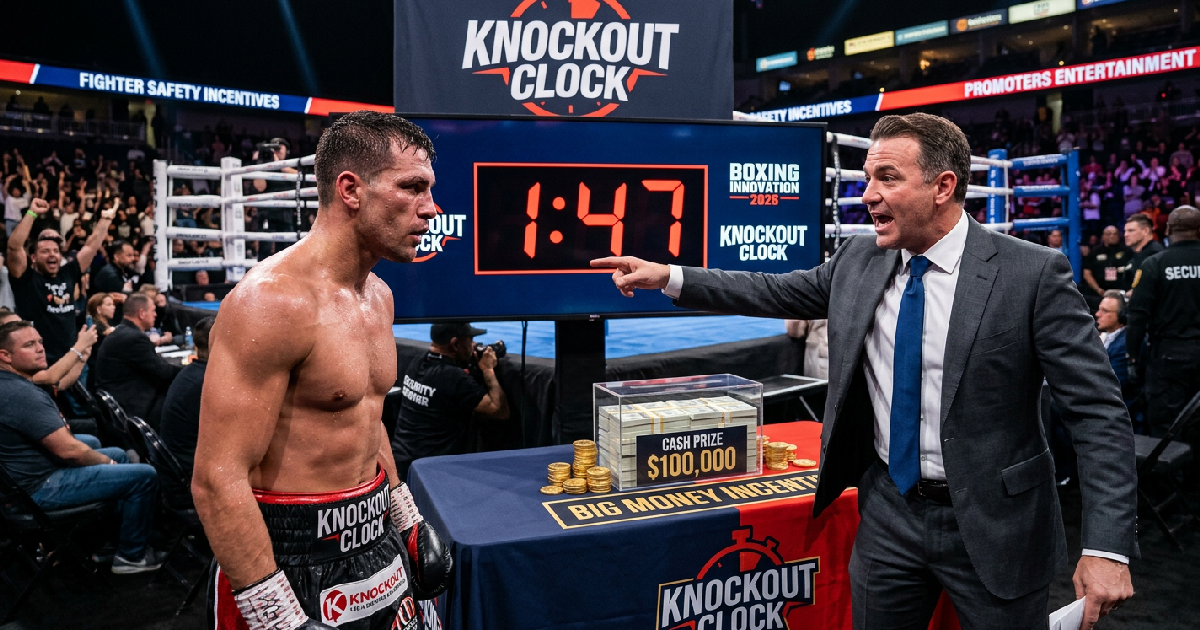
Boxing is currently wrestling with a polarizing proposal known as the Knockout Clock, a system designed to incentivize early finishes through escalating financial rewards. The concept has reportedly gained traction among certain promoters and investors who believe the sport needs to adapt to the fast-paced demands of digital audiences. By offering tiered bonuses for those who secure a stoppage in the opening rounds, proponents hope to boost the intensity of matches that might otherwise lean toward defensive caution.
The reception from the professional ranks has been sharply divided. While some athletes view the prospective bonuses as a vital way to increase their career earnings, others fear the mechanic would destroy the strategic nuance of “the sweet science.” There is a delicate balance between preserving the tactical purity of a 12-round contest and meeting the commercial pressures of a saturated media market where highlight-reel finishes are the primary currency for growth.
Industry leaders are watching these developments closely as they navigate an increasingly competitive promotional environment. For instance, Matchroom Boxing has focused on securing its market position against emerging influences, highlighting how established powers must adapt to stay relevant. The introduction of time-sensitive incentives represents a similar disruption, forcing the industry to choose between high-risk entertainment and traditional sporting values.
Commercial Pressures and the Search for “Big Money”
The primary driver behind the Knockout Clock is the pursuit of more lucrative broadcasting deals and social media engagement. Promoters reportedly believe that by placing a premium on aggression, they can ensure a more consistent stream of viral content for streaming platforms. In an era where attention spans are short, the fear within executive offices is that technical, defensive-minded battles may struggle to attract the younger demographic necessary for long-term survival.
For the fighters themselves, the potential for a “big money” windfall is hard to ignore. Many in the sport, particularly those outside the elite championship level, operate on razor-thin margins. A bonus structure that rewards a quick finish could provide the financial security that a standard fight purse often lacks. However, this financial lure comes with the risk of encouraging fighters to abandon the very skills that protect their long-term health.
The move toward specialized training to handle these shifts is already visible in how modern athletes manage their camps. Some boxers have opted for high-performance environments to better prepare for rapid-fire technical demands, similar to when Darius Fulghum relocated his training camp to Los Angeles to refine his approach. If the clock becomes a reality, training cycles might shift away from endurance and toward explosive, high-output power drills.
Safety Implications of Rushed Performances
The most significant criticism against the Knockout Clock centers on fighter safety. Veteran trainers and medical experts have voiced concerns that incentivizing a quick finish forces athletes to take unnecessary risks. A fighter rushing for a bonus is more likely to leave their chin exposed, potentially leading to more frequent and severe concussions. The tactical patience required to slip punches and counter-attack could be replaced by reckless exchanges that favor the heavy hitter over the technician.
Integrity also remains a major talking point. There are fears that a clock-based system could be manipulated by matchmaking choices designed to trigger specific bonuses. This skepticism follows a period of heightened scrutiny regarding the sport’s business practices, particularly in light of the fallout involving Daniel Kinahan which raised questions about transparency in the industry. Purists argue that once financial incentives dictate the flow of a fight, the sport risks losing its status as a legitimate athletic competition.
The Evolution of the 2026 Boxing Market
As the industry moves through 2026, the demand for innovation shows no sign of slowing down. While the major governing bodies are unlikely to adopt a timer-based bonus system for world title fights, the concept is expected to find a home in specialized tournaments or the burgeoning exhibition circuit. These formats allow for experimentation without disrupting the historical records of the professional rankings.
Promoters are increasingly looking at boxing as a hybrid of sport and entertainment. If the Knockout Clock proves successful in a trial phase, it could become a staple of specific “sprint” style cards designed for peak-time television. For now, the community remains in a state of cautious observation. The hunger for larger purses is universal, but the price of that progress—potentially at the cost of the sport’s soul—remains an ongoing debate that shows no sign of reaching a quick finish.