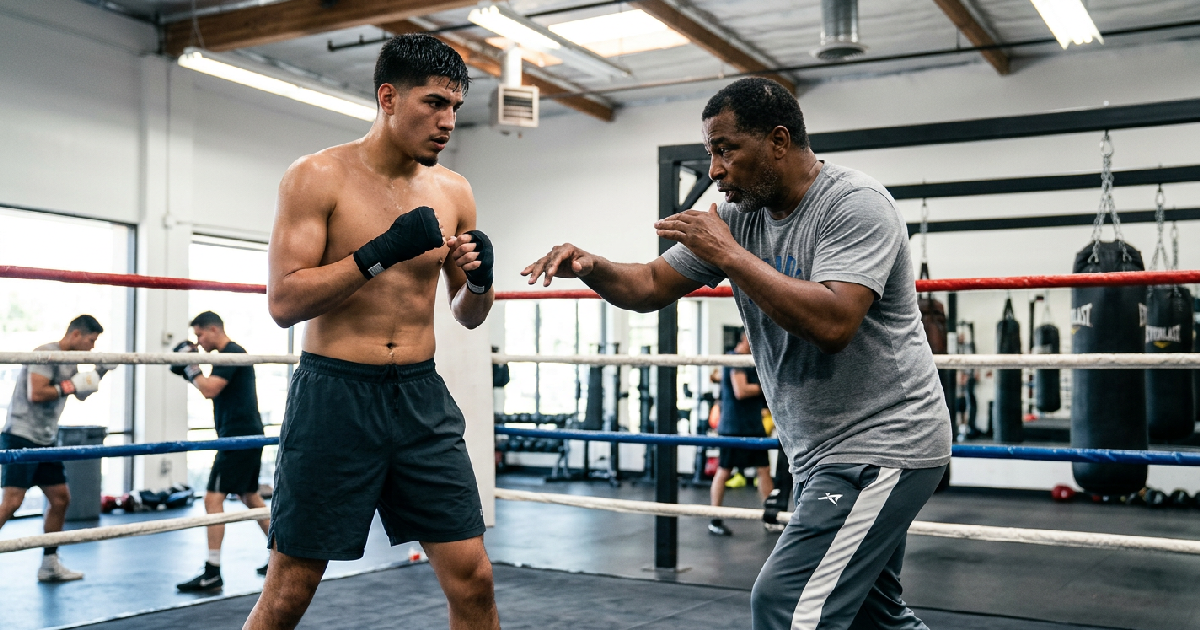
Unbeaten super middleweight contender Diego Pacheco has reportedly ended his professional partnership with trainer Jose Benavidez Sr., turning to Hall of Fame coach Buddy McGirt to lead his corner. The move follows a difficult outing in which Pacheco maintained his undefeated record but faced significant criticism for his performance against a high-pressure opponent. The transition marks a major shift for the young prospect as he looks to address defensive vulnerabilities that were exposed during his recent appearance in the ring.
The decision to join forces with McGirt represents a pivot toward a more technical approach for the 168-pound contender. While training under the Benavidez camp, Pacheco was often associated with a high-volume, aggressive style. However, after reportedly sustaining heavy punishment and even a knockdown in his most recent victory, the need for a more calculated defensive foundation became apparent. McGirt, renowned for his emphasis on distance management and lateral movement, is seen as the architect who could refine Pacheco’s raw talent into a more complete championship package.
Industry insiders view this as a necessary evolution for a fighter who has been categorized among the most dangerous boxers in the ring today. The struggles Pacheco faced in his last bout, where he reportedly relied heavily on clinching to survive the later rounds, suggested that his development had reached a plateau. By moving to McGirt’s camp, Pacheco is signaling a departure from the “Mexican style” of trading shots in favor of a “hit and don’t be hit” philosophy.
Shifting Strategy in the Super Middleweight Division
The primary critique of Pacheco’s recent form centered on his lack of a secondary plan when forced onto the back foot. When he was unable to keep his opponent at bay with his reach, he appeared to struggle with inside fighting and pocket defense. Analysts noted that his footwork often left him stationary, making him a vulnerable target for shorter, more explosive pressure fighters.
Buddy McGirt is expected to prioritize positional awareness and counter-punching in Pacheco’s new regimen. McGirt’s coaching style focuses on subtle shifts that keep a fighter out of the line of fire without sacrificing offensive positioning. This contrasts sharply with the gritty, volume-heavy approach favored by his previous camp, which often requires fighters to absorb significant damage to land their own power shots.
But while a trainer can adjust a fighter’s mechanics, the ultimate test remains the athlete’s composure under fire. Some observers worry that an over-correction toward defense might dampen the explosive offensive output that fueled Pacheco’s rise. Other contenders in similar situations have had to find a difficult balance; for example, Scrappy Ramirez navigated a patient path toward the top of his division by refining his style without losing his aggressive intent.
Building for Future Title Contentention
Before his recent setbacks in form, Pacheco was frequently linked to potentially massive bouts against elite names in the super middleweight landscape. However, the nature of his last win cooled some of the momentum surrounding his immediate title prospects. The change in coaching leadership is a clear attempt to bridge the gap between being a decorated prospect and a legitimate world champion.
The pressure to perform during this transition period is high, especially as rival contenders continue to sharpen their own camps. The move reflects a broader trend of fighters seeking specialized instruction to overcome specific tactical hurdles. For instance, Darius Fulghum relocated his training camp to Los Angeles recently to find a similar advantage in preparation. For Pacheco, the stakes are equally high as he enters the next phase of his career under the watchful eye of a Hall of Fame mentor.
Future Outlook and Tactical Changes
Pacheco is expected to return to the ring in the coming months, an outing that will serve as the first real barometer for the effectiveness of the McGirt-Pacheco partnership. The boxing world will be looking for signs that the excessive clinching and defensive lapses seen previously have been replaced by more educated movement and ring generalship. If he can demonstrate these improvements, he will likely find himself back on the fast track to a world title shot.
While some fighters struggle with the transition to a new trainer’s methodology, others find it provides the necessary spark to reach the elite level. For Pacheco, the move to McGirt is more than a change of scenery; it is a calculated gamble that a more clinical, traditional boxing foundation is what he needs to survive and thrive at the very top of his weight class. Whether the young contender can adapt his temperament to match McGirt’s tactical discipline remains the most pressing question for his future.