
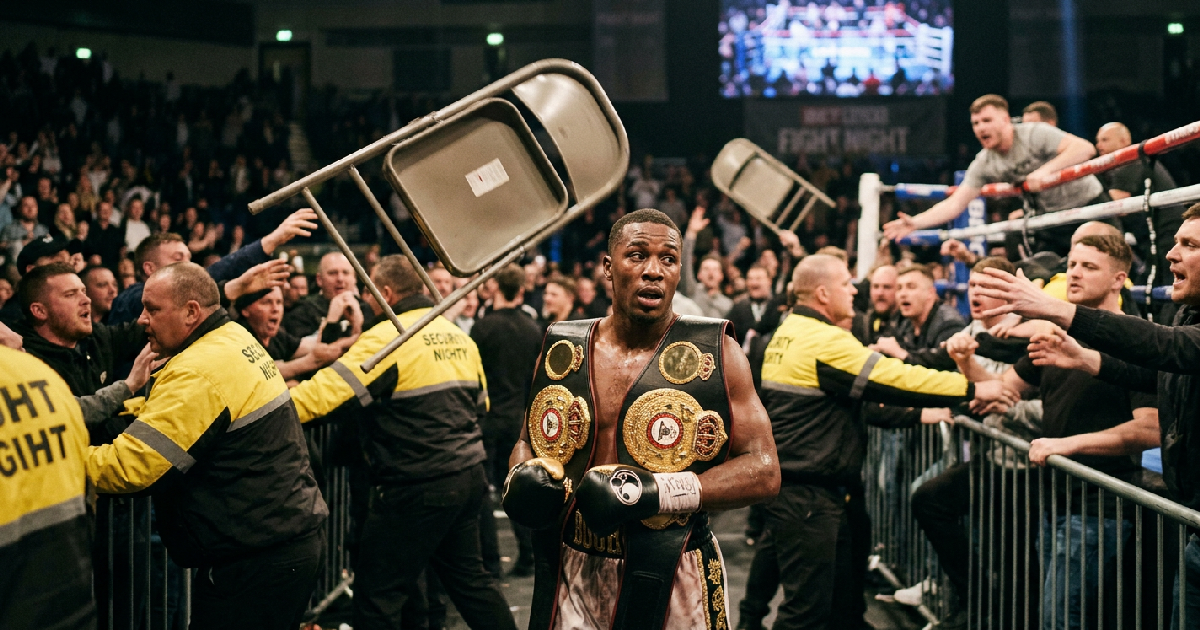
A high-stakes boxing match ended in sheer chaos this week as a fan-led riot resulted in a victorious fighter being struck with a chair and physically assaulted inside the ring. The incident, which unfolded moments after the referee had officially called the contest, saw dozens of spectators breach security barriers to launch a coordinated attack on the winning athlete. Local authorities and sanctioning bodies are now reportedly reviewing video footage to identify the primary instigators of the violence.
The brawl erupted during the post-fight celebrations when several individuals jumped over the ropes, initially appearing to join the festivities before the situation turned sour. Tensions that had been simmering between rival camps throughout the evening boiled over, leading to a swarm of people entering the squared circle. Amid the confusion, a metal folding chair was thrown into the ring, striking the winner across the upper body, followed by a series of punches from various unidentified assailants.
Security personnel struggles to contain the influx of people as the ring became a congested space of flying fists and debris. The winning boxer, who should have been enjoying a career-defining moment, was instead forced to cover up and retreat into a corner as his coaching staff attempted to shield him from the barrage. Similar scenes of unrest have occasionally plagued the sport, but the direct use of furniture as a weapon marks a troubling escalation in crowd-control failures.
Security Failures and the Risk of Ring Invasions
This latest incident raises serious questions about the adequacy of security protocols at regional and international boxing events. When spectators find it this easy to bypass barriers and reach the athletes, the integrity of the sport is compromised. For many in the industry, it brings back memories of the Daniel Kinahan boxing business fallout, which previously forced organizations to reconsider their safety and association standards.
Observers noted that the lack of a substantial police presence or a tiered barrier system likely contributed to the ease with which the crowd took over the ring. The physical safety of the fighters remains the paramount concern, yet many smaller promotions are often accused of cutting corners on security costs to preserve narrow profit margins. This event serves as a stark reminder that the volatile atmosphere of a fight night can shift from excitement to danger in a matter of seconds.
Escalation of Rivalries Beyond the Ropes
While boxing thrives on intense rivalries and “grudge matches,” the line between sporting competition and actual violence is often blurred by overzealous supporters. Reports suggest that the attackers in this instance may have been linked to the losing fighter’s entourage or local supporters who were unhappy with the referee’s stoppage. This tribalism, while driving ticket sales, creates a precarious environment for officials and athletes alike.
The sport is already dealing with internal shifts, such as those seen in the women’s boxing divisional rankings, where discipline and professional conduct are being pushed as the standard. Seeing a male prospect subjected to a chair attack shortly after winning a bout undoes much of the work done to present boxing as a regulated, professional endeavor rather than a street-level brawl.
Potential Sanctions and Long-Term Implications
The local athletic commission is expected to hand down significant fines and potentially indefinite bans for those identified in the melee. Furthermore, the venue itself may face repercussions, including the loss of its license to host combat sports events if it is determined that they failed to provide a “safe environment” for the participants. The winning boxer’s management team has reportedly expressed their outrage, calling for criminal charges to be filed against the man who wielded the chair.
In the wider context of the heavyweight and power-punching divisions, safety is usually associated with the punches thrown within the ropes. Many fear that if such incidents continue, the sport’s reputation will suffer among mainstream sponsors. Fans often look to the most dangerous boxers in the ring for their skills and power, but they do not expect that danger to come from a folding chair thrown from the third row.
Protecting the Future of the Sport
Moving forward, promoters will likely be under pressure to implement “sterile zones” between the front-row seats and the ring apron. While this may distance the fans from the action, the alternative—allowing athletes to be assaulted in their workplace—is no longer tenable. If the sport wants to maintain its recent growth, it must ensure that the only battles taking place are the ones sanctioned by the referee.
Frequently Asked Questions
What happens to the fight result after a riot?
In most cases, the official result stands unless the riot was caused by a technical error or interference that affected the outcome of the fight itself. Since the violence occurred after the winner was declared, the victory remains on the boxer’s official record, though the post-fight ceremony is usually cancelled.
Can the winning boxer sue the venue for damages?
Yes, athletes typically have grounds to sue for negligence if it can be proven that the venue or promoter failed to provide adequate security. Legal experts suggest that being hit with a weapon like a chair during a professional event constitutes a clear breach of the duty of care owed to the participants.
How do commissions identify fans who storm the ring?
Commissions use a combination of high-definition broadcast footage, fixed arena security cameras, and social media videos posted by other spectators. Because almost every angle is filmed in modern boxing, identifying the specific people who threw punches or furniture is much easier than it was in previous decades.