
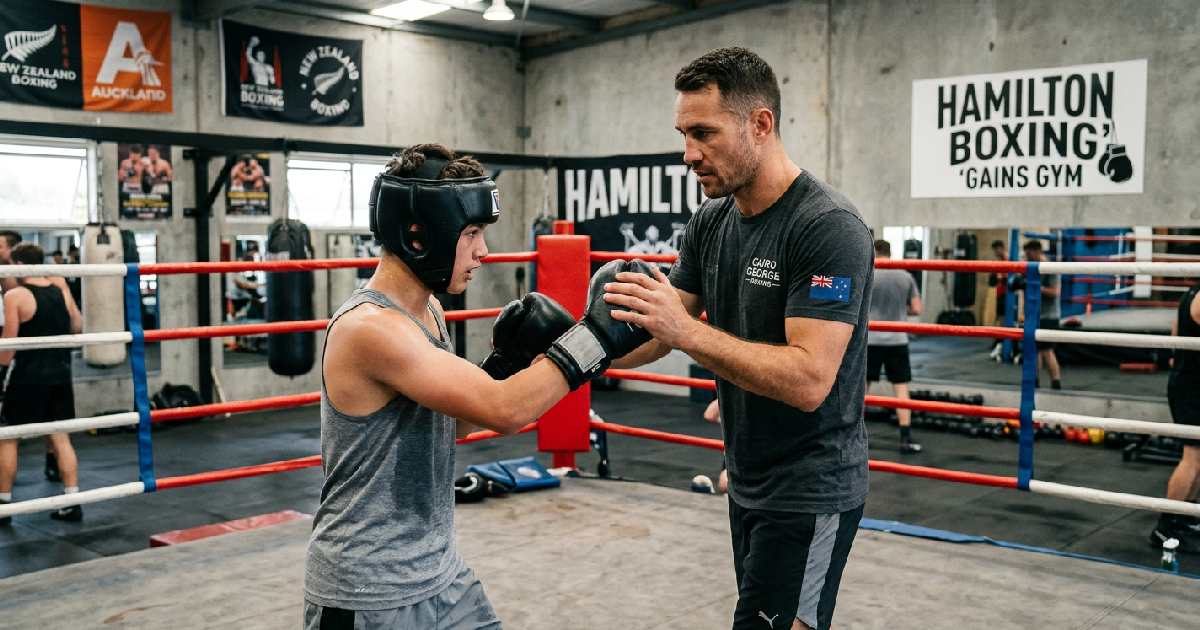
Cairo George, the former New Zealand and regional welterweight champion, has transitioned into a full-time coaching career, marking a significant shift for one of the country’s most durable boxing figures. After a professional tenure defined by resilience and several regional titles, the Hamilton-based veteran is now focusing his efforts on mentoring athletes at his own training facility. George is reportedly utilizing his extensive ring experience to instill a level of mental toughness in his students that he believes is essential for survival in the professional ranks.
The move follows a career where George competed at a high level across the Australasian circuit. He was known for a technical style that allowed him to capture various honors, including the IBO Asia Pacific and WBO Oriental titles. His shift to a mentorship role appears to be a natural evolution, as he has frequently noted that the sport demands a temperament that is not for everyone. This perspective now forms the basis of his instructional philosophy as he works with a new generation of fighters. Much like how David Price evaluates current form in the heavyweight division to pinpoint the margins between success and failure, George is applying a veteran’s eye to local talent development.
By moving into the corner, George joins a growing movement of former champions aimed at strengthening the professional infrastructure within New Zealand. His training methodology reportedly merges traditional fundamentals with the psychological rigor required for modern sport. This focus is becoming increasingly vital as the global standards for professional boxing continue to rise, requiring more sophisticated preparation from local athletes.
Developing Technical Standards in Hamilton
The facility established by Cairo George serves as a specialized environment reportedly designed to test the commitment and discipline of those who enter. The sessions are said to be demanding, mirroring the professional camps George navigated throughout his own prime years. He has reportedly emphasized to his pupils that mastering the mental aspects of the “sweet science” is just as important as physical conditioning, particularly when preparing for the pressures of a live match.
The gym acts as a hub for both aspiring professionals and amateur boxers looking to refine their technical skills. George’s presence provides a direct link to the international circuit, offering insights that are usually only gained through years of high-stakes competition. Under his guidance, students are taught to prioritize defensive responsibility and tactical counter-punching over more reckless styles of engagement.
This commitment to nurturing talent reflects broader trends in the sport where established names take on administrative or developmental roles. Whether it is through significant promotional deals, such as when Dalton Smith secured his long-term future to ensure stability, or through grassroots coaching like that of George, the objective remains the health of the professional ecosystem.
Strategic Discipline and the Mental Fortress
A primary element of George’s coaching is the development of what is described as a “mental fortress.” During his time as an active fighter, George was noted for maintaining composure during difficult rounds, a trait he now attempts to pass on to those under his tutelage. He reportedly suggests that the majority of boxing success is determined by psychological preparation, with physical fitness serving as the vehicle to execute a game plan.
He is also known to be transparent regarding the sacrifices necessary to reach championship levels. This includes the dietary restrictions and the isolation often found in rigorous training camps. By providing a realistic look at the professional business, he aims to ensure his fighters are prepared for the difficult moments that inevitably occur during a long contest.
Strengthening the New Zealand Boxing Scene
The presence of a coach with George’s pedigree in the Waikato region is expected to strengthen the national boxing landscape. While New Zealand has seen a rise in general interest in the sport, the lack of experienced coaching has often been a hurdle for local fighters trying to reach the world stage. George is reportedly working to bridge this gap by offering high-level technical instruction in a local setting.
His influence is beginning to show as his fighters participate in regional cards across the country. While he maintains a relatively low profile, his impact is often seen in the disciplined approach of the athletes he trains. This transition from the ring to a leadership role is similar to how Oscar De La Hoya and Nico Ali Walsh have sought to influence the sport’s culture and safety through their actions outside the ropes.
As boxing in the South Pacific continues to grow, the involvement of former champions like Cairo George ensures that the technical lessons from previous eras are preserved. While he is no longer trading blows himself, his competitive drive is now channeled through his pupils. Reports suggest he is focused on quality over quantity, aiming to produce fighters who are fully prepared for the realities of the professional ring.
The Road Ahead for the Former Champion
Though George has stepped away from active competition, his role as a coach allows him to stay deeply involved in the sport’s tactical side. He is reportedly looking to guide his athletes toward regional and eventually major titles, aiming to replicate his personal success through his stable of fighters. The change from athlete to mentor is often difficult, but observers suggest George has adapted to the requirements of the corner quite effectively.
In the coming years, the New Zealand boxing community will likely monitor his progress and that of his students on the international scene. For now, he remains focused on the daily operations of his gym, serving as the architect for the next wave of talent in Hamilton and proving that professional experience is a vital asset for the future of the sport.