
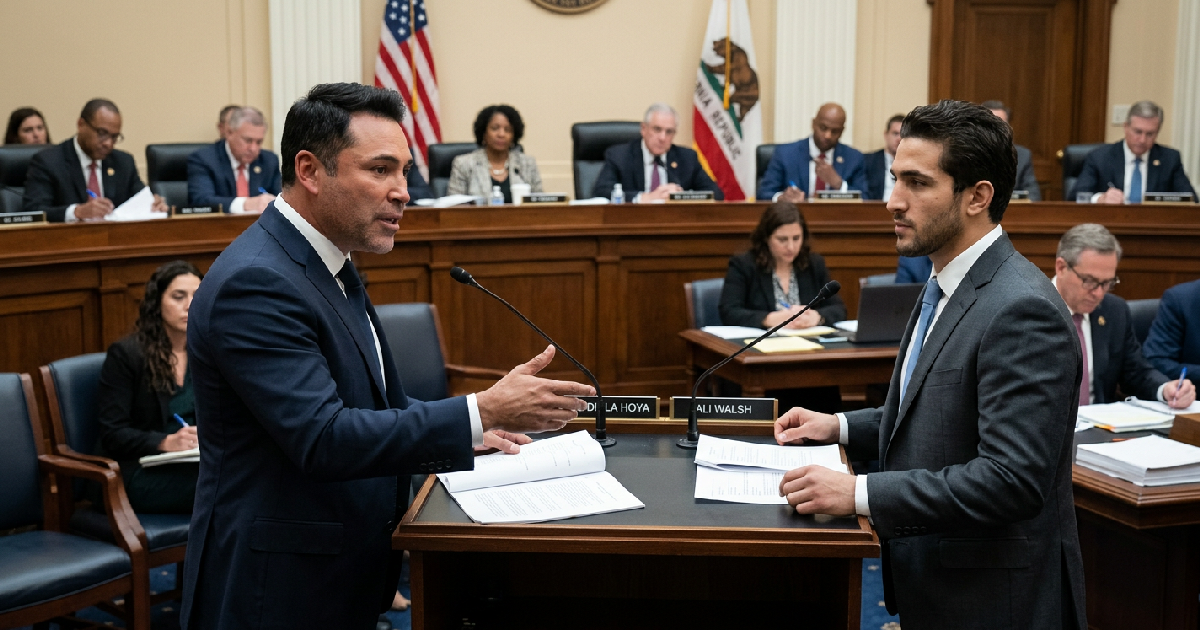
Oscar De La Hoya and Nico Ali Walsh have taken their fight from the ring to the halls of government, appearing before United States lawmakers to caution against proposed changes to federal boxing regulations. The high-profile duo argues that sweeping legislative overhauls could inadvertently damage the sports’ infrastructure and limit opportunities for rising fighters.
The debate centers on potential amendments to the Muhammad Ali Boxing Reform Act, a piece of legislation originally designed to protect boxers from exploitation and ensure financial transparency. While some advocates believe the act needs sharpening to address modern promotional complexities, De La Hoya—a Hall of Fame fighter turned promoter—and Ali Walsh, the grandson of the act’s namesake, suggest that heavy-handed intervention might do more harm than good.
De La Hoya and Ali Walsh Defend Current Regulatory Framework
During the briefings, the messengers for the sport emphasized that the existing framework provides a necessary balance between athlete safety and promotional flexibility. De La Hoya, who heads Golden Boy Promotions, has often been a vocal critic of how the sport is governed but remains wary of federal mandates that could consolidate power or lead to bureaucratic gridlock. His stance suggests that while improvements are always welcome, a complete overhaul might stifle the competitive nature of the marketplace.
Nico Ali Walsh brings a symbolic weight to the discussion. As a professional middleweight and a direct descendant of the man whose name is synonymous with boxing rights, his presence serves as a reminder of the act’s original intent. Reports indicate that Walsh is concerned about maintaining the integrity of his grandfather’s legacy while ensuring that the “sweet science” remains a viable career path for the next generation of most dangerous boxers entering the professional ranks today.
Concerns Over Promotional Competition and Fighter Autonomy
The primary concern raised by the boxing figures involves how new laws might affect the relationship between promoters and fighters. Proponents of the overhaul often argue for more stringent “firewalls” between those who manage fighters and those who promote the events. They believe this would prevent conflicts of interest that often leave athletes with the smaller share of the purse.
However, De La Hoya has pointed out that the modern boxing economy relies on the ability of promoters to build stars over long-term cycles. He argues that if the regulations become too restrictive, it may become harder for promoters to take risks on unproven talent. This sentiment is echoed by many in the industry who fear that excessive red tape will drive major fights away from U.S. soil to international territories with more relaxed oversight.
The Legacy of the Muhammad Ali Boxing Reform Act
For decades, the Ali Act has been the “North Star” for boxing regulation in the United States. It was enacted to prevent the kind of predatory contracts that plagued the mid-20th century. By requiring promoters to disclose certain financial details to fighters, it moved the needle toward equity. But critics of the current system say it lacks teeth, noting that many of its provisions are rarely enforced at the state level.
The ongoing discussions in Washington D.C. have also touched upon the controversial history of third-party involvement in the sport. The shadow of past scandals still looms over the industry, and lawmakers are sensitive to the business fallout associated with individuals who have attempted to skirt traditional regulatory boundaries. The fear is that without updated laws, the sport remains vulnerable to outside influences that prioritize profit over the welfare of the athletes.
Potential Ripple Effects on Major Matchups
If the proposed legislative changes move forward, they could fundamentally alter how the sport’s biggest events are negotiated. This includes the massive cross-promotional bouts that fans have been clamoring for. Whether it involves middleweights or the perennial speculation surrounding a potential Joshua and Fury clash, the legal hurdles for making these fights happen are already immense. De La Hoya and other stakeholders argue that added federal oversight could make the “big fight” even harder to materialize, as legal scrutiny might slow down the already glacial pace of heavyweight negotiations.
The pushback from Ali’s family and De La Hoya is not necessarily a rejection of progress, but a plea for precision. They argue that lawmakers should focus on enforcing the rules already on the books rather than layering on new restrictions that might only benefit the wealthiest power players in the industry.
The Path Forward for US Boxing Legislation
Lawmakers now face the challenge of weighing the testimony of legendary figures against the calls for reform from advocacy groups. The outcome of these discussions could define the professional landscape for years to come. If the warning from De La Hoya and Ali Walsh is heeded, we may see a focus on refining state-level enforcement rather than a top-down federal restructuring.
For the fighters currently climbing the rankings, the stakes are high. The balance of power between the “suits” in the offices and the athletes in the ring remains one of the most contentious issues in sports law. As the debate continues, the boxing world remains divided on whether the sport needs a new set of rules or simply a better way to play by the old ones.
Frequently Asked Questions
Why are De La Hoya and Ali Walsh opposing the new boxing laws?
They believe the proposed overhauls could create unnecessary bureaucracy that hurts the sport’s economic structure. They argue that instead of creating new laws, the government should focus on better enforcement of the existing Muhammad Ali Boxing Reform Act to protect fighters without stifling promoters.
What is the Muhammad Ali Boxing Reform Act?
Enacted in 2000, this federal law was designed to protect boxers from coercive contracts and ensure financial transparency between promoters and athletes. It is currently the primary piece of federal legislation governing professional boxing in the United States.
How could these legal changes affect which fights get made?
Critics of the proposed changes, like De La Hoya, suggest that more restrictive laws could make it more difficult for different promotional companies to work together. This could potentially lead to fewer high-profile “super-fights” as legal hurdles and disclosure requirements become more complex for the parties involved.