
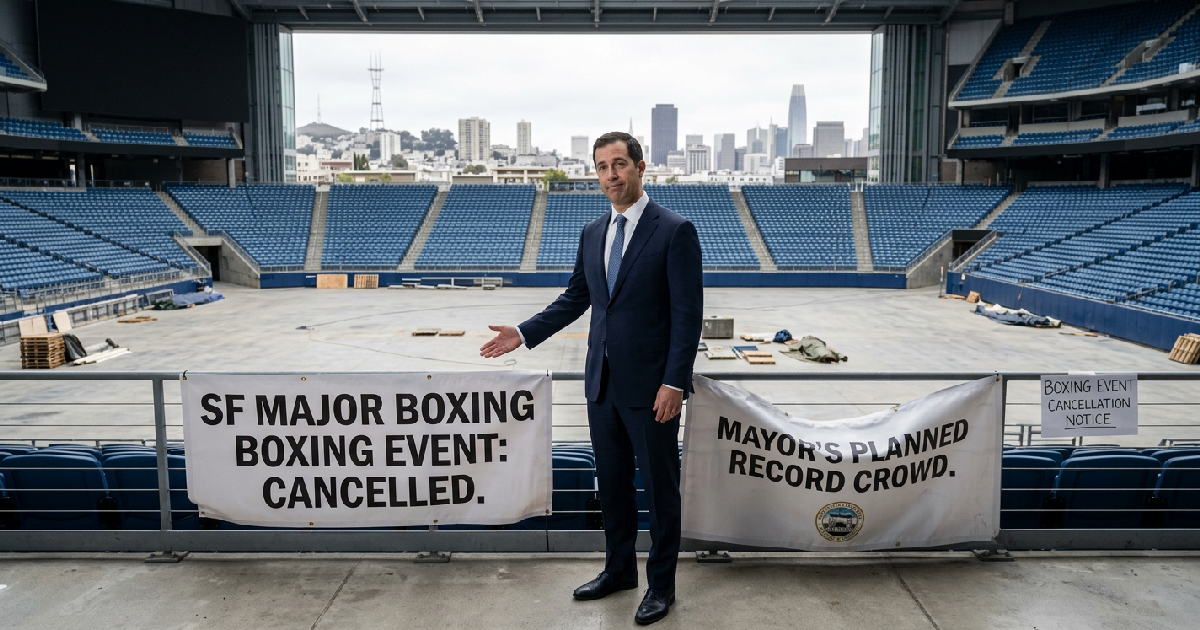
Mayor Daniel Lurie’s ambitious attempts to host a record-breaking boxing match in San Francisco have officially collapsed following a breakdown in negotiations with organizers.
The San Francisco Chronicle reported Monday that the plan to transform the city into a global combat sports destination has imploded, dealing a blow to the administration’s efforts to revitalize the downtown core through major sporting spectacles. The proposed event was intended to set a new attendance benchmark for boxing in Northern California.
The deal’s failure marks a setback for Mayor Daniel Lurie, who had championed the initiative as a way to generate significant tax revenue and foot traffic. City officials and private promoters had been in discussions for months to secure a high-profile card that could fill a stadium-sized venue.
However, disagreements over logistics, security costs, and the financial guarantees required by the city ultimately derailed the project before it could be formally announced to the public.
This collapse comes at a time when other major cities are successfully leveraging combat sports to boost local economies. While figures like Eddie Hearn have recently hailed historic moments in emerging markets like Egypt, San Francisco struggled to bridge the gap between its regulatory requirements and the promoter’s expectations.
The “implosion” of the deal suggests that the city’s high costs of operation continue to be a barrier for large-scale sporting entertainment.
Logistical hurdles and financial disputes stall San Francisco boxing event
The core of the disagreement reportedly centered on the massive overhead associated with hosting a fight of this magnitude in San Francisco. Sources close to the negotiations indicated that the Lurie administration was firm on strict security protocols and infrastructure upgrades.
These requirements added millions to the estimated budget, making the venture less attractive to the professional promoters who would have fronted the capital for the fighters’ purses.
Economic experts suggest that San Francisco’s current climate of cautious spending contributed to the cautious approach from the Mayor’s office. While the city wanted the prestige of a world-title bout, it was reportedly unwilling to provide the level of subsidies that competing markets in Las Vegas or the Middle East frequently offer.
This fiscal friction is a common theme in modern boxing, where high-profile fighters often call out governing bodies or local officials when dates and venues fail to materialize.
Public safety costs and venue limitations
San Francisco officials were concerned about the strain a record-setting crowd would place on the city’s already stretched police and transit resources. Initial drafts for the event required a heavy law enforcement presence that promoters felt was excessive. When the city refused to lower the security fee requirements, the financial viability of the card began to crumble.
Furthermore, the specific requirements of the unnamed “record-setting” match required a certain level of broadcast infrastructure. San Francisco’s most iconic venues frequently present challenges for modern pay-per-view setups compared to purpose-built arenas in other states. Without a compromise on these technical needs, the promoters eventually sought more accommodating partners elsewhere.
Impact on San Francisco tourism and economic revitalization
The cancellation is more than just a missed sporting event; it represents a missed opportunity for the city’s hospitality sector. Local hotels and restaurants have been struggling to return to pre-pandemic occupancy levels.
A boxing match drawing tens of thousands of visitors from across the country would have provided a much-needed injection of capital into the downtown economy, which Mayor Daniel Lurie has prioritized since taking office.
Boxing fans are known for traveling long distances and spending significantly on luxury accommodations and dining during fight weekends. By losing this bid, San Francisco misses out on millions in transit-occupancy taxes and peripheral spending. This trend of city-backed sports deals falling through is becoming a concern for local business owners who were hoping for a summer of high-profile events to drive foot traffic.
Recent trends in high-stakes boxing negotiations
The volatility of the current boxing market makes these deals notoriously difficult to close. Promoters frequently pivot to different cities at the last minute if a better tax incentive package is offered. We have seen similar situations where fighters like Shakur Stevenson dismiss immediate bout opportunities due to complex negotiation hurdles that go beyond the ring.
In this case, the lack of a “bridge” between the public sector and the fight game’s private interests proved insurmountable. While some cities are willing to take a loss on initial costs to build their brand, San Francisco’s current political climate demands a more immediate return on investment, which the boxing world is rarely able to guarantee up front.
Future of combat sports in the Bay Area
Despite this collapse, the Lurie administration has not entirely ruled out future sports partnerships. However, the “implosion” of this specific record-setting plan has cast a shadow over San Francisco’s ability to compete with venues in Texas or Florida. For now, the city remains without a major boxing date on its summer calendar, leaving fans and local vendors disappointed by the outcome of these secretive talks.
The focus may now shift to smaller, more manageable events that do not require the same level of city-funded infrastructure. While the dream of a massive, record-breaking turnout at a San Francisco stadium is dead for the foreseeable future, the administration maintains that it is still open to “sound” financial deals.
Whether promoters will be willing to return to the table after this public failure remains to be seen.