
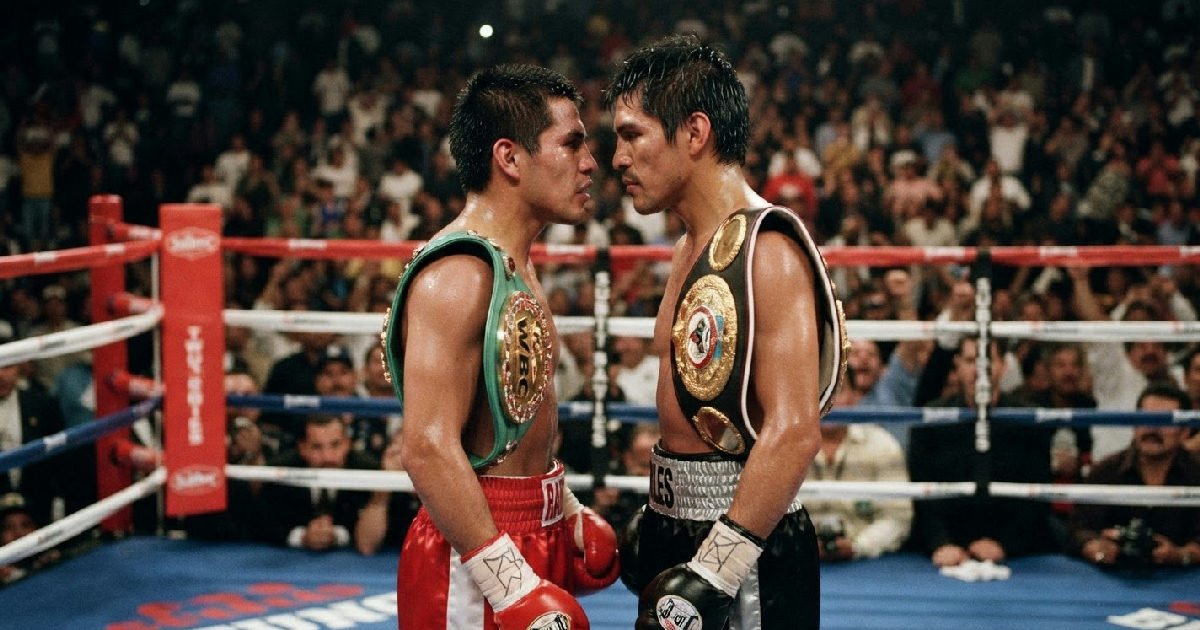
Mexican boxing icon Marco Antonio Barrera has declared Erik “El Terrible” Morales the toughest opponent he ever faced across his illustrious professional career. The revelation, made in an interview with The Ring Magazine, reignites memories of one of boxing’s most ferocious and celebrated rivalries.
Barrera’s statement, which first began circulating in late 2025 or early 2026, offers a definitive perspective from one half of a legendary trilogy.
Marco Antonio Barrera Erik Morales on his rival
Barrera, a multi-division world champion, faced a murderers’ row of opponents throughout his career. His choice of Morales underscores the brutal, back-and-forth nature of their three encounters. It also highlights the unique challenge Morales presented with his relentless pressure, granite chin, and formidable punching power, qualities Barrera himself cited as distinguishing factors.
For Marco Antonio Barrera, the decision to name Erik Morales as his most formidable foe was rooted in Morales’ sheer resilience and unyielding aggression. “Morales is definitely the toughest opponent I have faced, because it almost seemed whenever I hit him it wouldn’t hurt him,” Barrera told The Ring Magazine. This sentiment speaks volumes about the extraordinary durability of “El Terrible.”
Barrera elaborated on the relentless nature of his rival. “He was always coming forward, always throwing punches,” Barrera recalled, describing Morales as a “monster.” He added, “I hit him, and he just kept coming.” Such praise from a fighter of Barrera’s caliber emphasizes the intense physical and mental demands of competing against Morales.
The Trilogy: A Defining Era for Mexican Boxing
The rivalry between Marco Antonio Barrera and Erik Morales transcended mere competition; it became a cultural phenomenon, defining an era for Mexican boxing. Their three fights, spanning from 2000 to 2004, are etched into the sport’s history as some of the most thrilling and high-stakes contests ever witnessed. Each bout delivered unforgettable drama and showcased the warriors’ unyielding spirit.
These contests captivated audiences worldwide, pitting two national heroes against each other in a series that would ultimately help define their respective legacies. The sheer volume of action and the heart displayed by both men solidified their places in boxing lore. Their shared competitive fire pushed each fighter to their absolute limits, creating moments of unparalleled excitement for fans.
First Clash: Morales Claims Controversial Win
The epic trilogy began on February 19, 2000, at the Mandalay Bay Resort and Casino in Las Vegas. This initial encounter, a unification bout for the WBC and WBO super bantamweight titles, saw Erik Morales emerge victorious via a controversial split decision. Judges scored the fight 115–112 and 114–113 for Morales, with one dissenting card of 113–114 for Barrera.
Despite the close scoring, the fight was an instant classic, earning Ring Magazine‘s Fight of the Year award for 2000. It set the stage for one of boxing’s most anticipated rematches. Fans immediately clamored for a second meeting, sensing that the rivalry had only just begun.
Barrera’s Redemption: Even the Score
Two years later, on June 22, 2002, Marco Antonio Barrera sought his revenge at the MGM Grand Garden Arena in Las Vegas. This time, with the WBC Featherweight title on the line, Barrera delivered a masterful performance. He secured a unanimous decision victory with scores of 116–112, 115–113, and 115–113, leveling the series at one win apiece.
This second bout showcased Barrera’s adaptability, as he boxed more strategically to overcome Morales’ aggression. The win was a crucial moment in Barrera’s career, proving his ability to adjust and conquer his most persistent rival. It also ensured that a rubber match was inevitable, given the intensity of their rivalry.
Decisive Third Encounter: Barrera Takes the Series
The rubber match, held on November 27, 2004, back at the MGM Grand in Las Vegas, was fought for the WBC Super Featherweight title. Marco Antonio Barrera once again emerged victorious, this time by majority decision, with scorecards reading 115–113, 115–114, and a 114–114 draw. This win cemented Barrera’s 2-1 lead in the historic series.
The third fight, like its predecessors, was a blistering affair, showcasing the heart and skill of both combatants. Barrera’s ability to win two consecutive decisions against such a relentless opponent solidified his claim as the better man in their head-to-head encounters. The trilogy is often cited as one of the greatest in boxing history.
Beyond Morales: Barrera’s Other Elite Opponents
While Erik Morales stands out as the toughest, Marco Antonio Barrera’s career was defined by clashes with numerous other elite fighters. His resume reads like a who’s who of boxing legends, featuring encounters that tested his skill, will, and durability. These bouts further underscore the significance of his choice of Morales.
Barrera’s willingness to face the best defined his era. He consistently sought out challenges, solidifying his reputation as a true warrior. This commitment to fighting top-tier competition ensures his legacy as one of the sport’s all-time greats. His career was a testament to courage and competitive spirit.
Manny Pacquiao: The Hardest Puncher
Perhaps Barrera’s most well-known rival outside of Morales was Filipino superstar Manny Pacquiao. Barrera faced Pacquiao twice, losing both contests. Their first fight on November 15, 2003, ended in an 11th-round TKO victory for Pacquiao, a fight that dramatically elevated Pacquiao’s profile in the boxing world.
The rematch on October 6, 2007, also went to Pacquiao, this time by unanimous decision. Interestingly, Barrera had previously named Manny Pacquiao as the hardest puncher he encountered, citing Pacquiao’s surprising speed and power in a 2014 interview with The Ring. This distinction highlights the different challenges presented by various opponents.
Juan Manuel Márquez: A Technical Masterclass
Another formidable Mexican rival Barrera faced was Juan Manuel Márquez. On March 17, 2007, Barrera lost his WBC super featherweight title to Márquez via unanimous decision. This bout featured two highly skilled counter-punchers and was a technical chess match that showcased the nuanced aspects of the sport.
Márquez, another legend of Mexican boxing, presented a different kind of challenge than Morales. His precision and tactical prowess forced Barrera to adapt his approach. This loss marked a significant point in Barrera’s later career, demonstrating the depth of talent in the lighter weight classes during that period.
Naseem Hamed: Ending an Unbeaten Run
In a career-defining moment, Marco Antonio Barrera also famously defeated the previously unbeaten “Prince” Naseem Hamed in 2001. This victory was a major upset at the time and solidified Barrera’s status as a global boxing superstar. He dismantled Hamed’s unorthodox style, exposing vulnerabilities many thought didn’t exist.
The win over Hamed showcased Barrera’s ring IQ and ability to neutralize unique threats. It was a significant achievement that added another layer of prestige to his already impressive resume. For many, this fight remains one of Barrera’s most iconic performances, cementing his legacy as a fighter who could adapt and conquer.
The Enduring Legacy of Warrior Kings
Marco Antonio Barrera and Erik Morales are more than just fighters; they are symbols of a golden era in boxing, particularly for Mexico. Their rivalry captivated millions and continues to be a benchmark for intense, high-quality professional boxing. Barrera’s recent statement only reinforces the profound impact Morales had on his career and the sport.
Their battles were not just about titles; they were about pride, national honor, and personal supremacy. This enduring legacy is a testament to their warrior spirits and the mutual respect forged through shared adversity. Fans still discuss their fights with reverence, highlighting the indelible mark they left on boxing history.
The respect Barrera shows for Morales underscores the unique bond that can form between fierce rivals. It’s a recognition that true greatness often requires an equally great adversary to draw it out. Their trilogy remains a masterclass in competitive boxing, demonstrating the heart and skill required to reach the pinnacle of the sport.
Other boxing legends have also spoken about their toughest opponents, showcasing a common thread among elite athletes.
Barrera, now an analyst for TV Azteca, continues to contribute to the sport he graced for decades. His insights, like this recent declaration about Morales, offer valuable perspectives from someone who lived through boxing’s most thrilling moments. Such reflections provide fans with a deeper understanding of the sport’s demanding nature. Insights from other boxing greats often reveal similar admiration for their most challenging foes.
The impact of their rivalry extends beyond their respective careers, inspiring generations of boxers and fans alike. It serves as a reminder of what happens when two exceptionally talented and determined individuals meet in the ring.
The Barrera-Morales trilogy is a timeless example of boxing at its absolute finest, a benchmark for future rivalries to aspire to. Modern rivalries often draw comparisons to these classic matchups.