
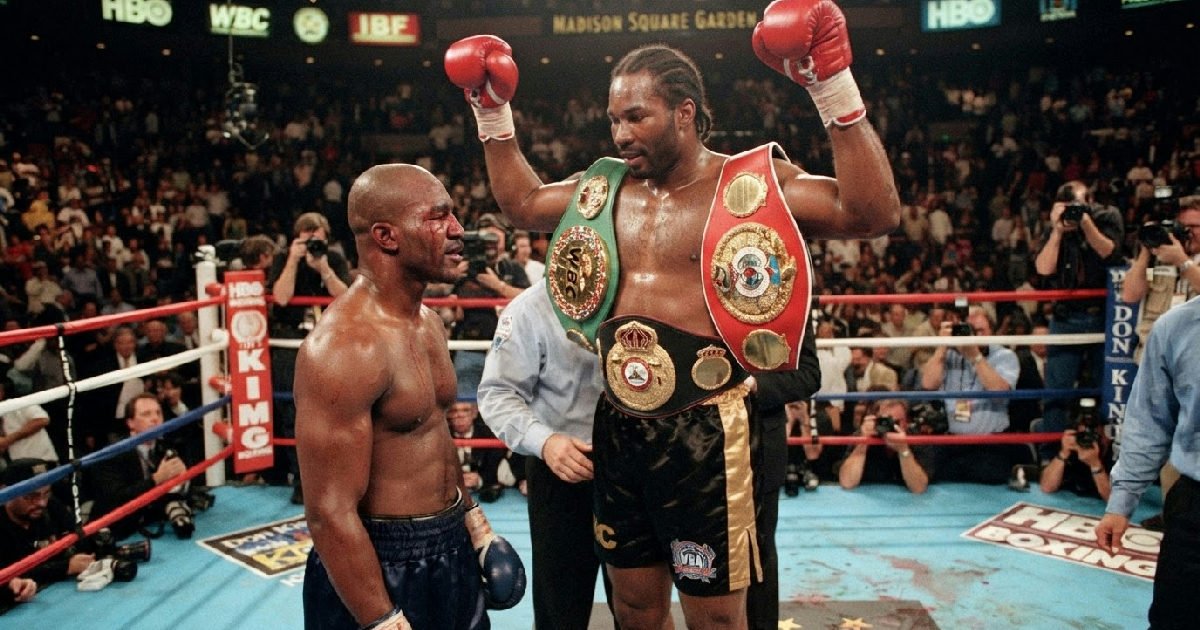
Former undisputed heavyweight champion Lennox Lewis has unequivocally named Evander Holyfield as the best opponent of his storied professional career. Lewis made the declaration publicly in an Instagram post on April 1, 2020, reiterating sentiments he first shared in a 2015 interview with The Ring Magazine. His choice highlights a defining rivalry that captivated boxing fans at the close of the 20th century.
This definitive statement from “The Lion” sheds light on the calibre of competition he faced throughout his illustrious run, which culminated in a final record of 41 wins from 44 fights. While Lewis acknowledged other tough encounters, Holyfield clearly stood out in his reflections years later. Their two highly anticipated bouts are etched into boxing history.
Lennox Lewis Evander Holyfield’s epic clashes
Lennox Lewis’s assessment stems from two iconic clashes with Evander Holyfield in 1999, contests that initially ended in controversy before a decisive resolution. Their first encounter, on March 13, 1999, aimed to unify the WBC, WBA, and IBF heavyweight titles. The fight ended in a highly disputed split decision draw, despite many observers believing Lewis had clearly won.
The public outcry after the initial bout was significant, demanding a rematch to settle the score definitively. Later that year, on November 13, 1999, the two titans met again.
This time, Lewis left no room for doubt, securing a unanimous decision victory. He added Holyfield’s WBA and IBF belts to his WBC title, officially becoming the undisputed heavyweight champion. This triumph solidified his status at the pinnacle of the sport.
A Legacy Forged in Controversy
The controversy surrounding their first fight only amplified the stakes for the rematch, cementing both boxers’ places in boxing lore. Such high-stakes rivalries often define a fighter’s legacy.
They force athletes to perform under immense pressure, showcasing resilience and skill. This was evident despite the contentious judging in their initial meeting, adding another layer to their storied history.
Distinguishing “Best Opponent” from “Toughest Fight”
While Lewis praised Holyfield as his “best overall” opponent, he notably drew a distinction regarding his “toughest fight.” That particular challenge, he clarified, belonged to Ray Mercer.
This nuance offers a deeper understanding of a boxer’s perspective on their career challenges. A “best opponent” implies a fighter who tests every facet of one’s skill, strategy, and mental fortitude.
Meanwhile, a “toughest fight” might refer to a gritty, punishing encounter that pushed the fighter to their physical limits. Other boxing greats often distinguish between opponents who were technically superior and those who were simply durable or relentless.
Lewis faced an array of formidable adversaries throughout his career, not least of which included future Hall of Famers. His resume boasts victories over the likes of Mike Tyson and Tommy Morrison.
A thrilling stoppage of Vitali Klitschko also stands out as a high point. Each of these contests presented unique tests, yet Holyfield’s comprehensive skill set seemingly resonated most with Lewis years later.
The Undisputed Reign and Subsequent Challenges
Lennox Lewis’s journey to undisputed heavyweight champion was a testament to his sustained excellence and strategic career management. His amateur pedigree was exceptional, culminating in an Olympic Gold Medal at the 1988 Seoul Games while representing Canada.
He turned professional in 1989, rapidly ascending the ranks and claiming various regional titles. He first captured the World Boxing Council (WBC) heavyweight title in December 1992 after Riddick Bowe vacated it.
His initial reign saw him defend the belt successfully three times before a shocking upset loss to Oliver McCall in 1994. Lewis, however, demonstrated his resolve.
He reclaimed the WBC title in a February 1997 rematch against McCall. This crucial victory ultimately set the stage for his eventual unification efforts against other champions.
His undisputed status, achieved against Holyfield, was relatively short-lived due to organizational politics. The WBA stripped him of their title in 2000 after he opted to fight Michael Grant instead of mandatory challenger John Ruiz.
The International Boxing Federation (IBF) followed suit in 2002 when he did not face Chris Byrd. These instances illustrate the complexities of unifying and holding multiple belts in modern boxing’s fragmented landscape.
A Career Defined by Top-Tier Competition
Lewis concluded his career in February 2004 with a stellar professional record of 41 wins from 44 fights. His retirement followed a successful defense of his WBC heavyweight title against Vitali Klitschko.
Many legendary boxers reflect on their career arcs, often pointing to specific opponents who truly brought out their best performances.
His impressive record and consistent willingness to face the best of his era underscore why he is universally considered one of the greatest heavyweights of all time. Lewis didn’t shy away from challenges.
He actively pursued unification and took on dangerous fighters throughout his career. This consistent approach against top-tier talent cemented his legacy as a true champion in the sport.
The Enduring Legacy of an All-Time Great
Lennox Lewis’s career epitomized the golden era of heavyweight boxing, marked by genuine rivalries and high-stakes championship bouts. His recent statement about Evander Holyfield serves as a poignant reminder of the intense competition at the sport’s highest level.
It also invites fans to revisit the tactical masterclasses and raw power displayed in those unforgettable fights. For younger generations of boxers and fans, Lewis’s candid reflection provides a valuable perspective on what it takes to reach the summit.
It’s not just about winning, but about the quality of the opposition that truly defines a champion’s greatness. Lewis, “The Lion,” consistently sought out challenges, ultimately securing his place among boxing’s immortals.
The impact of such declarations often resonates beyond mere nostalgia, influencing how contemporary fighters are assessed. When current athletes discuss their peers or potential rivals, they draw parallels to these historic matchups.
Discussions around modern fighters and their “hit lists” echo the strategic thinking employed by champions like Lewis. This continuous comparison keeps the legends alive in the sport’s consciousness.
His willingness to articulate such a specific choice, decades after the fact, speaks to the profound impression Holyfield made. It wasn’t just a physical battle, but a chess match and a true test of will.
This ultimately became a defining moment in both men’s careers. Lewis’s legacy isn’t just about his collection of belts; it’s also about the quality of the champions he faced and defeated.