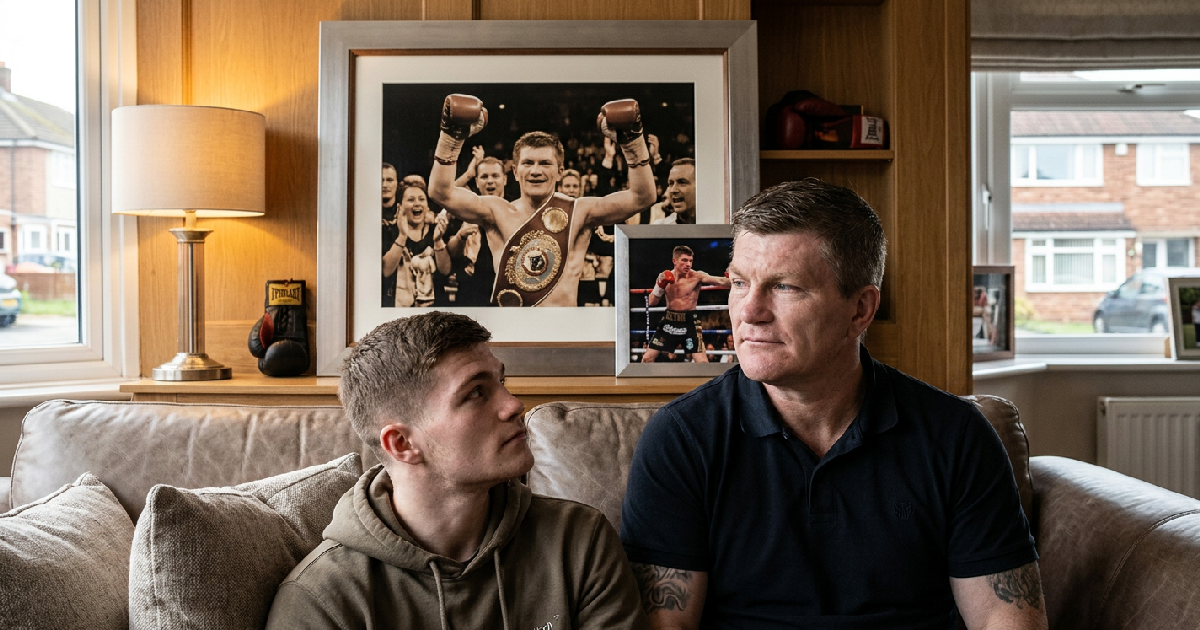
Campbell Hatton has spoken candidly about the legacy of his father, the celebrated former world champion Ricky Hatton, reflecting on the dichotomy between the public icon and the man he knows at home. While the boxing community continues to celebrate the “Hitman” for his historic achievements and visceral connection with fans, Campbell insists that his perspective remains grounded in their father-son relationship despite the pressures of following in those famous footsteps.
The young prospect, who is currently carving out his own path in the lightweight division, admitted that while he understands why his father remains one of the most beloved figures in British sporting history, he has never viewed him through the lens of a fan. To the public, Ricky Hatton represents a blue-collar hero who famously took massive groups of supporters to major fights in the United States; to Campbell, he is simply the parent who offers guidance from the corner and the dinner table.
Establishing an Identity Beyond the Hatton Name
Forging a career in the shadow of a Hall of Fame father presents unique psychological and professional hurdles. Campbell has often been compared to the prime version of his father, a benchmark that few fighters in history could realistically meet. This pressure has been a constant companion since his professional debut, yet he maintains that his motivations are internal rather than a search for external validation or a desire to replicate his father’s exact trajectory.
The younger Hatton has worked hard to refine a style that, while bearing some of the trademark aggression of the “Hitman,” is increasingly becoming his own. This development is crucial as he moves through the domestic ranks. Much like other second-generation fighters featured in rankings of modern talent, Campbell must balance the marketing advantages of his surname with the reality of the physical risks inside the ring.
The Weight of Public Affection
Ricky Hatton’s career was defined as much by his vulnerability as his victories. His openness about his struggles with mental health following the conclusion of his peak years endeared him to a generation of fans. Campbell noted that the outpouring of emotion from the boxing world during his father’s more difficult periods—and his subsequent return to a healthier lifestyle—showed just how much the “Hitman” meant to the public.
But the son sees a side of that story that the cameras rarely captured. He noted that while the world felt the heartbreak of those competitive setbacks, the family dealt with the human being behind the athlete. This grounded perspective has helped Campbell stay disciplined, avoiding some of the pitfalls that reportedly challenged his father during his time at the pinnacle of the sport.
Navigating the Modern Professional Landscape
The boxing world Campbell inhabits today is vastly different from the one his father entered decades ago. With the rise of massive promotional entities and the constant threat of promotional shifting, young fighters need stable backing. We have seen this recently with domestic talents like Dalton Smith securing his future through major long-term promotional extensions, a path Campbell is also looking to emulate by staying active and visible.
Training under the watchful eye of his uncle, Matthew Hatton, Campbell has access to a wealth of knowledge. This “Hatton Gym” environment ensures that he isn’t just learning from a former top-tier professional, but from a family unit that understands the specific mechanics of their fighting style. They focus on body punching and high-volume work—staples of the Hatton brand—while trying to tighten the defensive lapses that are often associated with high-pressure styles.
Learning from Previous Generations
The road to a world title is rarely a straight line. Campbell has had to deal with the reality that every performance is scrutinized more heavily than his peers. This was similar to the scrutiny faced by many fighters during the fallout of major industry shifts, where the focus often drifted from the sport to the personalities involved.
By focusing on the “dad” rather than the “champion,” Campbell has been able to keep his ego in check. He acknowledges that he may not replicate the exact accolades of a multi-weight champion, but he is determined to see how far his own talent can take him without the burden of being a carbon copy. He is reportedly focused on individual growth rather than purely chasing his father’s historical shadow.
Future Prospects for the Hatton Legacy
As the younger Hatton continues his development, the goal remains a shot at domestic honors. The British boxing scene is currently thriving, and a Hatton fighting for a British title would likely be a significant draw for any arena in the north of England. The sentimental value of the name remains a powerful tool for promoters, but the results in the ring must follow the hype.
For now, Campbell remains focused on the next fight and the next training camp. He continues to speak of his father with a mix of professional respect and domestic familiarity. In a sport often defined by bravado and hyperbole, his understated view of his father’s legendary status is a refreshing take on what it means to grow up in the shadow of a sporting giant.