
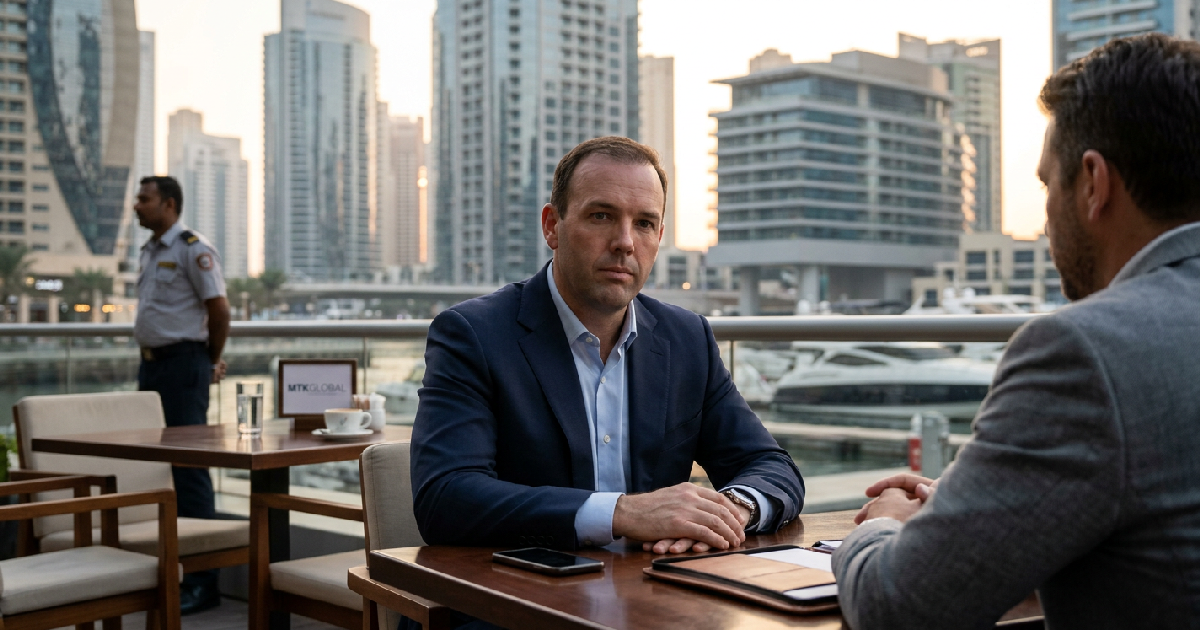
Authorities in the United Arab Emirates have confirmed the arrest of an Irish national in Dubai, a move that signals a massive shift for the international boxing community. The individual, widely known for founding the now-discontinued management firm MTK Global and acting as a consultant to various high-profile fighters, was reportedly taken into custody following the issuance of a new arrest warrant.
For several years, this figure remained a deeply divisive presence in the sport. While he projected a public persona as a reformer and a power broker who facilitated major bouts, law enforcement agencies globally have long maintained a different perspective. This recent development in Dubai appears to be the culmination of a multi-year effort involving international law enforcement agencies aimed at addressing transnational organized crime. The arrest follows a period of intense scrutiny by the United States Treasury Department, which had previously announced substantial rewards for information leading to the disruption of his alleged criminal network.
Latest boxing results and fixtures continue to shape the sport’s landscape, yet the influence of this individual often felt like a constant background presence. For years, the industry operated under a cloud of speculation regarding his role in sanctioning or approving the sport’s most lucrative deals.
The Influence on Fighter Management and Global Promotion
The rise of the “advisor” model within professional boxing was largely defined by his involvement. At its peak, the management group he founded represented hundreds of athletes across multiple continents. His name was frequently linked to some of the biggest stars in the heavyweight and welterweight divisions, though it is important to note that no evidence has ever emerged suggesting the fighters themselves participated in illicit activities.
Instead, the controversy centered on the business of boxing itself. Negotiators and promoters frequently reported that certain deals could not be finalized without the nod of a “friend in Dubai.” This gatekeeper role allowed for a level of control that often bypassed traditional promotional structures.
Even as global boxing results and fixtures updates showed the sport moving in new directions, the infrastructure he built seemed resilient. However, the appetite for maintaining these connections shifted significantly after various government sanctions forced many in the boxing world to distance themselves from his circle.
A New Chapter for International Extradition
The recent action by the Dubai Media Office marks a departure from the perception that the city served as a permanent refuge for those facing legal challenges in Europe. Local officials indicated that the arrest was processed rapidly once the formal legal requests were in place. This emphasizes a growing trend of cooperation between the UAE and European nations regarding criminal matters.
The focus now turns to the potential extradition process. Authorities in Ireland have long sought the return of individuals linked to this specific network to face questioning. The legal proceedings are expected to be complex and may take considerable time to resolve in the UAE court system.
This development arrives as the boxing results and fixtures have reshaped the summer schedule, leaving many to wonder if the removal of a key behind-the-scenes consultant will lead to more transparency in how major contracts are drafted. Without a central figure to navigate, some expect a more fragmented but perhaps more traditional promotional landscape to emerge.
The Long-Term Impact on Boxing’s Governance
The legacy of this era will likely be one of introspection for the sport’s governing bodies. For years, the question of how a person under such intense international suspicion could operate at the highest levels of the sport remained largely unanswered by the organizations responsible for oversight.
While the arrest is seen by many as a necessary clearing of the air, it also exposes the vulnerabilities of a sport that often lacks a centralized regulatory authority. The ease with which an individual could reportedly “launder” a reputation through the glamour of world-title fights remains a point of concern for politicians and financial regulators.
As the legal drama unfolds, the industry is already moving on. New entities are vying for the roster of fighters once managed under the MTK banner, and the sport’s commercial interests are pivoting toward more traditional corporate structures. This arrest may not just be the end of a single career, but the end of a specific, unregulated way of doing business in the ring.