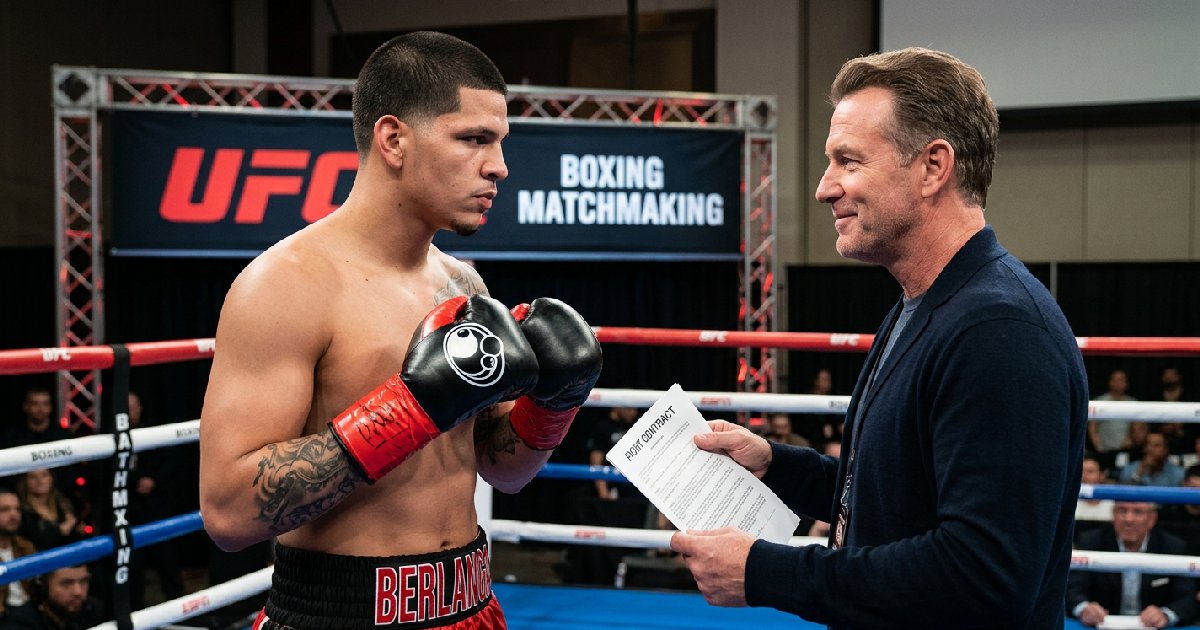
Super middleweight contender Edgar Berlanga has raised fresh concerns regarding the current state of professional boxing, suggesting that the sport’s fragmented promotional landscape is failing both its athletes and its audience. The Brooklyn-born puncher pointed to the Ultimate Fighting Championship (UFC) as a potential blueprint for success, noting that the mixed martial arts giant operates with a centralized authority that largely removes the promotional hurdles currently plaguing the ring.
Berlanga’s critique centers on the fact that boxing remains a decentralized marketplace divided among several powerful promoters and four major sanctioning bodies. While organizations like the UFC can mandate matchups between their top-ranked competitors, boxing frequently relies on complex, multi-party negotiations that can stall major events for years. This often results in the most dangerous boxers in the ring today being kept apart by network rivalries and contractual disagreements.
The frustration expressed by Berlanga echoes a sentiment shared by many active professionals who find themselves sidelined during their physical peaks. By operating under a single banner, the UFC ensures that its number one and number two contenders face off regularly. In contrast, boxing fans often see elite talents navigate long periods of inactivity while their management teams hold out for specific financial terms or favorable broadcast slots.
Comparing the Promotional Structures of Boxing and MMA
The fundamental difference lies in brand control. The UFC has spent decades building a platform where the organization itself is the primary draw, allowing it to dictate the terms of competition. Boxing, however, functions as a collection of independent kingdoms. A fighter signed to one major promotional house may find it nearly impossible to secure a bout with a rival company’s star without an external investor bridging the financial gap.
This lack of a unified league structure also impacts the career trajectories of rising prospects. Without a consistent schedule or a clear path to a title, many fighters struggle to maintain momentum. For some, the solution is securing long-term stability with a single major player, much like how Dalton Smith recently committed his future to a specific promotional path to ensure a steady run toward championship opportunities. But for others, the lack of a “league” means waiting for calls that frequently depend on political alignment rather than merit.
The Impact of Sanctioning Bodies and Internal Politics
A primary roadblock to the structure Berlanga desires is the influence of the four major sanctioning bodies. Each organization maintains its own rankings and mandatory challengers, which frequently complicates the process of unifying a weight class. When these bodies clash with promoters, champions are often forced to vacate titles rather than face the best available opposition, further diluting the prestige of being a world champion.
Berlanga suggested that this system fosters a culture of risk aversion. Promoters are often incentivized to protect an undefeated record rather than test their fighters in 50-50 matchups. This stands in stark contrast to the UFC’s ecosystem, where a single defeat rarely ends a fighter’s status as a headliner. In boxing, the political maneuvering required to keep rivals apart is a constant source of debate, even as analysts like David Price evaluate the heavyweight scene and the ongoing struggle to finalize the fights that fans value most.
The Feasibility of a Unified Global League
While the idea of a centralized boxing league is a recurring topic of discussion, the practical implementation remains difficult. To achieve a UFC-style model, a single entity would need the capital to consolidate training, promotional rights, and sanctioning under one roof. Given the deep-rooted history of independence in the sport and the recent influx of varied international investment, a total buyout of the current system appears unlikely in the immediate future.
Some industry observers argue that boxing’s current “chaos” actually allows for higher individual earnings for top-tier stars than a rigid league structure would permit. However, for fighters like Berlanga, the trade-off is often a lack of clarity and frequent delays. As the sport encounters new streaming platforms and evolving financial backers, the pressure to reform these old-school promotional barriers continues to mount.
Ultimately, the divide between the two sports reflects a choice between institutional consistency and individual leverage. Until a major shift occurs in how talent is managed across the globe, fighters will continue to operate within a system that prizes the art of the deal as much as the art of the fight.