
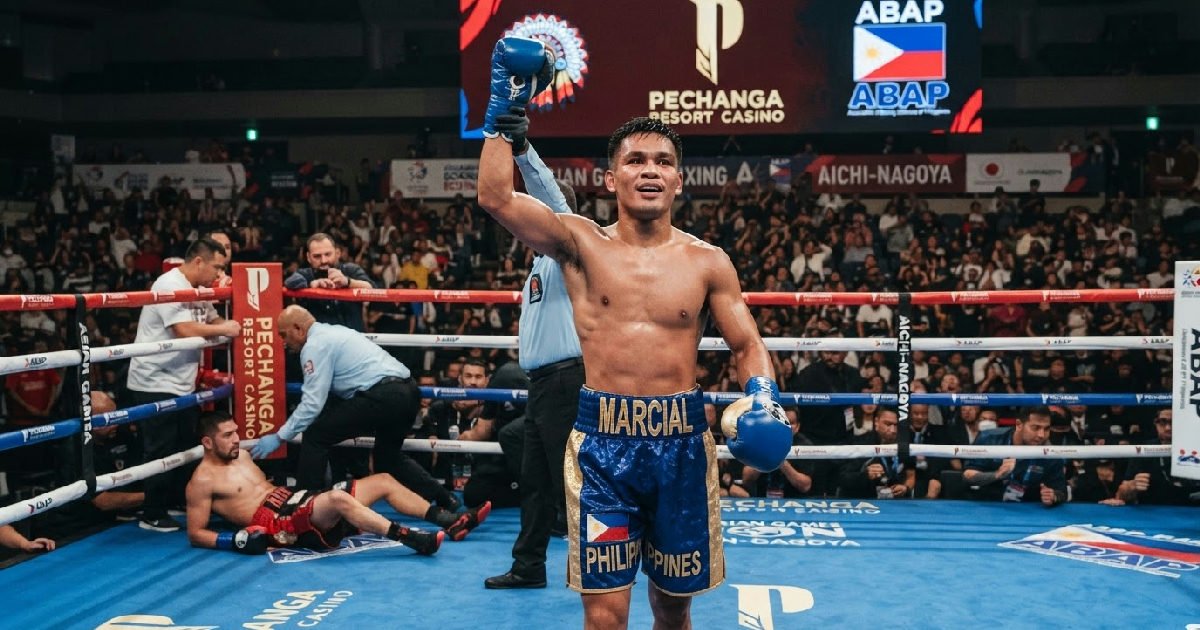
Filipino Olympic bronze medalist Eumir Marcial scored a stunning third-round knockout victory against Mexican fighter Omar Huerta on September 19, 2026, at the Pechanga Resort Casino in California. This dominant win in boxing boosted Marcial’s professional record to 8-0, including five knockouts.
However, the triumph was swiftly followed by Marcial’s withdrawal from the upcoming 20th Asian Games in Aichi-Nagoya, Japan. This decision, made with the Association of Boxing Alliances of the Philippines (ABAP), prioritises his health and addresses logistical challenges.
Dominant Performance in California Showdown
Eumir Marcial’s latest professional bout showcased his formidable power and precision, culminating in a decisive third-round stoppage. Facing Omar Huerta, also known as Omar Ulises Huerta or Omar Huerte, Marcial landed a perfectly timed counter right hook that sent his opponent to the canvas.
Huerta was unable to beat the referee’s count, ending the middleweight contest early. The official stoppage came at the 1:08 mark of the third round, according to some reports, while others cited 1:54 or with 1:44 remaining in the round.
Difficult Decision to Skip Asian Games
Just hours after his emphatic victory, the Association of Boxing Alliances of the Philippines (ABAP) confirmed Marcial’s withdrawal from the Asian Games. Marcus Jarwin Manalo, President of ABAP, communicated the joint decision, citing a confluence of factors that made participation impractical and potentially hazardous.
The boxing events at the Asian Games were scheduled to commence on September 23, leaving Marcial with a scant four-day window for preparation and travel.
Manalo emphasized the severe challenges posed by the short turnaround time, including the grueling long-distance travel from the US to Nagoya, Japan, compounded by a substantial 16-hour time difference. This intense schedule, combined with the physical toll of a professional fight, presented an untenable situation for Marcial’s immediate entry into another high-level competition. Many observers acknowledge the four-day challenge was simply too tight.
Prioritising Athlete Health and Recovery
The ABAP President was unequivocal in his stance on athlete welfare. “Boxing is a physically demanding and inherently risky sport, and adequate time to rest and recover is extremely important,” Manalo stated. He stressed that the organization did not want to compromise Marcial’s health and safety by pushing him into competition under such strenuous conditions.
The transition from professional boxing rules and style back to amateur competition, with its different demands, also weighed heavily on the decision. Manalo’s comments underscored a broader commitment to the well-being of Filipino athletes, ensuring they can sustain long, healthy careers. While Eumir Marcial himself reportedly expressed readiness, stating, “Ready pa ako.
Three rounds lang ‘yun, so parang lumaban lang ako sa amateur. I think ready pa naman yung katawan ko,” the collective decision leaned towards caution and strategic long-term planning.
Marcial’s Dual Career Path and Olympic Aspirations
Eumir Marcial’s career has been a remarkable balancing act between amateur glory and professional ambition. He etched his name in Philippine sporting history by securing a bronze medal at the Tokyo 2020 Olympics (held in 2021) in the men’s middleweight category.
Prior to his professional debut in December 2020, Marcial was a highly decorated amateur, boasting multiple gold medals at the Southeast Asian Games and a silver at the 2019 AIBA World Boxing Championships.
His dual pathway is not unique but consistently presents difficult choices for athletes aiming for both professional distinction and Olympic representation. Marcial is also an active Staff Sergeant in the Philippine Air Force, adding another layer of commitment to his already demanding schedule. The decision to prioritize recuperation highlights the dangers for boxing careers when athletes are pushed beyond reasonable limits.
Balancing Act for Future Competitions
This isn’t the first time Marcial has opted to skip a major amateur event to focus on his professional development. He previously chose to bypass the 2022 Asian Games (which took place in 2023) with the stated goal of pursuing a world title shot.
While the Asian Games often serve as an Olympic qualifier, Marcial still has other avenues to pursue Olympic qualification for future games, such as through World Olympic Qualifying Tournaments.
Despite withdrawing from Aichi-Nagoya, Marcial’s commitment to representing the Philippines remains strong. He is still expected to don the national colors at the Asian Indoor and Martial Arts Games (AIMAG) scheduled for December. This selective participation allows him to manage his physical readiness while continuing to serve his country on the international stage.
Broader Implications for Philippine Boxing and Athletes
Marcial’s withdrawal from the Asian Games sparks important conversations within Philippine boxing circles and across the wider sporting landscape. It highlights the perennial challenge faced by national sports associations in retaining and deploying top-tier talent when lucrative professional opportunities and stringent recovery demands intersect. The decision underscores a growing trend where elite amateur boxers, particularly Olympians, must make strategic choices about their career progression.
This move solidifies Marcial’s focus on his professional boxing career, signaling an intent to push aggressively towards a world title. His management, MP Promotions, has historically emphasized his professional trajectory, and this decision aligns perfectly with that vision. For other aspiring Filipino boxers, Marcial’s journey provides a blueprint for navigating the complex demands of a globalized sport.
Ultimately, this decision, while difficult for all parties, prioritizes the longevity and health of one of the Philippines’ most celebrated athletes. It reflects a maturing approach to sports management, where the well-being of the individual is placed at the forefront, even when it means foregoing immediate competitive opportunities.
Such strategic choices are increasingly common as athletes seek to maximize both their sporting potential and their professional careers.