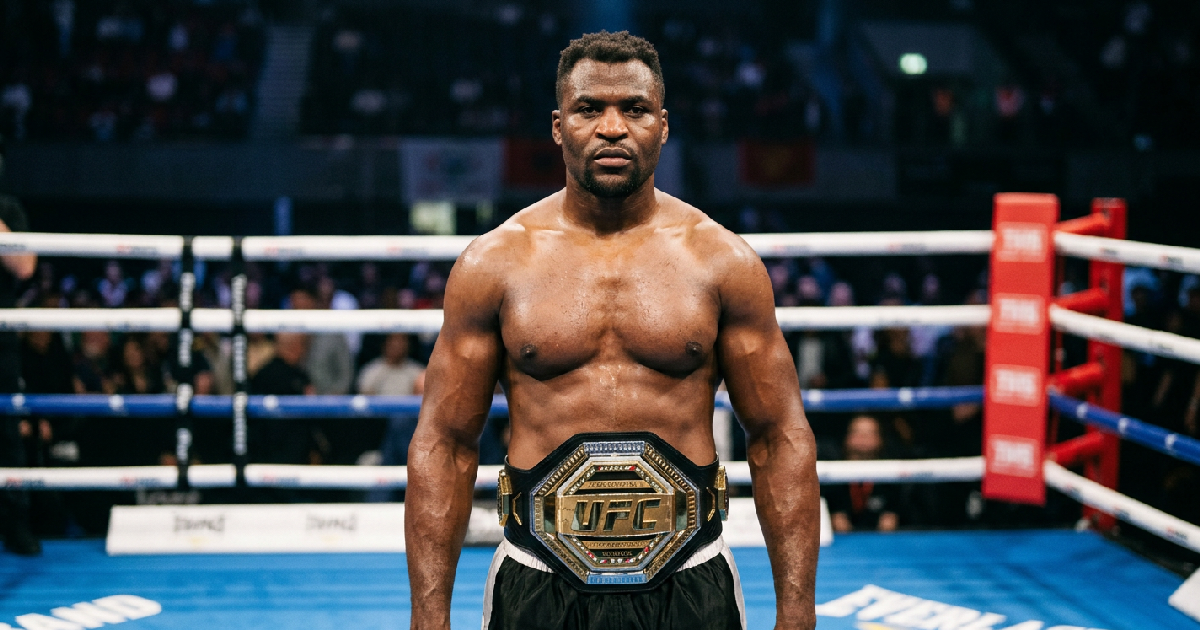
Francis Ngannou has reignited the debate surrounding heavyweight supremacy by declaring himself the rightful lineal heavyweight champion of the world, a claim rooted in his exit from the UFC as its reigning titleholder. The Cameroonian powerhouse maintains that his departure without losing in the cage preserves a historical chain that other active fighters cannot claim. This assertion comes as Francis Ngannou continues to balance his presence between mixed martial arts and the global boxing circuit.
The concept of a lineal champion—the man who beat the man—carries weight in combat sports history. By leaving the Ultimate Fighting Championship (UFC) in a previous calendar year while still holding the belt, Francis Ngannou argues that the lineage remained with him rather than staying with the promotional title. This stance sets him apart from some of the most dangerous boxers who hold traditional sanctioning body belts. His logic follows a tradition where a champion must be defeated to relinquish the status of being the premier fighter in the division.
While the boxing world often focuses on undisputed status through belt collection, the heavyweight landscape is currently fractured. Personal claims to the crown serve as a direct challenge to the legitimacy of established rankings. Francis Ngannou reportedly posits that any fighter currently holding a heavyweight title is effectively a secondary champion because they never took the crown from him directly. This rhetoric is designed to maintain his bargaining power as a massive draw in international sports, regardless of recent results in the boxing ring.
Heavyweight Status and Combat Sports Heritage
The insistence on lineal status by Francis Ngannou is often viewed as a calculated marketing move. By positioning himself as the uncrowned king, he keeps his name mentioned alongside established stars of the sport. Experts have compared his situation to historical boxing figures who were stripped of titles or retired early, only for the public to still view them as the true champions of their era. This narrative has allowed him to participate in lucrative events that many traditional athletes struggle to reach.
The impact of this claim is felt across the industry, particularly as promoters look to organize massive cross-over events. As Francis Ngannou continues to participate in major cards, his refusal to yield the champion moniker forces sanctioning bodies to address the validity of their own rankings. This is reminiscent of how some women’s boxing leaders are currently navigating their own divisional hierarchies to establish clear supremacy amidst administrative changes.
The Comparison to Boxing Traditionalists
Critics suggest that combat sports lineage is usually discipline-specific. They argue that being the lineal champion in mixed martial arts does not automatically translate to the boxing world, where different rules and historical records apply. But Francis Ngannou has bridged this gap by facing top-tier professional hitters, proving that his physical presence alone is enough to disrupt the established order. His ability to draw eyes to any event he headlines makes his claim difficult for the establishment to ignore entirely.
Furthermore, the heavyweight division has seen a trend of fighters seeking independent paths away from restrictive promotional contracts. In a similar vein to how Dalton Smith recently secured his future through strategic extensions, the path taken by Francis Ngannou serves as a blueprint for athletes wanting to maximize their value. His lineal claim is the cornerstone of his independent brand, ensuring he remains a focal point of any heavyweight conversation.
Future Moves in the Heavyweight Landscape
Moving forward, Francis Ngannou is expected to continue his involvement in dual sports. Whether he returns to the cage or continues to pursue massive paydays in the boxing ring, the lineal tag is likely to follow him. It serves as a permanent note next to the names of other champions. If a fighter wants to truly claim they are the best in the world, the shadow of Francis Ngannou remains a hurdle that many believe can only be cleared by a direct confrontation.
The combat sports community remains divided on whether this rhetoric helps or hurts the sport. Some believe it brings fresh interest to a division that occasionally stalls due to promotional politics. Others feel it devalues the hard work of fighters who climb the traditional rankings. Regardless of the stance, Francis Ngannou has managed to shift the narrative, ensuring that his status remains a topic of intense debate for the foreseeable future.
Frequently Asked Questions
What does Francis Ngannou mean by being the lineal champion?
He refers to the tradition of “the man who beat the man.” Since he vacated his UFC heavyweight title while still the reigning champion and was never defeated in a championship fight before leaving the promotion, he argues that the historical lineage of being the world’s best heavyweight remains with him personally, rather than with a specific belt or organization.
Can an MMA fighter be a lineal champion in boxing?
Technically, lineage is usually tracked within a specific sport. However, Francis Ngannou is using the term in a broader combat sports sense to claim he is the premier heavyweight athlete on the planet. While boxing purists might disagree, his commercial success and ability to compete with top boxers have made the distinction a major point of discussion in the media.
Who are the other current heavyweight titleholders?
The heavyweight landscape features several champions across different organizations. In boxing, the titles are currently held by elite fighters, while the UFC has moved on with new champions since the departure of Francis Ngannou. His claim serves as a challenge to all of them, suggesting that none are truly the undisputed best until they face him.