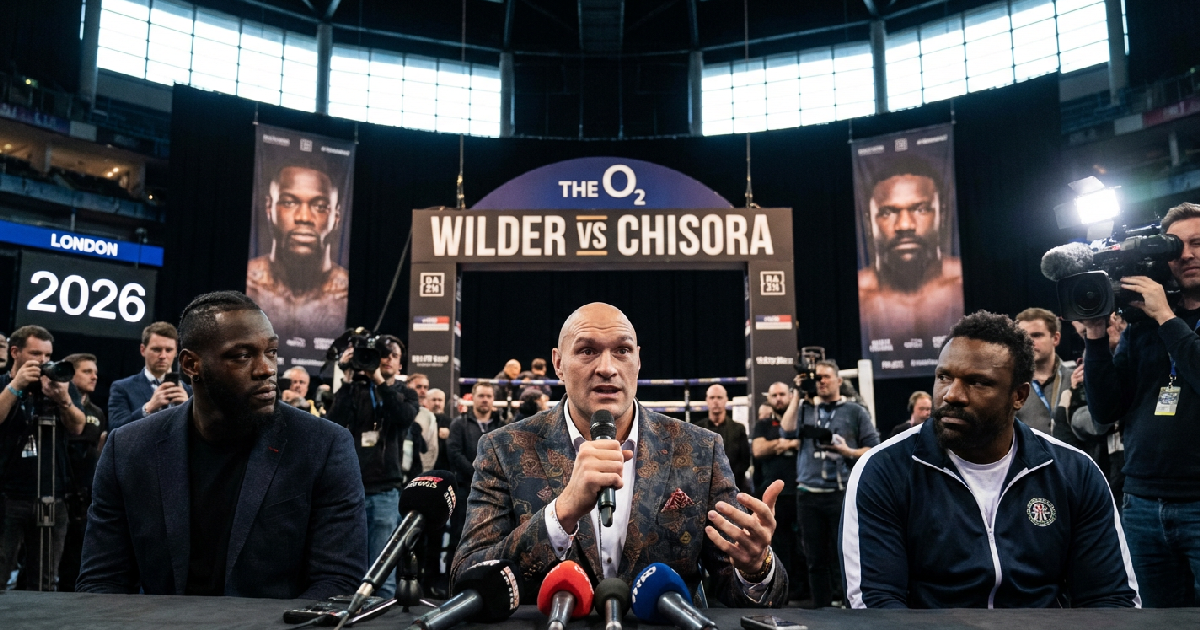
Tyson Fury hasn’t been one to hold back his thoughts on the state of the heavyweight division, and his recent assessment of the rumored interest in a clash between Deontay Wilder and Derek Chisora is no exception. While the prospect of two veteran power-punchers meeting at The O2 in London usually generates excitement, the “Gypsy King” has reportedly voiced concerns over the standard of performance displayed by both men in their recent outings. To Fury, what some see as a legacy fight looks more like a high-risk encounter between two fighters who may have stayed at the party too long.
The Decline of Heavyweight Elites
The alarm bells Fury is ringing aren’t just about the entertainment value, but the technical decline that often precedes a fighter’s exit from the sport. Deontay Wilder, once feared as a premier puncher, has looked a shadow of his former self in recent appearances according to various analysts. His right hand, which famously bailed him out of trouble for years, seems to have lost some of its hair-trigger timing. On the other side of the ring, Derek Chisora remains a beloved figure in British boxing, yet his “War” persona has taken a visible toll on his physical durability over a long career.
Fury’s critique stems from a place of deep familiarity with both men. He has spent significant time in the ring against Wilder across several high-profile bouts and has faced Chisora multiple times throughout his career. When the reigning WBC figurehead speaks on their “sloppy” mechanics, it carries the weight of someone who knows exactly how their reflexes used to be. Reports suggest that Fury believes putting these two together right now is less about finding the next challenger and more about a move for relevance as the heavyweight rankings update for the coming months.
Physical Toll at The O2
The choice of venue, The O2, usually guarantees a sell-out crowd and an electric atmosphere. However, critics argue that the venue alone cannot mask the technical shortcomings that have crept into both veterans’ games. Wilder’s footwork appeared disjointed in his last few fights, while Chisora’s ability to “roll” with shots has seemingly diminished. Industry insiders are beginning to question if the heavyweight division is leaning too heavily on names from the past decade rather than ushering in the new generation of talent.
There is also the matter of timing. As the latest boxing results and fixtures continue to show a shift toward younger, fresher contenders, the Wilder-Chisora narrative feels increasingly disconnected from the world title picture. Some analysts suggest that this fight serves primarily as a bridge for Wilder to reclaim some momentum before pursuing a massive payday, though that seems unlikely given current trajectories within the division’s upper tiers.
Snapshot: Deontay Wilder vs. Derek Chisora Narrative
| Feature | Deontay Wilder Status | Derek Chisora Status |
|---|---|---|
| Recent Form | Struggling with timing/reflexes | High activity, diminishing returns |
| Core Danger | Right-hand power (one-shot) | In-fighting and grit |
| Career Stage | Post-trilogy reclamation | Veteran gatekeeper / Last run |
| The O2 Factor | First major London appearance | Home territory / House fighter |
Why the “Sloppy” Tag Sticks
The term “sloppy” was reportedly applied to the defensive lapses seen in both camps. In heavyweight boxing, mistakes are normally punished by the canvas, but when two aging veterans trade errors, the fight can often devolve into a grueling affair that does more harm than good to their long-term health. Fury’s “alarm bells” likely refer to the lack of head movement and the tendency of both fighters to lead with their chins—a habit that was less prevalent several years ago.
The landscape is shifting, and while veterans still draw the biggest gates, the pressure to maintain a high level of technical proficiency is mounting. While some are eyeing world title returns, others are simply trying to prove they belong in the ring with the elite. For instance, Canelo Alvarez nears world title comeback plans in his own division, showing that longevity requires a different level of discipline that Fury fears is missing from the Wilder-Chisora camp.
Looking Toward a Heavyweight Reset
If Wilder and Chisora do eventually step into the ring at The O2, the winner might find themselves back in the conversation for a marquee event. The loser, however, will likely face calls for retirement that will be difficult to ignore. For Wilder, a loss to Chisora would effectively end his status as a “boogeyman” in the division. For Chisora, it would be the final chapter in a career that has spanned countless wars and earned the respect of his peers, including those who now criticize his continued presence in the ring.
Fury’s comments might sound harsh, but they serve as a reality check for a division that is currently at a crossroads. As the icons of the 2010s age out, the demand for high-level technical boxing—even in the land of the giants—is becoming the priority for fans and pundits alike.
Frequently Asked Questions
Why is Tyson Fury criticizing this fight?
Fury reportedly believes that both Wilder and Chisora have shown a drop in their technical abilities recently. He is concerned that what should be an elite heavyweight clash might end up being a messy encounter between two fighters who are past their prime.
Is Derek Chisora planning to retire after this?
While Chisora hasn’t officially confirmed retirement dates, many in the industry believe this fight at The O2 could be his swan song if it doesn’t go his way. He has fought more top-level heavyweights than almost anyone else in the modern era.
Could the winner fight for a world title?
It is a steep hill to climb. Heavyweight belts are currently tied up in unification matches and mandatory defenses. A win here would likely set up a final hurdle or high-profile eliminator rather than an immediate shot at a world championship.