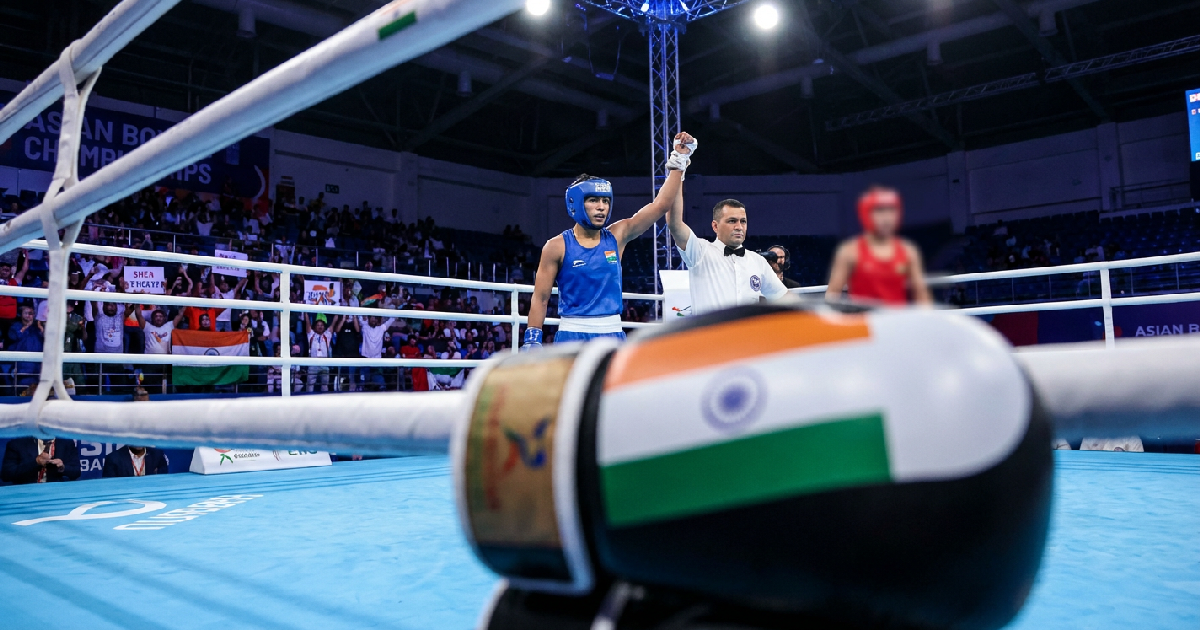
India’s standing in the regional boxing hierarchy has been reaffirmed this month as a significant portion of the national contingent secured places in the gold-medal rounds of the Asian Boxing Championships. Following a series of grueling semi-final encounters, multiple Indian pugilists have advanced to the final stage, positioning the country for a potentially historic haul at one of the amateur circuit’s most prestigious events.
The performance reflects a sustained period of investment in the national program, which has increasingly focused on technical aggression and conditioning. While the championships have seen stiff competition from traditional powerhouses like Uzbekistan and Kazakhstan, the Indian depth across both the men’s and women’s divisions has proven to be a defining story of the tournament.
Dominance Across Weight Categories
The path to the finals has not been easy. A number of the Indian finalists had to navigate through tricky split-decision victories against opponents from the Central Asian bloc, which is widely considered the gold standard in amateur boxing. The team’s success has been spread across several weight classes, suggesting that the coaching staff’s approach to individualizing training regimens is paying dividends.
And it isn’t just about the number of finalists. The manner in which these athletes have controlled the center of the ring has been a point of discussion among observers at the venue. By dictating the pace and utilizing a high volume of scoring punches, the Indian contingent has managed to sway the judges in close rounds that might have gone the other way in previous cycles.
Tactical Shifts and Conditioning
Reports from the competition indicate that the Indian boxers have exhibited a marked improvement in their third-round stamina. In the amateur format, where three rounds move at a frantic pace, the ability to finish strong is often the difference between a podium finish and an early exit. Those advancing to the final day have reportedly shown a high level of tactical flexibility, switching from counter-punching to aggressive stalking depending on the perceived scoring.
The pressure is now on to convert these final appearances into gold. Entering a final is a feat in itself, but the psychological hurdle of facing elite opposition with a championship on the line is a different animal. So, the upcoming bouts will serve as a crucial barometer for where these athletes stand ahead of other international assignments expected later in the year.
Rising Contenders and Established Names
While the roster of finalists represents a mix of seasoned veterans and emerging talent, the collective result signals a healthy state of transition in some categories. Younger boxers have managed to displace higher-seeded opponents, suggesting that the domestic pipeline remains productive. This internal competition has forced the established names to sharpen their skill sets, resulting in a more polished national squad.
The women’s side, in particular, continues to be a bastion of strength for the team. Their defensive maneuvers and ability to work the body have been highlights of the tournament. On the men’s side, the focus has reportedly shifted toward a style that emphasizes long-range boxing, utilizing the jab to set up power shots rather than engaging in high-risk brawls.
Looking Ahead to the Final Bouts
As the tournament reaches its climax, the focus shifts to recovery and strategy. Facing champions from nations like Kyrgyzstan or Thailand requires a specific blueprint. The Indian coaching staff is expected to be reviewing footage of the semi-finals to identify flaws in their opponents’ guards. For those involved in the upcoming gold-medal bouts, the goal is to maintain the discipline that brought them this far and avoid the tactical errors that can occur when the stakes are at their highest.
Boxing Media Context
The Asian Boxing Championships are often cited as one of the toughest regional tournaments in the world. Many of the gold medalists at this level frequently go on to win medals at the World Championships and the Olympic Games. A high volume of finalists typically indicates that a national team is maintaining its status as a premier boxing power in the region, capable of competing with the historical dominance of the Central Asian nations.