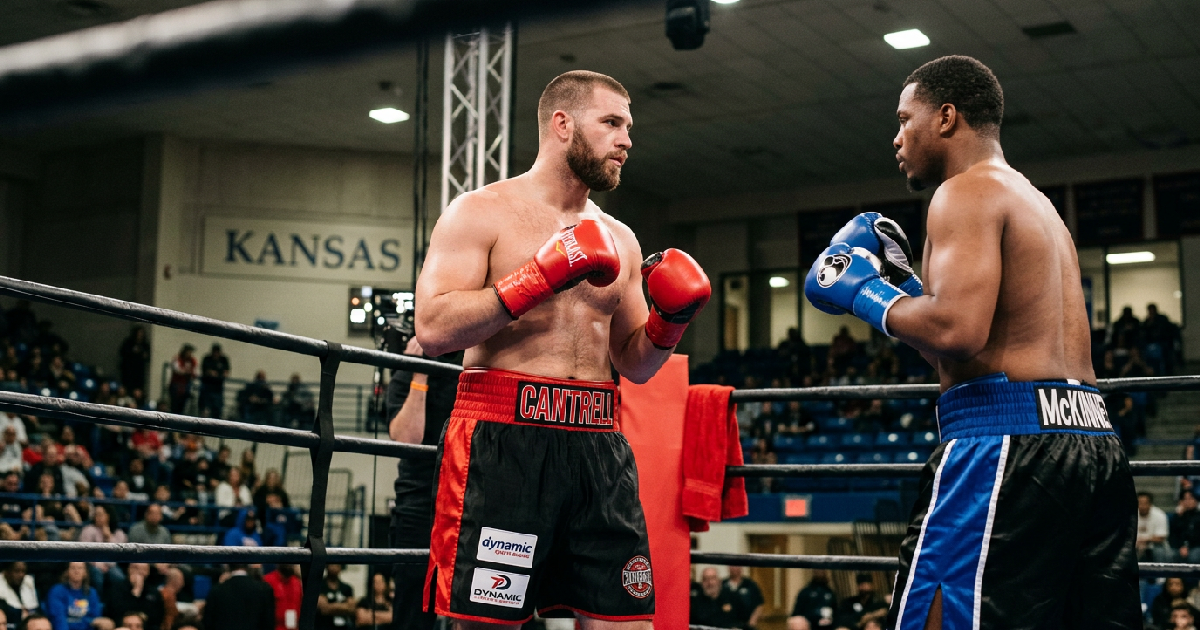
American heavyweight John Cantrell is set to return to the ring this weekend with a perfect 17-0 record, looking to move one step closer to the division’s top ten rankings.
The Kansas native, who remarkably did not start boxing until the age of 31, faces Matthew McKinney in a bout that could extend his professional tally to 18-0 with 16 knockouts.
Cantrell credits his unusual late-career surge to the inspiration he draws from his disabled son, a motivation that he says has fueled his five-year journey from a novice to a rising heavyweight contender.
Cantrell’s story stands out even in a division known for late bloomers. Away from the bright lights and the violence of the ring, he serves as a recovery pastor and motivational speaker. His decision to lace up the gloves long after most prospects have peaked was a message to his family.
“This was all for my disabled son,” Cantrell told World Boxing News. He views his career as living proof that individuals can pursue their dreams regardless of their circumstances.
The heavyweight landscape in the United Kingdom and the United States is currently shifting as the era of Deontay Wilder begins to fade. While fans often discuss the heavyweight rise of Moses Itauma as a young phenom, Cantrell offers a different narrative arc.
He represents a group of American heavyweights, including Joshua Edwards and Pryce Taylor, who are currently jockeying for position to restore U.S. dominance in the glamor division.
Late start provides unique path for Kansas heavyweight
Starting a boxing career at 31 is typically considered a recipe for failure, but Cantrell has defied the odds by maintaining a staggering knockout ratio over his first 17 fights. He admitted that he never expected to reach this level of professional success in just five years.
By entering the sport with “old man strength” and a clear purpose, he has bypassed the traditional amateur seasoning that many of his peers underwent as teenagers.
His upcoming opponent, Matthew McKinney, represents the immediate hurdle between Cantrell and the higher echelons of the rankings. McKinney is described as a large, hard-hitting fighter who comes to win. Cantrell’s strategy for the weekend involves using a combination of patience and what he describes as “never-ending endurance” to pull his opponent into deep water during the later rounds.
His mindset remains grounded in his faith and his role within his community. As a pastor, he navigates the mental toll of the sport with a specific perspective, stating that “God gets the glory” while he keeps the personal joy of the achievement. This mental fortitude is often what separates contenders from the pack, especially when facing the physical adversity of a professional heavyweight contest.
Challenging the elite names at heavyweight
Despite his relative lack of experience compared to world-class veterans, Cantrell has expressed a willingness to face the most dangerous names in boxing. He has publicly mentioned Oleksandr Usyk, Agit Kabayel, and Andy Ruiz Jr. as potential future opponents.
While some might consider this ambitious, Cantrell believes that sharing the ring with such elite talent would be both an honor and the ultimate test of his journey.
The heavyweight division has recently seen several established prospects stumble, notably Richard Torrez Jr. following his defeat to Frank Sanchez. Cantrell, however, remains optimistic about the future of American heavyweight boxing. He recently praised fellow prospects like Joshua Edwards, noting that the country needs more representatives in the top ten. Even com/anthony-joshua-dismisses-jake-paul-s-injury-with-that-s-figh/”>veterans like Anthony Joshua have seen that the division can be unforgiving to those who are unprepared for its sudden shifts.
For Cantrell, the clock is naturally ticking faster than it would for a 20-year-old. Every fight is a high-stakes gamble to move toward a title shot before age catches up with his athleticism.
If he manages to secure his 18th victory this weekend, the pressure on major ranking bodies to include him in the conversation for a significant eliminator will only increase. Success would validate his five-year experiment and provide a powerful conclusion to his “Iron Man” story.
The impact of family and personal motivation
The parallels between Cantrell’s motivation and other famous heavyweights are clear. Former champion Deontay Wilder famously entered the sport at 20 to support his daughter, Naieya, who was born with spina bifida. Similarly, the father of prospects like Billy Long Jr.
, who is 36, has used boxing to empower his son through challenges like autism. Family has always been a primary driver for some of the sport’s most resilient characters.
Cantrell’s son remains the focal point of his career’s “why.” He told reporters that time was against him from the start, but that his son’s presence made the risk worthwhile. This clarity of purpose has allowed him to endure the rigorous training required to compete as a heavyweight in his late thirties.
It turns each bout from a simple athletic competition into a public demonstration of perseverance for his community and his family.
And while the physical demands of the sport are immense, Cantrell’s lack of a long, bruising amateur career may actually extend his shelf life. He enters the ring this weekend with less accumulated damage than many younger fighters who have been hit since childhood.
The Kansas native is betting that his fresh legs and unwavering motivation will be enough to overcome McKinney and keep his dream of a heavyweight title shot alive.