
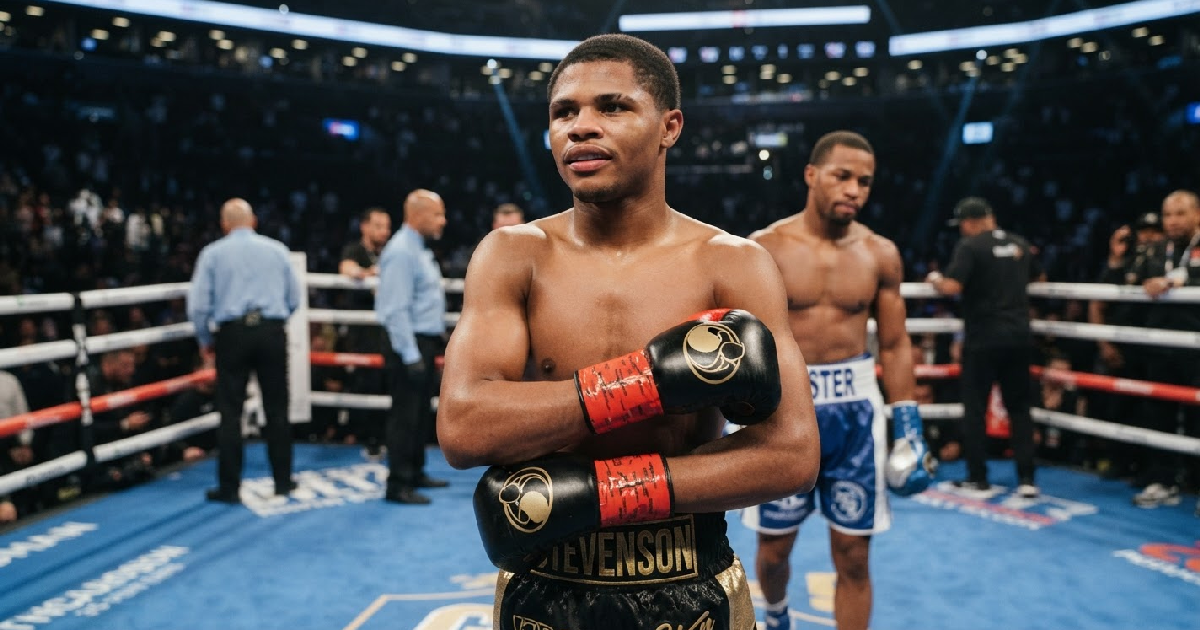
WBO light welterweight champion Shakur Stevenson has publicly rejected a potential fight with O’Shaquie Foster, dismissing him as a “130 pounder” and signaling his intent to pursue other opponents. This firm stance comes despite significant fan pressure and a prior verbal agreement between the two fighters, drawing considerable attention across the boxing world as of today, July 21, 2026.
Stevenson, American professional boxer Ash-Shakur Nafi-Shahid Stevenson, a decorated four-division world champion, took to social media to push back against criticism over his decision to bypass Foster. He made it abundantly clear he didn’t owe anyone an explanation for his choices, further intensifying the ongoing rivalry with Foster, who reigns as the current WBC super featherweight champion.
Shakur Stevenson Dismisses Foster’s Challenge
Shakur Stevenson didn’t hold back when addressing fans on X (formerly Twitter) who questioned his decision regarding O’Shaquie Foster. “I owe myself my word about that nigga? I don’t got no loyalty towards him like I said Lamont Gary and Muratalla are all better options then fighting a 130 pounder..
If I’m gone be hated regardless I don’t owe yall shit either keep hating I’m gone continue to elevate,” Stevenson wrote, making his position unequivocally clear to his followers.
These pointed remarks followed a FightHype interview where Stevenson, the 29-year-old from Newark, New Jersey, had already questioned what O’Shaquie Dominique Williams Foster has truly accomplished at lightweight. Instead of entertaining a matchup with Foster, Stevenson highlighted Lamont Roach, Gary Antuanne Russell, and Raymond Muratalla as more appealing contenders for his next bout, listing them as his preferred options.
The Unsigned Verbal Agreement Sparks Controversy
The rivalry between Shakur Stevenson and O’Shaquie Foster has been brewing for months, notably since May 30. That’s when Foster successfully defended his WBC super featherweight title against Raymond Ford, a fighter who trains alongside Stevenson, adding a personal dynamic to their budding conflict.
After Foster’s victory, the two champions exchanged words in the ring. This heated exchange led to Foster publicly challenging Stevenson to meet him at either 135 or 140 pounds. Stevenson verbally agreed to the fight on live television, creating significant buzz among fans who anticipated a high-profile showdown between the two.
But despite that widely televised, heat-of-the-moment agreement, no contracts were ever signed to formalize the bout. Stevenson ultimately moved past the option, signing a new multi-fight promotional deal with Zuffa Boxing on July 9, 2026. He then quickly shifted his focus towards other potential targets, including pound-for-pound star Devin Haney, indicating a clear change in his career strategy.
Stevenson’s Career Trajectory and Weight Class Strategy
Shakur Stevenson, who was born on June 28, 1997, boasts an impressive undefeated professional record of 25-0 with 11 knockouts. He secured his current WBO and Ring magazine junior welterweight titles in January 2026 by defeating Teofimo Lopez by unanimous decision, a win that cemented his status as a formidable four-division world champion.
His insistence on repeatedly referring to Foster as “a 130 pounder” clearly underscores Stevenson’s argument that a fight with him lacks the championship value or financial incentive of other available matchups at his current weight. Foster, meanwhile, remains the reigning WBC super featherweight champion, a division typically capped at 130 pounds.
Navigating Weight Class Implications for Top Fighters
The disparity in weight classes plays a crucial role in Stevenson’s decision to avoid O’Shaquie Foster. While Foster has expressed willingness to move up to 135 or 140 pounds, Stevenson doesn’t seem to view that as sufficient to make the fight compelling from his perspective, perhaps seeing limited gain.
Stevenson’s move to the light welterweight division, set at 140 pounds, represents a calculated climb through boxing’s ranks. This progression makes a potential return to face a smaller opponent less attractive from a career advancement standpoint. For many champions, like those navigating mandatory defenses such as in the case of Dmitry Bivol versus David Benavidez, strategic opponent selection is paramount.
Stevenson spent his first 22 professional fights with Top Rank Boxing, later signing with Matchroom Boxing in 2024. His last three fights were promoted primarily by Turki Alalshikh’s Riyadh Season before his recent deal with Zuffa Boxing. This varied promotional history suggests a fighter constantly seeking the best opportunities and matchups.
Fan Expectations Versus Fighter Strategy
The boxing world frequently sees a clash between avid fan expectations and a fighter’s strategic career planning. Fans, often fueled by heated in-ring confrontations and social media exchanges, tend to demand immediate resolution to perceived rivalries and big fights.
Stevenson’s verbal agreement with Foster on live television certainly built that anticipation, creating a sense of a guaranteed showdown that captivated audiences. However, the business of boxing involves intricate negotiations, complex promotional deals, and a careful, often calculated, opponent selection process.
Promotional freedom and careful opponent selection are often key factors for top-tier boxers in mapping out their careers. From Stevenson’s perspective, taking a fight against someone he deems a “130 pounder,” even if they move up, might not offer the same financial or legacy benefits as pursuing opponents like Devin Haney.
The “Theatrical” Moment Draws Scrutiny
Critics widely suggest Stevenson’s in-ring challenge after the Foster-Ford fight was merely a “theatrical performative” move designed to grab headlines. They argue he initially sought the spotlight in the heat of the moment but later retreated once serious fight negotiations would have begun, raising questions about his sincerity and commitment.
This perception can unfortunately erode fan trust in a fighter, but athletes often weigh their options very carefully away from the cameras and immediate hype. It’s a delicate balance for figures like Stevenson, who must manage public perception while also making pragmatic career decisions, much like how Terence Crawford navigates career decisions amidst various rumors and pressures.
His recent deal with Zuffa Boxing on July 9, 2026, signals a clear strategic direction, moving him away from the Foster challenge. This prioritisation demonstrates a clear focus on fights that align with his trajectory as a world champion in higher divisions, aiming for undisputed status.
Implications for Boxing’s Championship Landscape
Stevenson’s firm rejection of O’Shaquie Foster has immediate ripple effects across multiple weight classes and championship aspirations. For the junior welterweight division, it reinforces Stevenson’s focus on unifying titles or facing other top contenders there, like his reported pursuit of Devin Haney, which would be a monumental clash.
For O’Shaquie Foster, who had expressed a clear willingness to move up in weight, this decision means he’ll likely need to seek other high-profile opponents if he wants to make a name for himself in a higher division. He could also remain a dominant force at super featherweight, continuing to defend his current title and build his legacy there.
Future Matchmaking Challenges Remain
Matchmaking in professional boxing is rarely straightforward, as Stevenson’s recent decision vividly illustrates for observers and pundits alike. This situation highlights the complex factors at play, including specific weight classes, existing promotional affiliations, and the perceived market value and appeal of a potential fight.
While fans consistently crave exciting matchups, champions often prioritize strategic advantages and maximum returns on their investment of time and training. This scenario also raises questions about the long-term future of verbal agreements made in the heat of a post-fight moment, as they often dissolve without signed contracts, leaving fans disappointed.
Ultimately, Stevenson’s path seems clearly set towards bigger names in his current division, emphasizing his ambition for top-tier fights. This leaves Foster to forge his own path forward, whether that’s continuing his reign at super featherweight or moving up to challenge other contenders who might welcome him to their division.