Former WBO heavyweight champion Shannon Briggs recently named boxing legend George Foreman the strongest heavyweight he ever faced, also identifying him as the hardest puncher of his career. Briggs made this candid admission during an appearance on the JAXXON Podcast, reflecting on the immense power of his past opponents.
This insight, reported by news outlets on November 12, 2023, comes nearly three decades after their memorable 1997 bout, where Briggs ultimately defeated Foreman. His recent comments offer a rare glimpse into the physical and psychological toll of facing a fighter of Foreman’s caliber, even an aging version of the two-time world heavyweight champion.
The enduring impact of George Foreman’s power
Shannon Briggs didn’t mince words when describing the overwhelming force behind George Foreman’s punches. He recounted feeling a profound disorientation after their fight, vividly stating, “He hit me so hard I couldn’t believe, I couldn’t sleep for two weeks. He gave me vertigo, he was hitting hard.”
Briggs was a youthful 25 years old at the time of their encounter, a significant contrast to Foreman’s 48 years and 10 months. Yet, the raw power of “Big George” transcended the age gap, making a lasting impression on the younger contender.
Unforgettable force and physical toll
Comparing Foreman’s impact to an almost otherworldly experience, Briggs remarked, “I had never felt nothing like that in my life.” He further elaborated that while being hit by a car might be similar, Foreman’s punches were “different… it’s like metal,” underscoring their unique, brutal quality.
Revisiting the controversial 1997 title clash
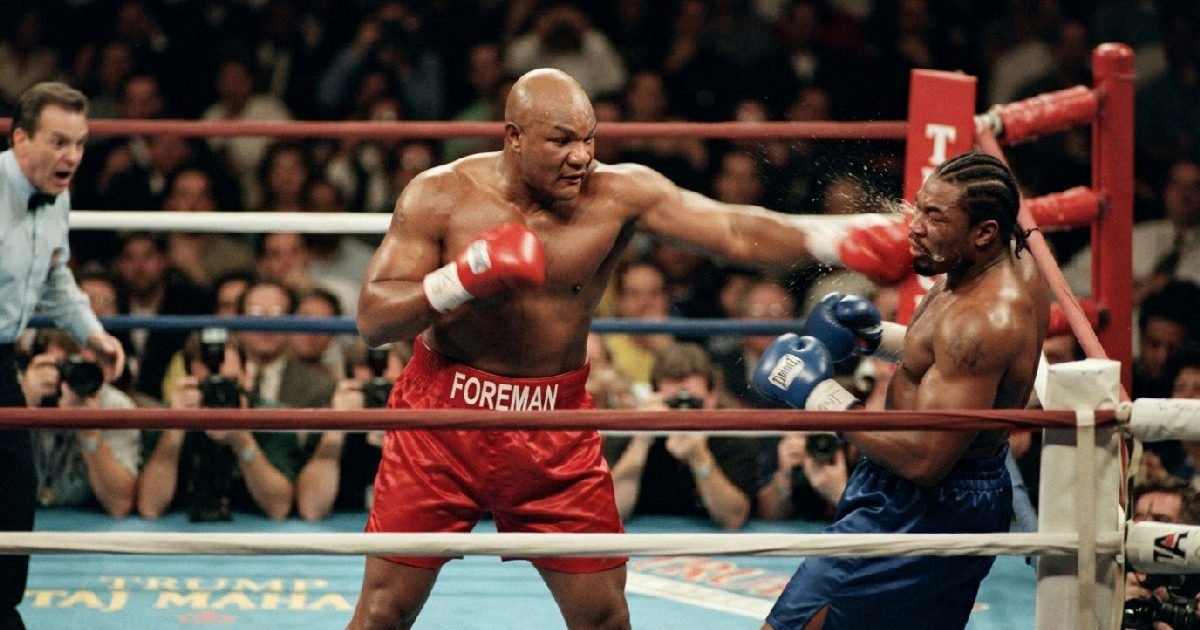
The highly anticipated showdown between Shannon Briggs and George Foreman took place on November 22, 1997, at the Trump Taj Mahal in Atlantic City, New Jersey. The fight had the lineal heavyweight championship on the line, adding significant stakes to the contest.
Briggs emerged victorious by a 12-round majority decision, with scorecards reading 114-114, 116-112, and 117-113. However, the decision was not without controversy, as many observers, including HBO’s Harold Lederman, believed Foreman had done enough to win the fight.
A disputed victory for Briggs
Despite the contentious outcome, the statistics revealed Foreman’s consistent aggression, landing 284 of 488 punches, a remarkable 58% connect rate. Briggs, meanwhile, connected on 223 of 494 punches, totaling 45%.
The event drew a respectable crowd of 5,220 spectators and generated substantial viewership, with 3.35 million average viewers on HBO. George Foreman received a significant purse of $5,000,000 for his efforts, while Briggs earned $400,000 for his career-defining win.
This bout marked a pivotal moment, as it would ultimately be George Foreman’s last professional fight. His performance against a much younger, hard-hitting opponent solidified his legendary status, even in defeat.
Briggs’s career: evolution and formidable foes
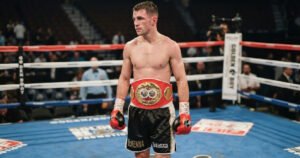
Known as “The Cannon,” Shannon Briggs carved out an impressive professional career spanning from 1992 to 2016. He amassed a formidable record of 60 victories, with an incredible 53 coming by way of knockout, boasting an 88.3% knockout-to-win ratio.
Briggs secured the lineal heavyweight title from 1997 to 1998, a title he won by defeating Foreman. He later added the WBO heavyweight title to his accolades in 2006 by dramatically knocking out Siarhei Liakhovich in the final round.
Past assessments of power and strength
While Shannon Briggs once claimed British-Canadian great Lennox Lewis was the “strongest fighter” he faced in a feature with The Ring Magazine, his most recent assessment on the JAXXON Podcast firmly places George Foreman at the top. Briggs explicitly named Foreman as the strongest heavyweight he ever encountered, also identifying him as the hardest puncher he faced.
Lewis defeated Briggs on March 28, 1998, stopping the American in the fifth round at the Boardwalk Hall in Atlantic City. This fight saw Lewis successfully defend his WBC heavyweight title and caused Briggs to lose his lineal status, highlighting the formidable challenge Lewis presented. Lewis himself once stated Briggs possessed some of the fastest hands and best punching power he ever encountered.
Another monumental challenge for Briggs came against Vitali Klitschko on October 16, 2010, for the WBC heavyweight championship. Klitschko won by unanimous decision, inflicting a severe beating on Briggs that resulted in multiple injuries, including a left orbital fracture and a broken nose.
After this brutal contest, Briggs famously stated that Vitali was “the best” and hit “harder than Foreman,” further elaborating on the diverse definitions of power and strength he experienced. This discussion echoes other fighters’ reflections on their toughest opponents, like when Shawn Porter named Terence Crawford as the best he faced.
A boxing legend’s nuanced perspective
Shannon Briggs’s reflections offer valuable insight into the diverse attributes of elite heavyweights. Having shared the ring with a who’s who of boxing legends, his assessment carries significant weight within the sport, sparking ongoing debate among boxing enthusiasts.
His candid commentary serves as a reminder that “power” can manifest in different forms, from the concussive force of George Foreman to the relentless pressure and technique of a fighter like Vitali Klitschko. These personal accounts enrich the historical narrative of heavyweight boxing.
Foreman’s ability to inflict such damage, even in his late 40s, speaks volumes about his inherent power and technique. His boxing career, marked by two reigns as world heavyweight champion, underscores a rare blend of longevity and destructive force. You can also explore Moses Itauma’s view on Oleksandr Usyk, another modern titan.
Heavyweight dominance: continuous debate and legacy
The conversation around who the “strongest” or “hardest-hitting” fighter is remains a constant in boxing. Briggs’s varied statements on Foreman, Lewis, and Klitschko highlight how individual experiences shape these perceptions, often changing over time or with new reflections.
These discussions not only celebrate the sport’s history but also inform contemporary evaluations of power and technique. The ability to generate fight-ending power is a crucial, if sometimes indefinable, element that separates good heavyweights from true legends.
As the heavyweight division continues to evolve, the benchmark set by icons like Foreman and Lewis remains a yardstick for current champions. Fighters like Tyson Fury and Anthony Joshua continue to chase the legacy of power and dominance established by their predecessors. These ongoing comparisons fuel fan debate and media coverage, keeping the sport vibrant.
The nuances of raw strength, punching power, and overall ring generalship are often intertwined in a boxer’s assessment of an opponent. Briggs’s recent remarks about George Foreman ensure that the discussion about the sport’s most formidable figures will continue for years to come.