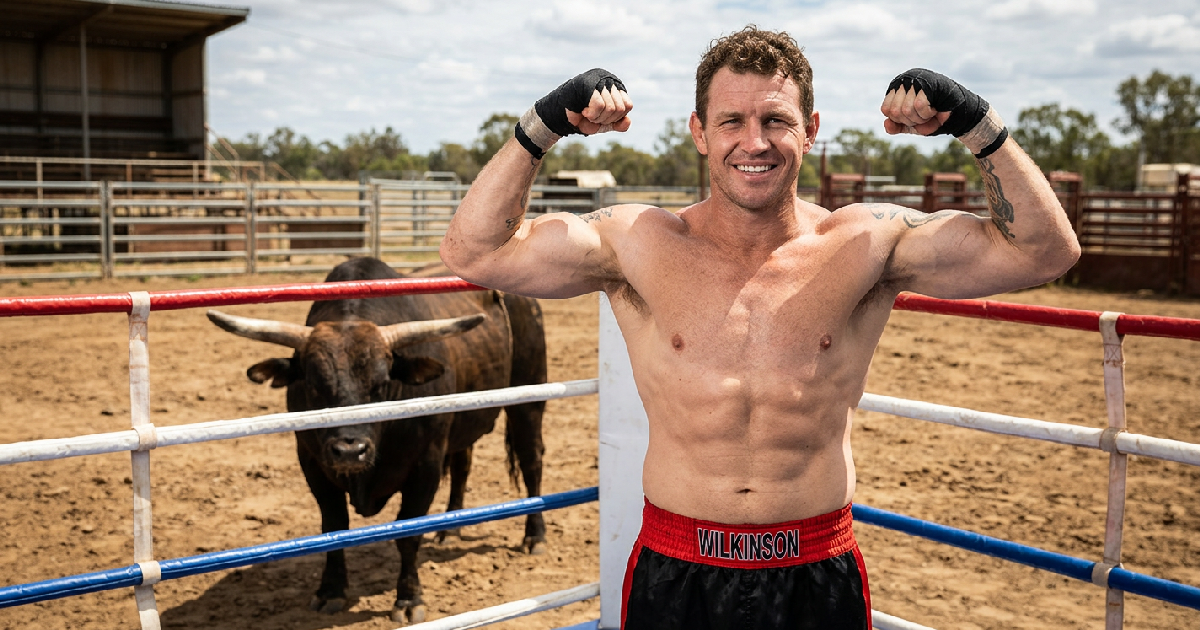
Professional rodeo champion Troy Wilkinson is officially transitioning from bull riding to the heavyweight boxing circuit, trading the dust of the arena for the canvas of the ring. The New South Wales native, who earned a title in the Professional Bull Riders (PBR) circuit, has pivoted toward a career in professional fighting. This move follows a storied career in one of the world’s most dangerous sports, where Wilkinson established himself as a dominant presence before deciding to swap his spurs for sixteen-ounce gloves.
The transition from animal athletics to combat sports isn’t entirely unprecedented, but Wilkinson’s pedigree as a national champion brings a unique level of intrigue to the Australian boxing scene. He faces the daunting task of mastering technical nuances late in his athletic career, yet his background in rodeo has reportedly provided him with the physical durability and mental fortitude required for the professional ranks. He joins a growing list of crossover athletes looking to make their mark in a sport that remains one of the most demanding disciplines in the world.
Heavyweight boxing in Australia is currently enjoying a period of heightened visibility, with domestic talents frequently making waves on the international stage. Wilkinson enters this fray with a reputation for toughness that precedes him. But the mechanics of the ring are fundamentally different from staying upright on a bucking beast. The timing, footwork, and cardiovascular demands of multiple rounds of boxing present a challenge that differs significantly from the short, anaerobic sprints of professional bull riding.
From the PBR Arena to the Boxing Ring
Wilkinson’s decision to move into boxing was reportedly not a snap judgment. Sources close to the athlete indicate he has been training privately for some time to ensure his fundamentals are sound before stepping under the bright lights of a televised show. The Australian heavyweight landscape is notoriously competitive, and while he may be among the most dangerous boxers in terms of raw physical strength, he will need to prove he can handle the tactical pressure of a seasoned opponent.
The rodeo veteran’s entry into the sport comes at a time when boxing is increasingly embracing high-profile personality matches and crossover stars. However, Wilkinson has signaled that he is not looking for a “celebrity” path. Instead, he reportedly intends to climb the traditional rankings, starting with domestic bouts that will test both his chin and his ability to counter-punch. His training camp has focused heavily on stripping away the rigid posture of a rider to develop the fluid, rhythmic movement essential for professional boxing.
Adapting Rodeo Strength for Combat
The core strength required to stay mounted on a bull is immense, and Wilkinson aims to translate that functional power into his punching ability. Trainers have noted that his grip strength and balance are already at a high level. These attributes are often vital in the clinch and when moving a larger human opponent around the ring. The question remains whether his aerobic capacity can match his explosive power over the course of a full fight.
Wilkinson isn’t the only one seeking a new path in a changing industry. Just as figures like Dalton Smith secure their future through long-term promotional deals, Wilkinson will eventually need the backing of a major Australian promoter to move beyond the local club show circuit. His name recognition in the rural heartlands of Australia gives him a built-in fan base that few debutants can claim.
Developmental Path for the Heavyweight Prospect
Australia has a long history of rugby players and AFL stars trying their hand at boxing, often with varying degrees of success. Wilkinson representing the rodeo community adds a fresh flavor to this trend. The mental toughness required to face a massive animal is arguably comparable to the nerves needed to face a heavy hitter in the ring. This psychological edge could prove to be his greatest asset during the middle rounds when fatigue sets in.
The heavyweight division has always been the primary attraction in boxing, and a charismatic brawler with a unique backstory is often a promoter’s dream. If Wilkinson can demonstrate technical proficiency, he could become a legitimate draw in the domestic market. We have seen how the rankings can shift rapidly with the arrival of new talent, and the Australian scene is currently looking for fresh heavyweight protagonists.
The path forward for Wilkinson is expected to involve a series of developmental fights to build his experience. If he can remain undefeated and show improvement in his defensive movement, his team is expected to target domestic title opportunities in the future. For now, the Australian public is watching closely to see if this bull rider can truly master the “sweet science” and navigate the risks of a division where one mistake can end a career prematurely.
Frequently Asked Questions
What made Troy Wilkinson decide to switch from rodeo to boxing?
After achieving success as an Australian PBR champion, Wilkinson sought a new competitive challenge that tested his physical limits in a different way. He has reportedly held a long-standing interest in combat sports and felt the transition was appropriate while he remains in his athletic prime.
Will he continue to participate in professional bull riding events?
Reports suggest that Wilkinson is shifting his primary focus to boxing to ensure he can dedicate the necessary time to training and recovery. It is considered unlikely that he will compete in high-level rodeo events simultaneously due to the risk of injury.
What weight class will Troy Wilkinson compete in?
Given his natural size and the strength developed during his years on the rodeo circuit, Wilkinson is campaigning in the heavyweight division. This allows him to utilize his natural power without the grueling weight cuts associated with lower divisions.