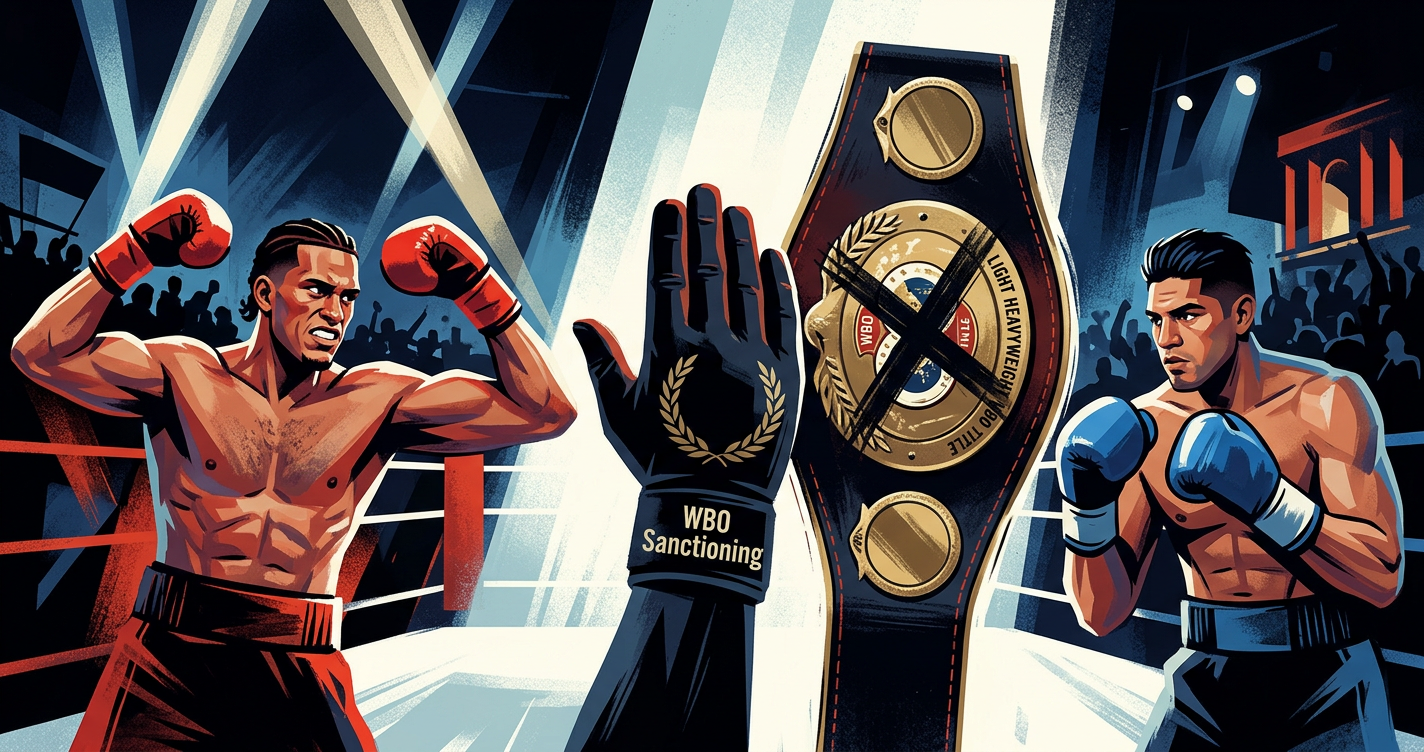
The World Boxing Organization has formally declined to sanction the upcoming clash between David Benavidez and Gilberto “Zurdo” Ramirez as a title fight, dealing a significant blow to the promotion’s attempt to unify a division that remains in a state of political gridlock. While the bout is still expected to headline a Premier Boxing Champions (PBC) pay-per-view, the absence of the WBO belt at the weigh-in changes the stakes for both men.
The decision stems from a combination of mandatory obligations and a dispute over weight classes. Benavidez, who has spent the last year campaigning at light heavyweight after cleaning out most of the 168-pound division, was seeking immediate recognition from the Puerto Rico-based sanctioning body. However, the WBO has opted to protect the status of its current mandatory challengers, effectively telling the promoters that their “super-fight” doesn’t supersede the rules on the books.
Sanctioning politics stall the unification dream
It’s a classic boxing stalemate. PBC recently announced the undercard for the event, featuring David Morrell’s return, signaling they were full steam ahead. But the WBO’s refusal to put their title on the line means Ramirez and Benavidez are essentially fighting for bragging rights and a better position in the rankings, rather than a definitive piece of hardware.
The WBO’s stance is reportedly tied to the fact that Ramirez, a former champion at super middleweight and cruiserweight, hasn’t met the specific activity requirements in this weight bracket to jump the line. For Benavidez, the frustration is familiar. He’s spent years chasing the biggest names, only to find that the “alphabet soup” of boxing titles often creates more hurdles than pathways.
And let’s be honest: boxing fans are tired of the belt-chasing. While the hardcore contingent cares about the “undisputed” tag, the general public just wants to see the best fight the best. Benavidez and Ramirez are two of the most entertaining pressure fighters in the sport. The lack of a WBO strap doesn’t change the tactical intrigue of the matchup, but it does complicate the winner’s path toward a clash with Artur Beterbiev or Dmitry Bivol.
The impact on the light heavyweight landscape
This ruling leaves the 175-pound division in a bit of a mess. If Benavidez wins, he’s the clear “people’s champion” at light heavyweight, but he remains at the mercy of sanctioning bodies to force a shot at the remaining titles. Ramirez, on the other hand, loses the leverage he was hoping to gain by becoming a multi-time, multi-weight WBO champion.
The shifting broadcast landscape has already put pressure on promoters to deliver “clean” fights with clear stakes. When sanctioning bodies pull out, it makes the marketing job twice as hard for platforms like Amazon Prime and DAZN, who have to explain to a casual audience why a massive fight isn’t actually for a world title.
But there is a silver lining. Without the burden of sanctioning fees—which can take a 3% chunk out of each fighter’s purse—both camps might actually walk away with more money. Sometimes, the prestige of the belt isn’t worth the invoice that comes with it.
Dana White and the Zuffa Boxing factor
As the traditional boxing world continues to trip over its own shoelaces with sanctioning disputes, outside disruptors are watching closely. Dana White has been vocal about his plans to “fix” the sport, recently confirming Zuffa Boxing launch plans. One of the primary pillars of the UFC’s success is a singular title and a clear ranking system—exactly what the Benavidez-Ramirez situation lacks.
White’s model would likely ignore the WBO, WBC, and IBF entirely, creating an internal ecosystem where the best fight the best because the promoter says so, not because a committee in San Juan approved it. While White has been picky about which fights he’ll involve himself in—notably rejecting a Dustin Poirier vs. Nate Diaz boxing match—the Benavidez situation is the exact kind of “broken” boxing logic he frequently mocks.
What’s next for Benavidez and Ramirez
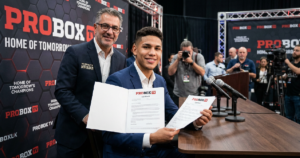
The fight will go on. Both fighters have already signed their contracts, and the training camps are well underway in high-altitude environments. Expect PBC to pivot their marketing toward the “interim” status or perhaps lean into a “WBC Diamond” title if that body remains on board.
The winner will remain the mandatory challenger for whichever champion emerges from the Beterbiev-Bivol saga, but they’ll have to wait a little longer to collect the full set of belts. For now, we get a great fight, even if the trophy case stays empty for another night.
Frequently Asked Questions
Why did the WBO refuse to sanction the fight?
Mainly because of existing mandatory obligations. The WBO has a “line” of challengers who have been waiting for their shot, and the organization felt that allowing Benavidez and Ramirez to jump that queue for a vacant or interim title would violate their own bylaws. There were also concerns regarding Ramirez’s recent activity in the specific weight class.
Is the fight still happening?
Yes. The fight is still scheduled as the main event of the upcoming PBC pay-per-view. It just won’t have the WBO world title on the line. It’s still a high-level bout between two top-tier light heavyweights that carries significant weight for future rankings.
Does this affect Benavidez’s status as a top contender?
Not in the eyes of the fans or the other sanctioning bodies. Benavidez is widely considered one of the best pound-for-pound fighters in the world. While not winning the WBO belt is a setback for his “undisputed” goals, a win over a name like Ramirez still makes him the man to beat at 175 pounds.