The machinery of professional boxing is grinding through its most significant structural shift in decades. While the sport has long been defined by a fractured system of promoters and rival networks, the recent alignment between Dana White’s Zuffa Boxing and Bob Arum’s Top Rank suggests a consolidation that few saw coming even twelve months ago. It isn’t just about making one-off fights; it’s about a fundamental change in how the sport’s business model is constructed.
Dana White and Bob Arum Find Common Ground
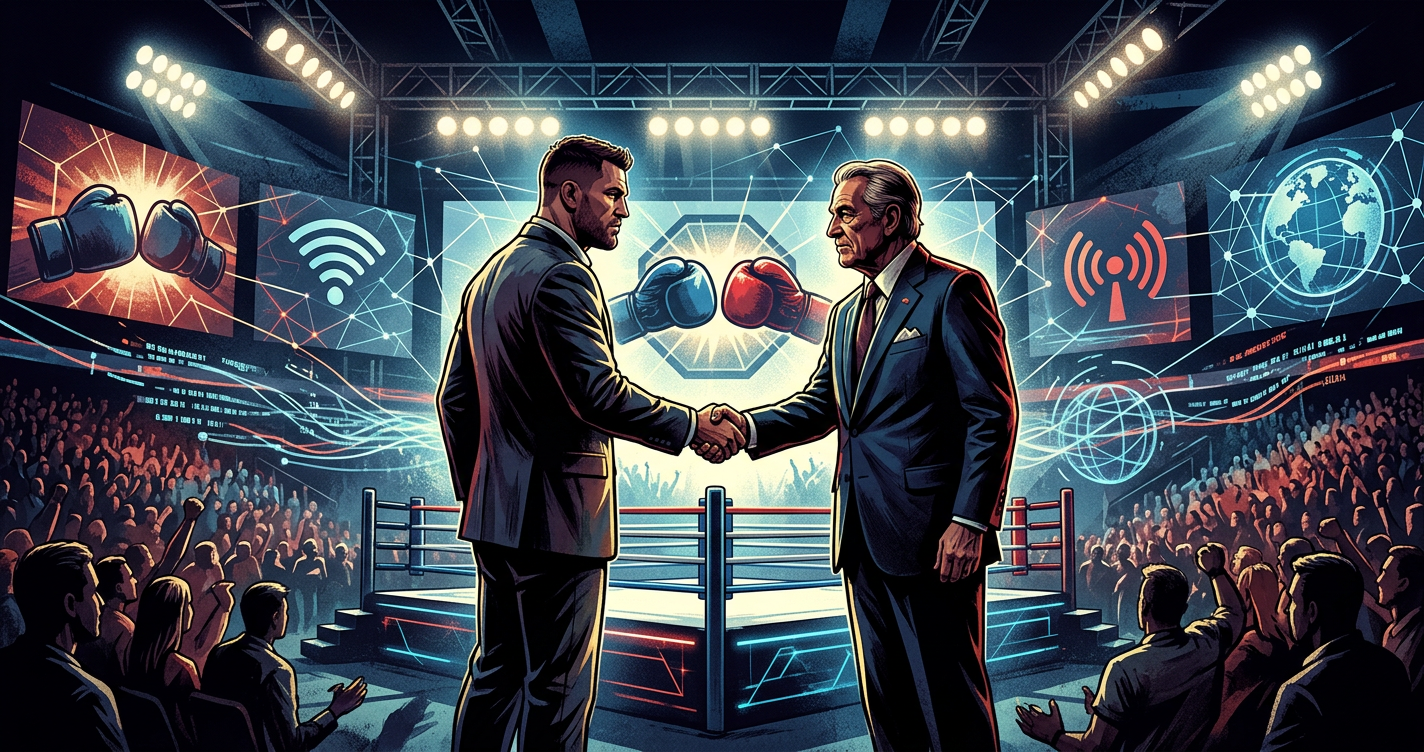
For years, the idea of Dana White and Bob Arum co-promoting an event seemed like a pipe dream. The two have traded public insults for over a decade, with White often criticizing the “dinosaur” model of boxing promotion and Arum dismissing the UFC’s pay structure. But the financial realities of 2026 have forced a truce. As Dana White confirms Zuffa Boxing launch plans, the partnership with Top Rank provides the logistical backbone he needs to enter the space without starting from scratch.
Top Rank holds one of the deepest rosters in the sport and an entrenched relationship with ESPN. Zuffa brings the marketing muscle and the production sleekness that turned the UFC into a multi-billion dollar entity. By pooling resources, they are positioning themselves to dominate the North American market, particularly against PBC and Golden Boy. This isn’t a merger, but it is a strategic alliance aimed at streamlining the path for elite amateur talent to turn pro under a unified banner.
Infrastructure Over Ego
The logic behind the deal is simple: infrastructure. Zuffa Boxing doesn’t want to spend five years building a scouting department when Top Rank already has one in every corner of the globe. Conversely, Top Rank has occasionally struggled to capture the younger, MMA-adjacent demographic that White commands with a single social media post.
We’ve already seen how this influences match-making. White is notoriously picky about “crossover” bouts that don’t satisfy his standard for elite competition. This was evident when Dana White rejected the Poirier and Diaz boxing match, despite the massive potential gate. He’s looking for legitimate boxing matches, not spectacle, and the Top Rank stable provides the “real” fighters he wants to promote. This rigid adherence to “pure” boxing over celebrity circus acts is a surprising pivot for a man who made his name in the entertainment-heavy world of the UFC.
Market Shifts and Broadcast Battles
The timing of this alliance coincides with a volatile period for sports media. The boxing broadcast landscape is shifting as streaming platforms and traditional cable networks fight for a narrowing slice of the subsciption pie. With Top Rank and Zuffa working together, they create a formidable block during rights negotiations. If they can offer a combined schedule that includes both traditional boxing cards and Zuffa’s high-energy productions, they become an “must-have” for any major sports broadcaster.
However, it isn’t all smooth sailing. Other promoters are digging in. Golden Boy has found a second wind through its partnership with DAZN, particularly with high-stakes matchups on the horizon. The recent news that DAZN involvement in the Ramirez-Benavidez fight has boosted Golden Boy’s standing shows that the market remains competitive. White and Arum might have the biggest machine, but they don’t have a monopoly on the talent or the audience’s attention.
The Road to a Unified Schedule
The real test of this partnership will be how it handles the “Big Fight” logistics. There is a long-standing frustration among fans regarding the inability to see the best fight the best due to promotional squabbles. If Zuffa and Top Rank can actually deliver a unified rankings system or a more consistent schedule of top-tier fights, it could force the rest of the industry to follow suit or risk irrelevance.
One upcoming litmus test involves the featherweight division. Michael Conlan is currently moving toward a massive opportunity, with Conlan eyeing a WBC title shot against Bruce Carrington in New York. Carrington is a Top Rank star; Conlan has his own massive following. How Zuffa chooses to market or interact with these existing Top Rank narratives will tell us everything we need to know about the long-term viability of this deal.
What This Means for the Fighters
For the athletes, the Zuffa-Top Rank alliance is a double-edged sword. On one hand, it offers a clearer path to mainstream stardom and potentially better production values. On the other, the consolidation of power usually leads to less leverage for the fighters themselves. If two of the biggest players are working together, there are fewer places for a fighter to go if they’re unhappy with their contract. It’s the “UFC-ification” of boxing—a move toward a more centralized, corporate structure that prioritizes the brand over the individual promoter’s ego.
Frequently Asked Questions
Is Dana White going to run Top Rank?
No. Bob Arum and Todd duBoef are still very much in charge of Top Rank’s operations. Think of it more as a joint venture where Zuffa handles much of the branding, marketing, and live production, while Top Rank handles the boxing operations and talent relations.
Will we see UFC fighters in Zuffa Boxing events?
Occasionally, but don’t expect it to be a freak show. White has been vocal about wanting Zuffa Boxing to stand on its own as a legitimate boxing promotion. While he might use a UFC name to sell 100,000 extra PPVs, the core focus is on signing and developing actual boxers.
Does this mean more fights will move to ESPN+?
It’s likely. The relationship between ESPN and both Top Rank and the UFC is already strong. This deal makes the “Value Pack” of combat sports on ESPN much more enticing for the network, potentially leading to more frequent, high-profile cards on the platform rather than traditional PPV.