
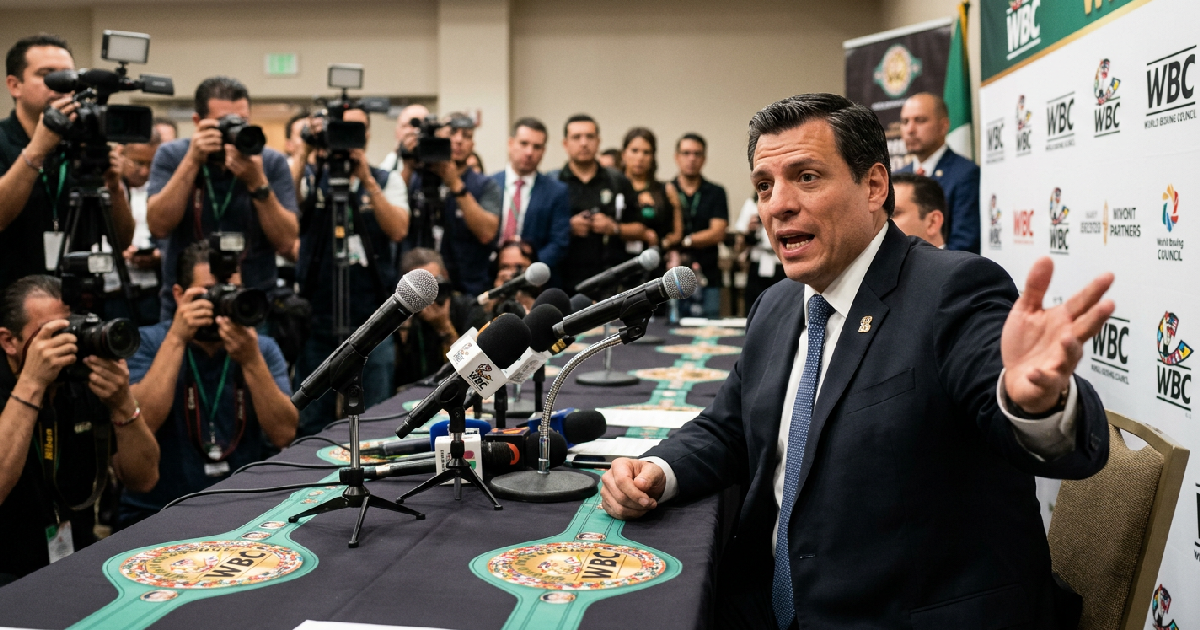
WBC President Mauricio Sulaimán has ignited a new firestorm in the boxing world after reportedly describing the retirement of former undisputed champion Terence Crawford as “cowardly” during a recent media appearance. The verbal broadside comes as the latest chapter in a fractious relationship between the sanctioning body head and the pound-for-pound star, suggesting that Crawford’s departure from the ring was a calculated maneuver to avoid certain administrative or competitive obligations.
The friction between the two figures appears to have peaked following high-profile bouts where Crawford’s dissatisfaction with the sanctioning body system became a matter of public record. While Crawford is widely regarded as one of the top 10 most dangerous boxers 2026, his willingness to challenge the traditional “alphabet” title structure has made him a polarizing figure in the sport’s boardroom. By stepping away from active competition with an undefeated record, Crawford has arguably signaled a shift in how elite fighters view the necessity of these organizational accolades.
Sulaimán’s sharp rhetoric is widely interpreted as a response to disagreements regarding sanctioning fees. Reports suggest that throughout negotiations for major fights, the WBC may have offered fee structures that Crawford ultimately rejected. The fighter has been vocal about his view that championship belts can sometimes resemble expensive trophies, prioritizing the recognition of the global boxing public over the official stamps of approval from administrative bodies.
A Dispute Over Fees and Administrative Legacy
The financial undercurrents of this dispute are hard to ignore. When a fighter of Crawford’s caliber retires, it represents a departure from the ecosystem that generates significant revenue for organizations through sanctioning percentages. His absence from the active roster removes the possibility of future blockbuster bouts that would have bolstered the WBC’s influence in the welterweight or super middleweight landscapes.
Crawford has reportedly expressed a preference for alternative honors, such as the Ring Magazine belt, which does not require the same level of recurring fees as the major sanctioning bodies. This stance represents a direct challenge to the traditional business model of the sport. As the Matchroom Boxing strategy under Eddie Hearn continues to prioritize commercial star power, Crawford’s decision to “vote with his feet” may inspire other top-tier athletes to negotiate more aggressively with organizations or bypass them altogether.
From Sulaimán’s perspective, the “cowardly” label likely targets Crawford’s exit from these political and financial negotiations rather than his legendary performances inside the ropes. By retiring at the pinnacle of the sport, Crawford effectively removed the WBC’s ability to discipline him or strip him of his titles, leaving the organization to watch from the sidelines as the fighter moved on to the next chapter of his life.
The Impact of the Administrative Fallout
The tension reportedly escalated following major clashes in Las Vegas where Crawford’s social media activity suggested a total lack of concern for the prestige of the green belt. For Sulaimán, whose family management of the organization has spanned several decades, such dismissive attitudes are often viewed as deep-seated insults to the history of the sport.
This situation highlights a growing trend where elite fighters are realizing their personal brands carry more weight than the belts they hold. We have seen similar shifts in how other rising stars manage their careers; for instance, as Dalton Smith secured his future through long-term promotional deals, the focus often lies on personal career stability over the accumulation of every possible sanctioning body title. Crawford, however, took a more direct approach by signaling that the sport’s heritage is defined by the fighters, not the organizations that govern them.
Future Matchups and Vacant Titles
With Crawford currently inactive, Sulaimán is pivotting to promote a new wave of contenders willing to operate within the WBC’s framework. Contenders in the super middleweight and light heavyweight divisions are expected to move into the positions left vacant. The focus has shifted back to ensuring that mandatory challengers remain active part of the organization’s ecosystem.
The fallout from this dispute could have lasting implications for how fight contracts are structured in the future. The Crawford precedent suggests that the era of fighters paying significant portions of their earnings to multiple sanctioning bodies without question may be evolving into a more transactional, case-by-case relationship.
What Lies Ahead for the WBC and Crawford
Despite the harsh words from Sulaimán, few expect Crawford to return to the ring simply to settle a grudge with a sanctioning body. Having secured his legacy across multiple weight classes, the fighter appears content with his current standing. His exit remains one of the most definitive in recent boxing memory, even if it lacked the formal cooperation that sanctioning bodies typically demand from their champions.
For the WBC, the challenge will be reasserting the relevance of their titles to a younger generation of fans who may prioritize pound-for-pound rankings over official championships. Labeling an all-time great with such provocative terms is a high-stakes strategy that risks alienating fans who see the fighter as the primary draw of the sport. Whether this remains a isolated feud or a harbinger of a broader movement toward a belt-less elite tier of boxing is the question now facing the industry.