
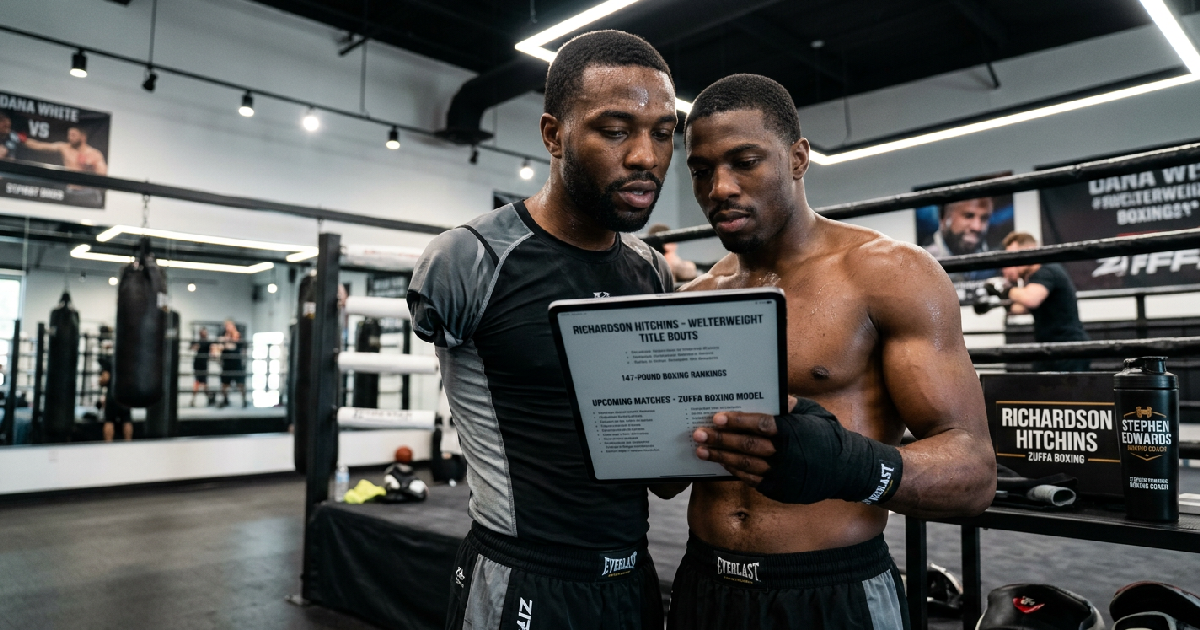
Respected coach Stephen Edwards believes Richardson Hitchins possesses the technical arsenal to conquer the 147-pound division, but the fighter’s shift to Zuffa Boxing has introduced significant questions regarding his championship trajectory. While Hitchins’ move to welterweight is viewed as a natural progression for a fighter of his caliber, the operational strategy of Dana White’s Zuffa Boxing could prioritize internal marquee matchups over traditional world title pursuits through sanctioning bodies like the WBC or IBF.
The assessment from Edwards comes at a pivotal moment for Hitchins, who has frequently been cited as one of the most mechanically sound operators in the sport. His ability to control distance and maintain tactical discipline has drawn comparisons to elite technicians, yet his career has occasionally been slowed by promotional friction and high-stakes negotiations. With a move to 147 pounds, he enters a weight class currently in a state of flux, offering a clear opening for a fighter with his particular skill set.
However, the promotional “X-factor” cannot be ignored. Zuffa Boxing represents a departure from the traditional model of the sport. If the company leans into the business structure that made the UFC a global powerhouse, the focus may shift toward building a proprietary ecosystem of stars rather than navigating the often-labyrinthine politics of the four major sanctioning organizations. This shift could effectively place Hitchins in a “league” of his own, where big-name fights take precedence over the acquisition of physical belts.
The Technical Transition to Welterweight
Moving up in weight requires more than just adding muscle; it requires a style that can negate the natural physical advantages of larger opponents. Edwards pointed out that the “eye test” suggests Hitchins is already performing at a level that justifies a title shot at welterweight. His defensive highlights and range management are often featured when analysts discuss the top 10 most dangerous boxers 2026, particularly those who rely on high-IQ boxing rather than raw power.
Hitchins has built a reputation as a “spoiler” in the best sense of the word—a fighter who prevents his opponents from ever getting comfortable. At 147 pounds, he will face harder punchers and physically imposing athletes, but his jab remains one of the most effective tools for keeping such threats at bay. The real challenge won’t just be the opposition in the ring, but the logistical hurdles that have previously delayed his rise through the ranks.
Overcoming Promotional Friction and Narrative Hurdles
Critics of Hitchins often point to a history of stalled negotiations and a perceived selectivity in his choice of opponents. In a sport where momentum is everything, these gaps can lead to a loss of public interest. By joining forces with Zuffa, Hitchins is clearly looking for a more streamlined path to the top, even if that path doesn’t look like a standard title climb.
The shift in representation comes as the industry is already seeing major moves from heavy hitters. For instance, Matchroom Boxing Hearn Zuffa strategy analysis highlights how established promoters are reacting to the entry of Dana White into the boxing space. For Hitchins, being at the forefront of this new era could be a gamble that pays off with massive domestic pay-per-view opportunities, even if it circumvents the traditional ratings-based system.
The Zuffa Boxing Strategic Shift
The core of the uncertainty surrounding Hitchins involves how Zuffa intends to treat the concept of “world champion.” In the UFC, the brand is the champion. If Zuffa applies this to boxing, it may prefer to match Hitchins against other notable names under their banner, such as Conor Benn, rather than sending him to fight a champion residing on a rival platform like DAZN or ESPN.
This “closed-loop” system would simplify the matchmaking process significantly. It avoids the purse bids and step-aside fees that often plague the sport. The downside is that it could isolate Hitchins from the prestigious titles he has long sought. If the objective is to crown the best in the world, the lack of traditional titles might bother the purists, but for the modern fighter, a high-profile “internal” championship might be just as lucrative.
We have seen similar promotional tugs-of-war before, such as when Dalton Smith Matchroom Boxing contract extension analysis showed how security and long-term planning are becoming more important than short-term title gambles. Hitchins is now in a position where he must decide if he wants to be a traditional world champion or a foundational star for a new promotional powerhouse.
But the landscape of the welterweight division is changing rapidly. With several aging stars moving up or considering retirement, the vacuum at the top is real. Whether he pursues a WBC belt or a Zuffa-sanctioned prize, Hitchins has the talent to be a dominant force for several years.
Frequently Asked Questions
Will Richardson Hitchins still fight for the IBF or WBC titles?
While Hitchins has the talent to compete for these belts, his move to Zuffa might make these fights harder to coordinate. If Zuffa focuses on internal matchmaking, he may only pursue these titles if the champions are willing to fight on Zuffa-led cards or under joint-promotional agreements.
Is Hitchins too small for the 147-pound division?
Most analysts, including Stephen Edwards, believe his frame and height are more than adequate for welterweight. His style relies on range and timing rather than brute strength, which typically helps a fighter move up in weight without losing their effectiveness.
How does Zuffa Boxing differ from Matchroom or PBC?
Zuffa is expected to mirror the UFC’s business model, which emphasizes the brand and own-league matchups over the traditional “free-agent” style of boxing. This means more control over the schedule and opponents but potentially less interaction with the wider world of sanctioning bodies.