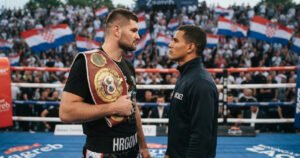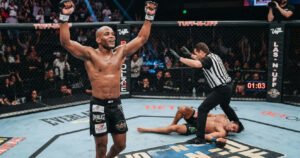
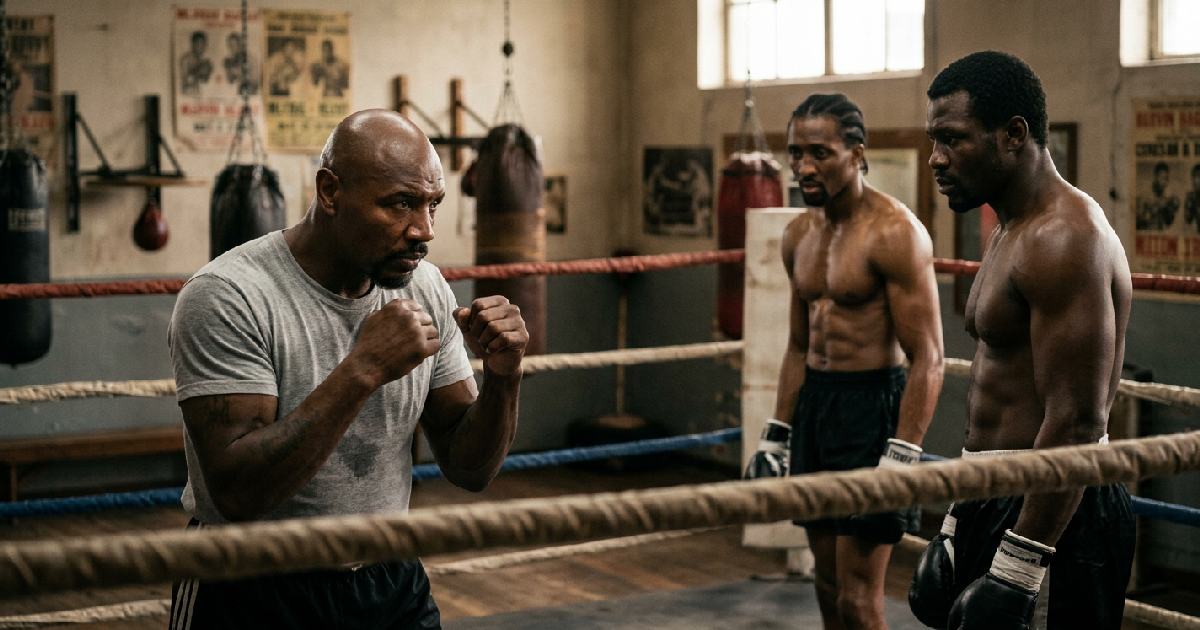
Marvin Hagler, the longtime ruler of the middleweight division, identified Thomas Hearns and John Mugabi as the hardest punchers he encountered during his storied career. Despite sharing the ring with some of the most formidable names in boxing history, including the other members of the “Four Kings” era, the late champion reportedly singled out the power of “The Hitman” and “The Beast” as the most intense he ever felt. These reflections highlight the sheer physicality of his campaigns during a reign that remains a benchmark for dominance in the sport.
Hagler’s career was defined by a chin that seemed unbreakable and a relentless southpaw pressure that often wore down his opponents. For much of the 1980s, he stood as the definitive force in the middleweight ranks, turning back challengers with a mixture of tactical intelligence and raw toughness. While his tenure included legendary wars against icons like Roberto Duran and Sugar Ray Leonard, his choices for the hardest hitters suggest a preference for the aggressive, concussive power that characterized his most famous battles in Las Vegas.
The Heavy Impact of Thomas Hearns
When boxing fans discuss the most ferocious exchanges in the history of the sport, the opening of the clash between Marvin Hagler and Thomas Hearns at Caesars Palace usually sits at the top of the list. Billed as “The War,” the fight was brief but produced a lifetime of highlights. Hagler’s inclusion of Hearns as one of his hardest-hitting foes aligns with the historical view of Hearns’ devastating right hand, which dismantled world-class opponents across multiple weight classes. Even modern assessments like the top 10 most dangerous boxers 2026 rankings often use the power of that era as the gold standard for evaluating today’s punchers.
Hearns reportedly injured his hand during the early exchanges of the fight, yet he continued to land heavy blows that might have finished other middleweights. Hagler’s ability to walk through that fire remains a cornerstone of his legacy. The victory over Hearns was one of several defenses of Hagler’s undisputed crown, requiring “Marvelous” to weather an early storm before securing a stoppage. The physical toll of those punches stayed with him, cementing the Detroiter’s reputation as a puncher of unique, searing velocity.
John Mugabi and the Brutal Threshold of The Beast
The second name Hagler frequently mentioned was John Mugabi, the Ugandan powerhouse known as “The Beast.” Heading into their encounter, Mugabi possessed a long and unblemished knockout streak that had seen him stop every professional opponent he had faced to that point. Unlike the speed and snap of Hearns, Mugabi brought a thudding, heavy-handed pressure that forced Hagler into a grueling, back-and-forth struggle. Such longevity and resilience are traits that current fighters like Dalton Smith look to emulate as they build their own paths toward divisional dominance.
Hagler eventually secured a late-round stoppage win, but the fight was viewed by many observers as one of the most taxing of his career. Mugabi’s ability to land heavy shots over several rounds tested Hagler’s durability more than almost any other opponent. The Ugandan’s raw strength meant Hagler could never fully relax or rely purely on his technical boxing skills, forcing him to engage in a high-stakes trade of power shots until the end.
The Retirement That Followed a Controversial Finale
The end of Hagler’s career came under a cloud of controversy following a narrow and debated loss to Sugar Ray Leonard. Many observers, and certainly Hagler himself, felt he had done enough to win that night. When a potential rematch failed to materialize, Hagler walked away from the sport entirely, moving to Italy to pursue a new path in film rather than continuing to compete as his physical prime began to fade. This mental fortitude is often discussed by contemporary experts; for instance, David Price has analyzed the form of today’s heavyweights by looking back at the psychological strength required to face the sport’s most dangerous punchers.
His departure left a significant void in the middleweight division. Hagler’s decision to retire at the top, despite the bitter taste of his final result, preserved his health and his status as an icon who was never truly outclassed in the ring. He remained the archetype of the “blue-collar” champion, a fighter who believed he was avoided by the elite for too long and spent his reign proving that no amount of power could break his resolve.
The Legacy of the Undisputed Era
Hagler’s willingness to name the opponents who pushed him to his limits serves as a testament to his respect for the fighters who tried to take his throne. He didn’t shy away from admitting who hurt him or who forced him to dig deepest. The names Hearns and Mugabi represent two different styles of power—the lightning-quick, sharp impact of the former and the heavy, crushing weight of the latter. By identifying the punchers who tested him the most, he provided a roadmap for what it truly took to compete at the elite level of the 160-pound division during its golden age.
Frequently Asked Questions
Who were the “Four Kings” of boxing?
The “Four Kings” refers to Marvin Hagler, Thomas Hearns, Roberto Duran, and Sugar Ray Leonard. These four legendary fighters dominated the middleweight and welterweight divisions during the 1980s, engaging in a series of iconic matches that are considered some of the greatest in the history of the sport.
Why did Marvin Hagler decide to retire?
Hagler chose to retire after a controversial decision loss to Sugar Ray Leonard. He was reportedly frustrated by the judging and the difficulty in securing an immediate return bout. Rather than staying in the ring as his speed began to decline, he opted for a career in acting and relocated to Europe.
Was Marvin Hagler ever stopped in a fight?
No, Marvin Hagler was famously never stopped or knocked out in his professional career. He only suffered one official knockdown, which occurred early in a bout against Juan Roldan, though Hagler maintained it was a slip. His durable “granite” chin is widely regarded as one of the best in boxing history.