
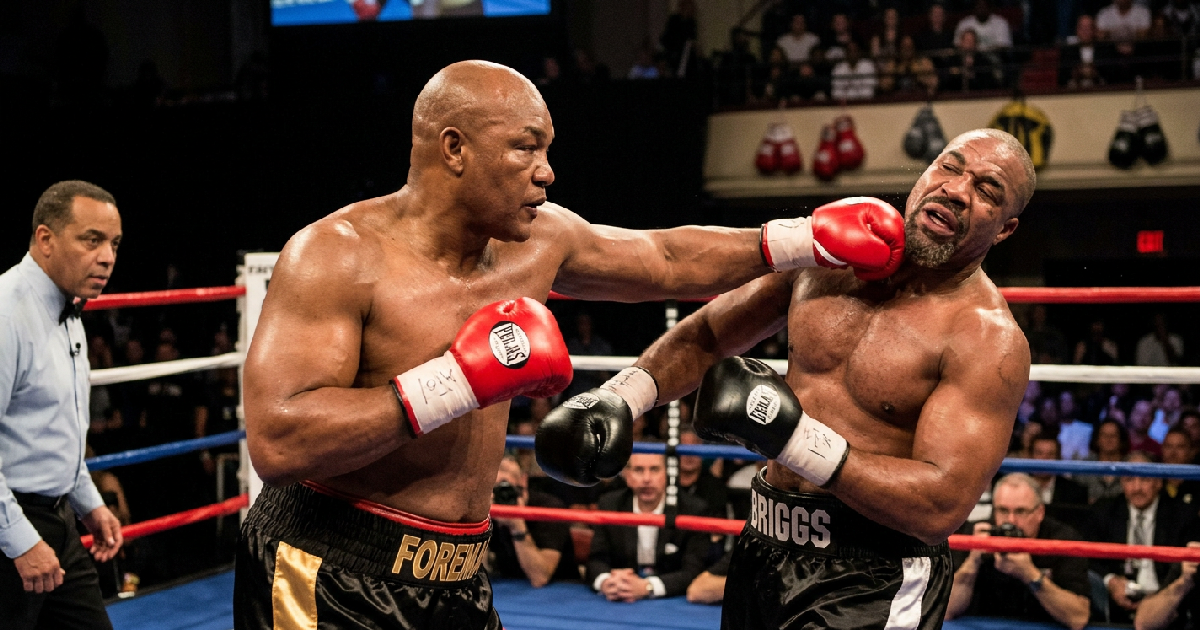
Former heavyweight champion Shannon Briggs has provided a detailed comparison of the punching power possessed by Lennox Lewis and George Foreman, two figures widely regarded as the most formidable hitters in the history of the division. Speaking about his experiences in the ring, the Brooklyn native known as “The Cannon” explained that while Lewis was a precise and devastating finisher, the raw, clubbing force of Foreman felt like being struck by a motor vehicle. Briggs is among a rare group of competitors who shared the ring with both icons during their respective tenures at the pinnacle of the sport.
Briggs encountered these two legends at different stages of their careers during the late 1990s. He famously shared the ring with Foreman in a high-stakes encounter that reportedly served as the final professional appearance for the Hall of Famer. Not long after that performance, Briggs challenged Lewis for a world heavyweight title in a bout that showcased the technical brilliance of the British champion. Despite the different ways those contests unfolded, the physical impression left by Foreman’s legendary strength remains a defining memory for the American fighter decades later.
The Physics of Power: Contrasting Lewis and Foreman
The distinction between the two heavyweights often centers on the delivery of their power. Lewis was celebrated for his explosive, technical precision and a right hand that remains a benchmark for the most dangerous boxers to have ever competed. He utilized his significant height and reach to generate torque, often catching opponents with clinical shots. Briggs acknowledged the effectiveness of this sharp power, which ultimately played a decisive role in their championship clash.
However, when describing the impact of George Foreman, Briggs reached for a more extreme analogy. He recounted a personal incident where he was struck by a car in New York, stating that the sensation of Foreman’s punches was the only experience in his life that matched that level of physical trauma. Unlike the sharp, snapping power common among many modern heavyweights, the force from Foreman is frequently described by his former opponents as a thudding, heavy momentum that felt almost impossible to move or withstand.
Foreman’s reputation as a knockout artist is supported by a history of stoppages across two distinct eras of boxing. While Lewis relied on the “sweet science” to set up his finishes, Foreman’s later career was defined by a slower, stalking pressure. Even as his mobility changed with age, the strength in his arms and shoulders remained a constant hazard. This heavy-handed approach allowed him to remain a threat against younger, faster opponents throughout his second run in the heavyweight division.
Heavyweight Legacies and Personal Bonds
The heavyweight landscape is often built upon the lineage and reputations of its champions. Briggs eventually secured a world title of his own later in his career, but his identity as a top-tier contender was forged against the giants of the previous generation. His reflections on Lewis and Foreman mirror the sentiments of other contemporaries, such as David Price who evaluates heavyweight form by looking at the technical foundations and physical attributes of the greats from that era.
It is also a reminder of the human element behind these intense physical encounters. Briggs has often spoken about the respect he holds for those who helped shape his professional path. This is a common theme among boxing families; for instance, Campbell Hatton often discusses his relationship with his father Ricky through the lens of the sport’s grueling demands and the mutual respect earned within the ropes. For Briggs, the reverence for Foreman is rooted in the sheer endurance required to withstand his legendary power.
The Lasting Reputation of George Foreman’s Strength
In the decades following his retirement, the stories surrounding George Foreman’s physical strength have continued to grow. Fighters from different eras have corroborated the idea that Foreman possessed a unique type of natural power that did not rely solely on perfect mechanics—the force was reportedly present regardless of whether he was off-balance or in close quarters. Briggs’ recent comments reinforce this standing, placing Foreman’s raw strength in a category of its own, separate even from the refined, clinical power of a peak Lennox Lewis.
While Lewis is often cited as the greatest British heavyweight to ever live, the “old school” power of Foreman remains a point of fascination for fans and historians alike. As the sport moves forward with a new generation of heavyweights attempting to stake their claim, the testimonies of veterans like Briggs serve as a benchmark. These accounts provide context for what truly constitutes “all-time” power in the ring and how it differs between the masters of technique and the masters of raw force.
Heavyweight Comparisons and Career Timeline
The encounter between Shannon Briggs and George Foreman resulted in a victory for Briggs via a decision from the judges. The outcome was a major talking point at the time, as many observers debated whether the veteran Foreman had done enough to secure the win in what is widely considered his final professional outing. Ultimately, the judges favored the younger Briggs, which propelled him toward further opportunities at the highest level of the sport.
Following that victory, Briggs moved into a high-profile championship bout against Lennox Lewis. In that contest, Briggs reportedly had moments of early success, but Lewis’s technical superiorly eventually took over. The champion was able to secure a stoppage victory, successfully defending his world title. While Briggs did not win that particular night, his ability to compete with both Lewis and Foreman has given him a unique perspective on the varying types of power that define championship-level boxing.
While he has not competed in a sanctioned professional bout in some time, Briggs remains a highly visible figure in the boxing world. He is frequently seen at major international fights and remains a popular personality among fans. His observations on the heavyweights of the past continue to provide valuable insight for those following the current state of the heavyweight division.