
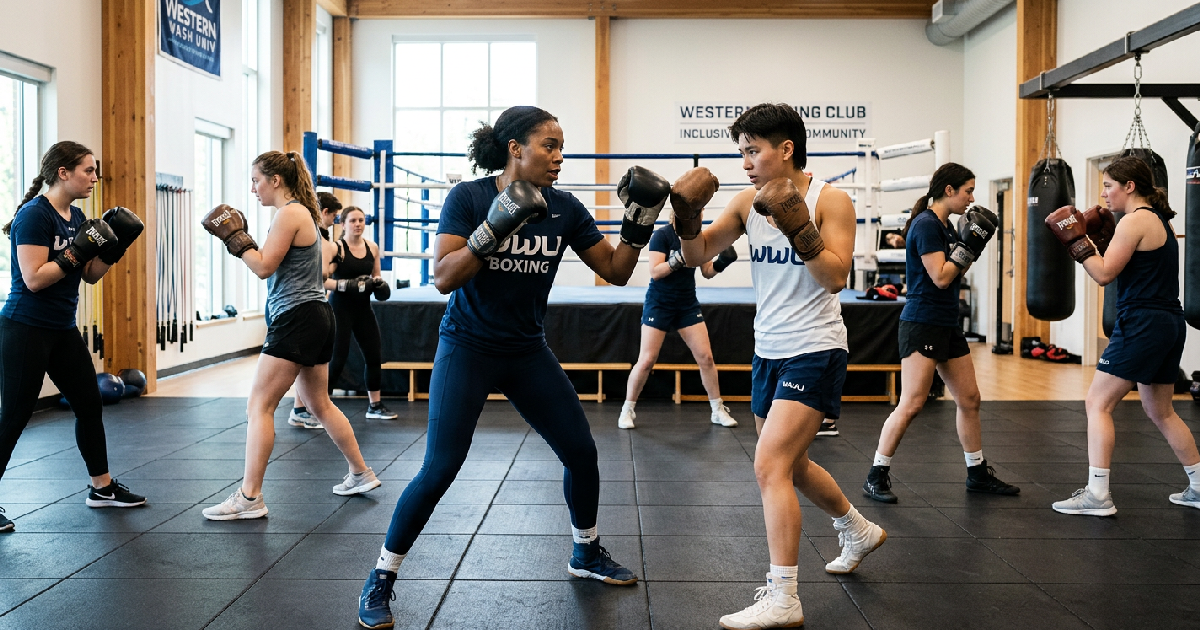
Western Washington University students have established a dedicated boxing club tailored specifically for women and non-binary participants, creating a specialized athletic space on the Bellingham campus. Led by student organizers including Kyla Williams and Phoebe Akwari, the Western Boxing Club aims to dismantle traditional barriers in a sport often perceived as hyper-masculine. By offering structured training sessions and a supportive community, the initiative provides a safe environment for marginalized genders to learn technical pugilism without the intimidation frequently found in commercial combat sports gyms.
The club grew out of a recognized need for inclusivity within the university’s recreational sports offerings. Organizers noted that many students felt sidelined or unwelcome in traditional boxing settings. This new framework prioritizes comfort and technical development, ensuring that participants can focus on their footwork, punching form, and cardiovascular health. It mirrors a broader trend in the sport where women’s boxing rankings and participation levels are reaching historic highs globally.
Developing Technical Proficiency in an Inclusive Environment
Training at the Western Boxing Club goes beyond basic fitness. Instructors emphasize the “sweet science” of the sport, teaching the nuances of defensive movement and heavy bag work. For many members, the attraction lies in the balance between intense physical activity and the mental discipline required to master boxing combinations. The sessions are designed to be accessible to absolute beginners while still challenging those who may have prior experience in martial arts.
The social component of the club is just as vital as the physical training. By limiting the space to women and non-binary individuals, the club fosters a unique camaraderie. Members often mention that the absence of a “bro-culture” allows them to take risks and fail comfortably while learning complex maneuvers. This sense of belonging is a key factor in the club’s rapid growth and consistent attendance during weekly sessions at the campus recreation center.
Safety and Equipment Accessibility
One of the primary goals for Williams and the leadership team was to lower the financial barrier to entry. Boxing can be an expensive pursuit when factoring in gloves, wraps, and gym fees. The club provides much of the necessary communal equipment, allowing students to test their interest in the sport without a significant upfront investment. Safety remains a top priority, with a heavy focus on non-contact drills and controlled sparring for those who choose to progress to that level.
This localized effort reflects a growing national conversation about how boxing laws and regulations are evolving to protect athletes. Figures like Oscar De La Hoya and Ali Walsh have recently discussed the importance of structured oversight in the sport, and while those discussions often happen at the professional level, the principles of athlete safety and fair play are being instilled at the grassroots level in Bellingham.
Challenging Combat Sport Stereotypes at Western Washington
The presence of a gender-focused boxing club at a major university challenges long-standing stereotypes about who belongs in the ring. Historically, boxing has been marketed through a lens of aggressive masculinity. The Western Boxing Club reframes the sport as a tool for personal empowerment and physical autonomy. For non-binary students in particular, finding a fitness space that recognizes and respects their identity can be a transformative experience.
By moving boxing into a community-centric model, the club avoids the high-pressure environment of competitive prize fighting. Instead, the focus remains on the individual’s journey and the collective strength of the group. While some members may eventually seek out more competitive avenues, similar to how Jennifer Lehane has pursued international opportunities, the current priority is building a firm foundation of support and skill on campus.
Future Growth and Campus Integration
As the club enters its next phase, the leadership team is looking to expand its reach through collaborative events and workshops. There are plans to invite guest instructors and potentially host exhibitions to showcase the progress of its members. The goal is to make the Western Boxing Club a permanent fixture of campus life, ensuring that future generations of students have access to a combat sports environment that prioritizes their safety and identity.
The success of the program suggests a high demand for gender-expansive sports programming. As more students seek out activities that align with their values of inclusivity, the Western Boxing Club stands as a blueprint for how traditional sports can be successfully adapted for a modern, diverse student body.
Frequently Asked Questions
Is the club open to students with no prior boxing experience?
Yes, the club is specifically designed to accommodate beginners. Most training sessions focus on the fundamentals of stance, punch mechanics, and conditioning, making it easy for those who have never worn gloves to join and progress at their own pace.
How does the club ensure a safe environment for non-binary members?
The club maintains strict community guidelines that emphasize respect and inclusivity. By creating a space specifically for women and non-binary individuals, the organizers remove many of the traditional social pressures found in co-ed gyms, allowing for a more authentic and supportive training experience.
What kind of gear do I need to bring to my first session?
New members are encouraged to wear comfortable athletic clothing and bring water. While the club provides communal gloves and some protective gear for newcomers, many regular members eventually choose to purchase their own hand wraps and gloves for hygiene and personal fit as they become more involved.