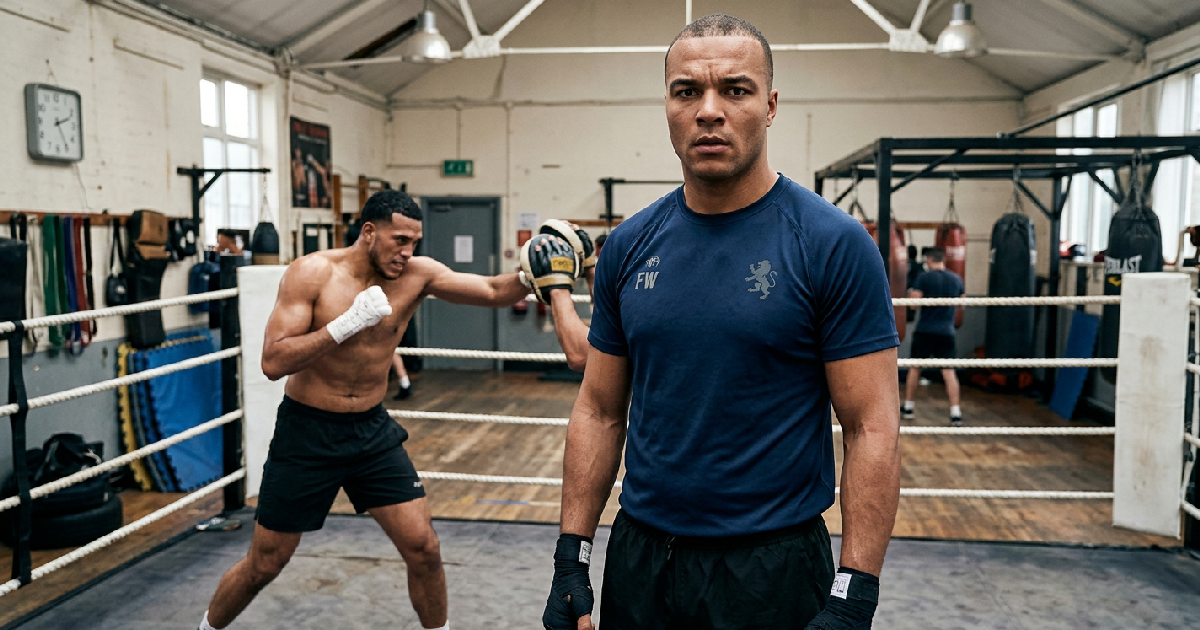
British heavyweight contender Fabio Wardley has issued a cautious assessment of David Benavidez and his rumored interest in moving up to the heavyweight division. While David Benavidez has established himself as a dominant force in the lower weight classes, Fabio Wardley suggests the jump to the sport’s heaviest category involves physical risks that are often overlooked by fighters coming up from lighter frames.
The American star, widely known as “The Mexican Monster,” has already showcased his versatility by moving from super middleweight to find success at 175 pounds. However, Fabio Wardley, who has become a prominent name on the UK circuit, argues that the sheer durability required to compete with natural heavyweights is difficult to simulate. The transition is rarely a simple matter of carrying over speed and volume.
David Benavidez is celebrated for a relentless, high-pressure style that has overwhelmed the majority of his career opponents. But Fabio Wardley notes that such an aggressive approach could present defensive hazards when facing men with a significant weight advantage. There are concerns that the “stopping power” David Benavidez currently possesses might be absorbed more easily by athletes accustomed to the impact of heavyweight competition.
Check out the most dangerous boxers dominating the ring to see how the current heavyweight landscape is shaped by increasingly large and athletic competitors.
The Physical Realities of the Heavyweight Leap
Moving between weight classes is a standard path toward legacy in modern boxing, yet the gap between light heavyweight and heavyweight is often considered the most difficult to bridge. Fabio Wardley pointed out that while David Benavidez maintains elite hand speed, the consequences of defensive lapses are much higher in the top division. He suggested that a lack of planning for the physical attrition of a heavyweight bout could lead to unforeseen setbacks.
Historically, the list of fighters who successfully moved from 175 pounds to secure major heavyweight honors is short. While icons like Roy Jones Jr. and Michael Spinks managed the feat, they often did so against specific opponents rather than navigating a division or staying there long-term. Today’s heavyweights are generally larger than those of previous eras, making the physical mountain David Benavidez would have to climb even steeper.
The heavyweights of the current era are not just bigger; they are increasingly mobile. As rising stars like Moses Itauma near a return to major platforms in London, the depth of the division continues to grow, posing a threat to any newcomer.
Managing Power and Stamina at a Higher Weight
Fabio Wardley’s critique focuses heavily on the receiving end of the sport. He expressed that the margin for error effectively disappears when facing opponents who routinely weigh in well over the 200-pound limit. In the heavyweight division, even shots that do not land cleanly can have a cumulative effect on a smaller man’s stamina and resistance.
There is also the physiological challenge of adding mass. If David Benavidez attempts to bulk up to match the size of natural heavyweights, he faces the risk of diminishing the speed and conditioning that have defined his career so far. The heavyweight ranks are already crowded with established veterans and hungry young talents who are unlikely to accommodate an “interloper” from the lighter divisions.
The current landscape is also influenced by the activity of the division’s biggest names. For instance, the way Tyson Fury’s current form is perceived affects the opportunities available to everyone else in the top ten. For David Benavidez, a more measured progression through cruiserweight might be the more traditional route before testing the waters with the giants.
Outlook for the Mexican Monster
Despite the warnings from peers like Fabio Wardley, the prestige of the heavyweight crown remains a powerful draw. David Benavidez is managed by a team that has navigated his career with significant success, and any move to the top weight would likely be preceded by a long-term physical conditioning program.
For the time being, David Benavidez remains a central figure in the light heavyweight division, where a range of mandatory challengers and high-profile unification bouts await. Whether he eventually chooses to test Fabio Wardley’s “heavyweight reality” or remains in the divisions where he has already found championship success is a question his team will likely weigh carefully in the coming months.
In a sport where fighters are often driven to prove critics wrong, the skepticism from the heavyweight ranks might only serve as further motivation. However, history suggests that the weight jump to the very top is a gamble that requires more than just championship pedigree to pay off.