
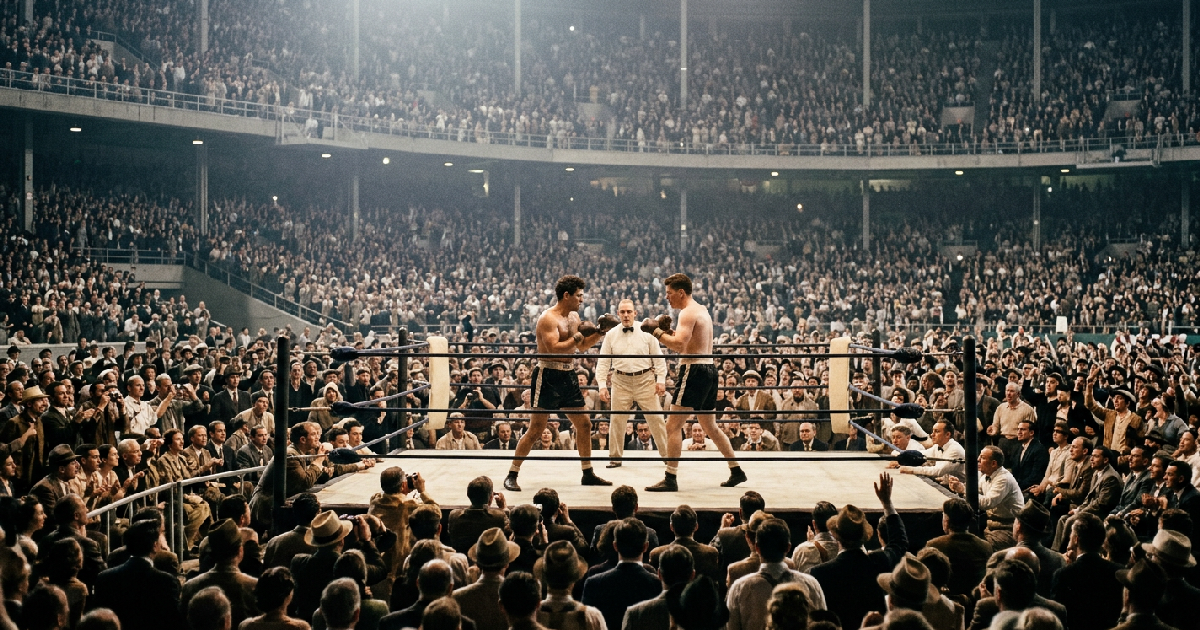
High-capacity stadium boxing events remain a benchmark of commercial success in the United States, harkening back to an era where the sport served as a primary cultural pillar. While many modern marquee matchups take place in the climate-controlled arenas of Las Vegas, the history of the sport is defined by massive outdoor spectacles that have reportedly drawn hundreds of thousands of spectators. These historic gates, particularly those involving the legendary Jack Dempsey, established a blueprint for the “mega-fight” that promoters continue to chase in the 21st century.
Promoters and historians often point to the early 20th century as the “Golden Age” of boxing attendance, a time when the lack of television broadcasts meant fans had to be physically present to witness sporting history. The shift toward pay-per-view models in recent decades changed the financial landscape, but the prestige associated with filling a national stadium remains intact. Today, the pursuit of these massive live crowds is a key strategy for major promotional houses looking to solidify their market position against emerging competitors.
The Dempsey-Tunney Era and the Birth of the Stadium Spectacle
The historical record suggests that the heavyweight rivalry between Jack Dempsey and Gene Tunney remains the pinnacle of American boxing attendance. Their first encounter in Philadelphia’s Sesquicentennial Stadium is widely cited as the largest ticketed crowd in the history of the sport in the United States. Reports from the period indicate that well over 100,000 fans reached the venue, braving heavy rain to watch the underdog Tunney face the legendary Dempsey. This event proved that boxing could move beyond smoky halls into the realm of massive civic enterprise.
A subsequent rematch in Chicago reportedly saw another immense turnout at Soldier Field, further cementing the duo’s status as the greatest box-office draws of their time. These events set benchmarks for the “big event” feel that top 10 most dangerous boxers 2026 still aim for when headlining major domestic shows. The sheer volume of spectators in this era established a standard that remained largely unchallenged until the rise of modern retractable-roof stadiums in the south and southwest.
Modern Shifts Toward Industrial-Scale Venues
In the contemporary landscape, AT&T Stadium in Arlington, Texas, has emerged as the primary rival to the historic gate records of the past. The home of the Dallas Cowboys allows for a vast seating configuration that has accommodated some of the largest indoor crowds in boxing history. High-profile bouts involving superstars like Saul ‘Canelo’ Alvarez have reportedly filled the venue to its upper limits, showcasing the massive public appetite for elite-level competition in the Texas market.
This evolution into larger venues reflects a broader business strategy within the industry. Promoters often utilize these cavernous spaces to maximize the live gate revenue, especially when facing pressure from other combat sports entities. For instance, the industry continues to monitor how major players manage their rosters, such as when Matchroom Boxing blocked Zuffa threats to ensure their champions remained the focal point of these high-capacity events. The ability to command a stadium-sized audience remains the ultimate bargaining chip in promotional wars.
Heavyweight Allure and the International Landscape
While fighters in lower weight classes have achieved significant success, the heavyweight division historically provides the most reliable path to a stadium sell-out. The “big man” aura translates more effectively to the cheap seats of a football stadium, where fans are drawn to the spectacle of power. This trend continues with the next generation of talent, as figures like heavyweight Moses Itauma are evaluated by their potential to eventually headline massive domestic or international shows.
The United States faces significant competition for these attendance records from the United Kingdom and Mexico. Wembley Stadium in London is known for hosting heavyweight bouts with reported crowds nearing the six-figure mark, while events in Mexico City have historically drawn some of the largest audiences ever documented in the history of professional sports. However, the U.S. market remains uniquely lucrative due to the integration of luxury hospitality and high-tier ticket pricing, ensuring that American soil remains the preferred destination for the sport’s most profitable nights.
Infrastructure and the Future of Large-Scale Boxing
Modern attendance figures are often influenced by factors that did not exist during the 1920s, such as stringent fire safety codes and the priority given to optimal camera angles for global broadcasts. Today, a crowd in the range of 70,000 to 80,000 is typically considered a massive success, even if it falls short of the legendary figures attributed to the Dempsey era. These modern spectacles rely on the combination of a charismatic headliner and a venue capable of providing a festival-like atmosphere.
As the sport moves forward, the focus remains on identifying the cross-over stars capable of bridging the gap between niche sports fans and the general public. Whether through domestic rivalries or international unification bouts, the goal for promoters remains the same: to create a moment in time that rivals the historic gatherings in Philadelphia and Chicago. The stadium show is no longer just a boxing match; it is a statement of the sport’s enduring relevance in the modern entertainment economy.