Roy Jones Jr. has never been one to bite his tongue, but his latest assessment of the featherweight title picture has ruffled feathers on both sides of the Atlantic. Speaking from his gym in Pensacola, the former four-division world champion pulled no punches when discussing the current crop of 126-pounders, specifically targeting what he describes as a lack of authenticity in the division’s showmanship.
The Hall of Famer suggested that several modern champions are “clones” of the legendary Prince Naseem Hamed, arguing that while they have adopted the flair, they lack the substance that made the Sheffield native a global icon. Jones didn’t name a single culprit, but the timing of his comments coincides with the rise of several flashy prospects and champions who have leaned heavily on theatrical ring walks and unorthodox defensive movements.
The struggle for middle ground between style and substance
Jones remains one of the few fighters in history whose athleticism allowed him to break every traditional rule in the boxing manual. He knows better than anyone the difference between a fighter who is naturally gifted and one who is playing a character. According to Jones, the current circuit is flooded with “knock-offs” who prioritize viral moments over technical mastery.
“I see a lot of guys trying to walk that walk that Naz walked,” Jones said during a recent media session. “But they’re doing it because they think it’s a brand. Naz did it because that’s who he was. When you try to replicate that without that singular, devastating power he had, you just look like a cover band. It’s a cheap imitation.”
It’s a sentiment that resonates with many purists who feel the “TikTok era” of boxing has incentivized aesthetics over effectiveness. While the 1990s saw Hamed dominate the featherweight ranks with a blend of arrogance and genuine knockout power, today’s leaders often struggle to maintain that same level of consistency. For Jones, the issue isn’t the showmanship itself—it’s the foundation beneath it.
Featherweight landscape and the shadow of ‘The Prince’
The featherweight division is currently in a state of flux. While Bruce Carrington and Nick Ball have brought different flavors of aggression to the weight class, others have been accused of being too focused on the “spectacle.” This comes at a time when the boxing broadcast landscape is shifting dramatically. As new players enter the market, the pressure to be “marketable” has never been higher, leading some fighters to adopt personas that don’t necessarily fit their fighting style.
Jones’ comments also touch on the technical evolution—or lack thereof—in the lower weight classes. He argues that by trying to mimic Hamed’s “hands-down” style, younger fighters are exposing themselves to unnecessary risks. Hamed’s style was predicated on elite reflexes and a punch that felt like a middleweight’s. Without those two pillars, the style becomes a liability rather than an asset.
Interestingly, this critique comes as the sport sees a resurgence in veteran influence. We’ve seen Tyson and Mayweather agree to exhibitions, and even figures like Dana White confirming Zuffa Boxing launch plans to shake up how talent is managed. Jones seems to be positioning himself as a guardian of the old-school mentality: if you’re going to talk it, you better be able to fight like a legend.
What the future holds for the 126-pounders
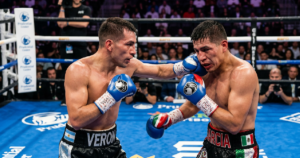
The target of Jones’ ire might be subtler than it seems. Names like Michael Conlan have been working their way back into the mix, with Conlan facing Kevin Walsh recently as he eyes a potential NYC showdown with Bruce Carrington. These are the types of high-stakes matchups where “style” is stress-tested against top-tier opposition.
But for a fighter to truly escape the “knock-off” label, they need a defining win. Hamed had Kevin Kelley; Jones had James Toney. Currently, the featherweight division is deep with talent but arguably lacks that one transcendent Rivalry. Until a clear king emerges who can sell out arenas on both sides of the pond while maintaining a perfect record, the comparisons to past greats like Hamed will likely continue to be unfavorable.
Jones remains adamant that he isn’t being a “hater.” He claims he wants to see the next generation thrive, but only on their own terms. “Be yourself,” Jones added. “Because the fans can tell when you’re acting. And in this ring, acting gets you knocked out.”
Boxing Fans Also Ask
Who is Roy Jones Jr. specifically talking about?
Jones didn’t name names, which is a classic veteran move to put the whole division on notice. However, many analysts believe he is referring to featherweights who employ high-risk, “theatrical” styles without the knockout ratio to back it up. He’s essentially calling out anyone he deems a “social media fighter.”
Is Naseem Hamed’s style actually possible to replicate?
Most trainers will tell you no. Hamed’s style relied on physiological gifts—abnormal punching power for his size and freakish core strength—that allowed him to punch from angles where most fighters would be off-balance. Trying to copy it usually results in getting caught with fundamental shots.
What is the next big fight in the featherweight division?
Keep an eye on the WBC title picture. With Conlan nearing a shot against Carrington, we will see if the “showman” approach or the “technical” approach wins out. That fight will likely answer many of the questions Jones has raised about the current state of the weight class.