
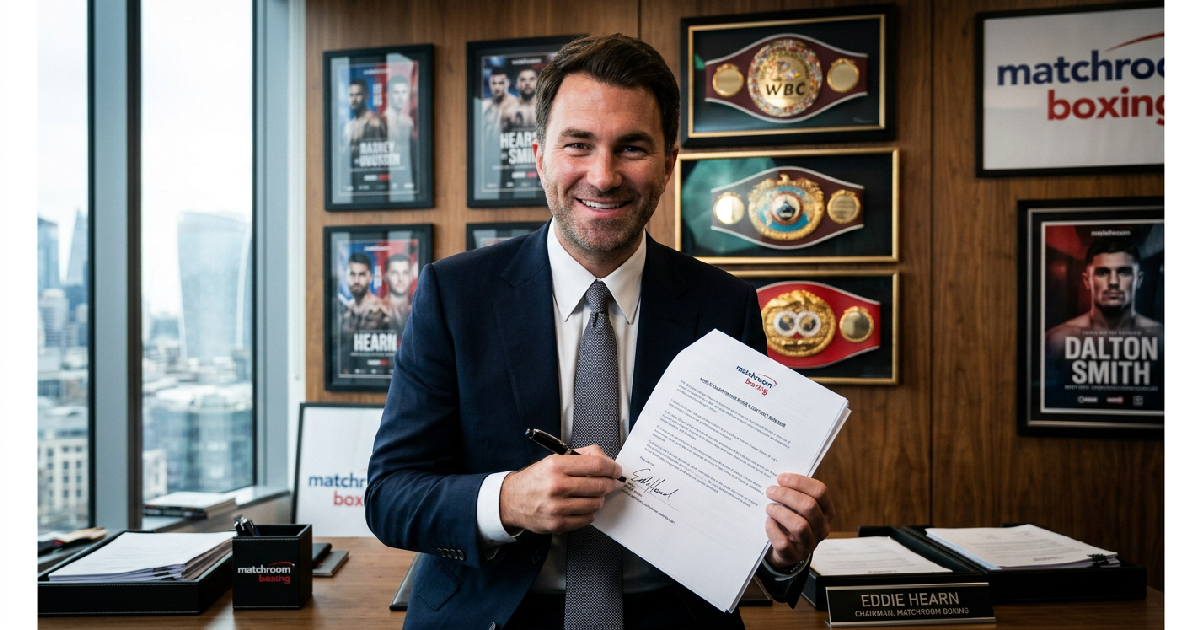
Eddie Hearn and Matchroom Boxing appear to be reinforcing their professional roster, reportedly securing the services of another titleholder in a move that analysts view as a strategic defensive play. This trend of contract renewals suggests a concerted effort by the British promotional powerhouse to stabilize its domestic and international assets as the boxing industry braces for potential disruption from new market entrants.
The reported focus on retaining current belt-holders follows a pattern of prioritizing stability for existing broadcast partners. By maintaining its talent pool under a single promotional umbrella, Hearn is effectively insulating his business model against what some have termed the “mistakes” of the past, where top-level fighters were occasionally allowed to enter free agency at times that left promoters vulnerable to rival bids.
Strategic Retention Amid Global Boxing Competition
The strategy currently employed by Matchroom has become increasingly clear to those following the business of the ring: control of talent remains the primary currency. By renewing key champions, the promotion is not only satisfying its broadcast requirements but also building a barrier against the rumored expansion of Zuffa Boxing. Dana White has frequently discussed a more aggressive entry into the pugilistic space, and Matchroom seems determined to ensure that its established names are committed to the brand before any major industry shifts occur.
This policy of active retention has reportedly involved several foundational names within the stable. For instance, Dalton Smith is widely understood to be tied to a long-term future with the outfit, representing the type of domestic talent required to anchor consistent event schedules. Maintaining these relationships allows for more coherent long-term planning, a luxury not always available in the traditional fight-by-fight negotiation landscape.
But the competition isn’t just about domestic dominance. The global arms race for talent means that promoters must now compete with venture-backed entities that promise to revolutionize how boxers are paid and marketed. As the most dangerous boxers dominating the ring today command higher purses and more control, the pressure on traditional promotional houses to provide a structured career path has never been higher.
Addressing Structural Weaknesses in the Promotional Model
Hearn has previously touched on the evolving nature of the sport’s infrastructure. In recent years, a perceived flaw in the promotional space has been the failure to provide a clear, consistent pathway for young champions. This lack of institutional support has historically led some athletes to look toward the UFC’s parent company or other emerging entities that offer a more centralized organizational structure.
By moving toward more comprehensive and structured contracts, Matchroom is attempting to provide a degree of organizational loyalty that mirrors more centralized sports leagues. This is particularly relevant as the industry moves beyond traditional strongholds. For example, as the rankings for women’s boxing continue to gain commercial weight, promoters are recognizing the need for steady, brand-led guidance to build a fighter’s marketability over several years rather than just several months.
The Looming Shadow of Zuffa Boxing
The specter of Zuffa Boxing has remained a talking point for years, acting as a catalyst for change among established promoters. While the UFC revolutionized mixed martial arts through a centralized structure, boxing remains a fractured ecosystem. Hearn’s recent focus on securing his roster is often seen as a direct response to the threat of a “Zuffa-style” takeover, which could theoretically use superior infrastructure to lure away stars who feel undervalued by the current system.
And while some critics argue that the traditional model is reaching its limits, Hearn appears to be betting that brand equity and consistent platforms will win out. Insiders suggest that the “mistake” often cited in these corporate circles is the lack of institutional permanence; historically, fighters were loyal to individual managers or promoters rather than a brand. Matchroom is trying to shift that dynamic, making the company name synonymous with a fighter’s total career progression.
The implications of this recruitment and retention drive go beyond the immediate domestic schedule. When a champion chooses to remain with a major promoter, it sends a clear signal to the amateur ranks and rival gyms. It suggests that the established system can still offer the necessary rewards without requiring a total overhaul of the sport’s business model. For Matchroom, these signatures serve as a statement of intent in an ongoing war of attrition against both traditional rivals and the “disruptors” seeking to change the sport’s fundamental landscape.