
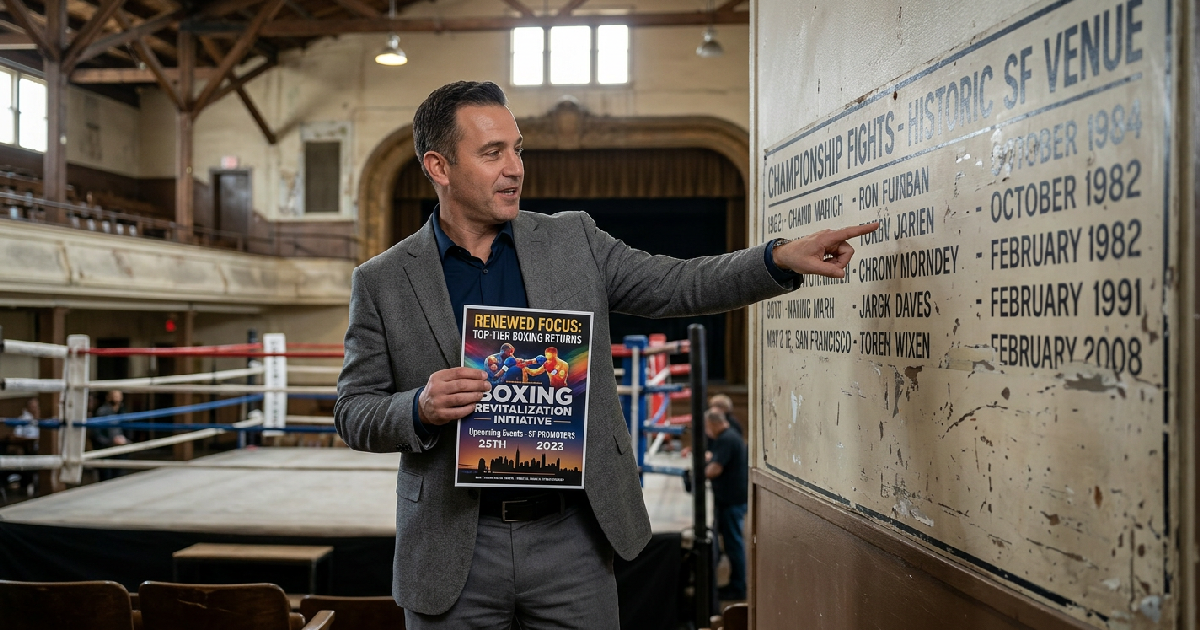
Event organizers and local officials in San Francisco are launching a strategic effort to revitalize professional boxing in Northern California, aiming to return the city to its former status as a premier hub for the sport. The initiative involve a coordinated push between regional promoters, venue managers, and municipal stakeholders who argue that the Bay Area is currently underserved by the sport’s major promotional outfits. By leveraging existing infrastructure and a loyal local fan base, the collective seeks to secure consistent dates for both televised prospects and world-title caliber bouts in the coming years.
Historically, San Francisco and the surrounding region served as a frequent backdrop for significant fights, but the spotlight has largely shifted toward Las Vegas and Southern California in recent decades. Organizers contend that San Francisco maintains the cultural and economic gravity necessary to sustain a regular boxing schedule if major promoters can be convinced to bring high-profile cards back to the city. This move comes as various metropolitan areas compete for a share of the live sports market, often fueled by the popularity of highly dangerous and marketable boxers who draw global audiences.
But the initiative isn’t focused solely on marquee names. Local stakeholders are emphasizing the importance of building a grassroots ecosystem that allows amateur standouts to transition into the professional ranks without being forced to relocate to traditional boxing capitals. By fostering a consistent environment for development, the city hopes to produce homegrown champions who can eventually headline major local venues like the Chase Center or the Bill Graham Civic Auditorium.
Capitalizing on the Northern California Combat Sports Market
The appetite for combat sports in the region remains high, even as the frequency of professional boxing matches in the city has fluctuated. Mixed martial arts has frequently filled the void left by boxing’s departure from the local mainstream. However, promoters are currently analyzing data that suggests a younger, tech-driven audience is showing renewed interest in the spectacle of live professional prize-fighting. This demographic shift could provide the necessary momentum to make San Francisco a viable alternative to established fight towns.
City officials see the return of regular boxing as a potential boon for the local economy. Large-scale events generally bring in out-of-town visitors, fill hotel rooms, and drive revenue for businesses focused on hospitality and services near major arenas. But the challenge lies in the logistics of the Bay Area. High operational costs often deter smaller promoters, making partnerships with the city government essential to streamline permitting and security processes. This collaborative approach mirrors efforts in other regions where promotional extensions and long-term commitments have stabilized local boxing scenes.
Building Sustainable Partnerships with Major Promoters
For San Francisco to “go big” again, it likely needs the backing of the industry’s most influential power players. Organizers are reportedly in early-stage talks with several prominent promotional companies to discuss the possibility of hosting seasonal residencies or recurring annual events. The goal is to move beyond isolated shows and create a reliable calendar that fans can anticipate and follow consistently.
This pursuit of stability is a common theme in the modern industry as cities find that sporadic events often fail to build the necessary momentum to keep casual fans engaged over time. Instead, stakeholders are looking toward models where a specific venue becomes synonymous with the sport, much like the legendary cards at the old Cow Palace in Daly City once were. If organizers can demonstrate that the San Francisco market is both profitable and professionally managed, the city could again become a mandatory stop for fighters looking to build a brand on the West Coast.
Addressing Infrastructure and Professional Development
One of the primary hurdles for a San Francisco boxing revival is the availability of mid-sized venues. While the city has large arenas for world-title fights, the developmental circuit requires intimate spaces that are modern and accessible. Organizers are reportedly looking at retrofitted warehouses and historic theaters as potential homes for recurring fight nights that cater to local prospects.
The diversity of the region’s population also provides a unique opportunity for international matchmaking. With a deep Hispanic and Asian-American presence, the city is an ideal location for fighters from abroad who have established fan bases in these communities. We have seen how specific markets can be transformed by targeted recruitment, such as the way promoters are expanding their rosters to tap into underrepresented weight classes and global fan bases.
Economic sustainability is at the heart of the new San Francisco plan as organizers look to avoid the “boom and bust” cycles that have plagued local boxing in the past. To achieve this, they are seeking corporate sponsorships from the region’s diverse business sector. By blending traditional boxing culture with modern corporate hospitality, the new wave of San Francisco promoters believes they can find a financial footing that traditional ticket sales alone might not provide in a high-cost environment.
Future Outlook for the Bay Area Initiative
The coming period is expected to be critical for the success of this initiative. Measurable progress will likely depend on the ability of organizers to secure a deal with a major broadcaster or confirm a marquee main event in the near future. Local experts suggest that if the initial wave of shows generates sufficient interest, it could trigger a domino effect, drawing back the trainers and managers who have historically been vital to the city’s sporting identity.
For now, the focus remains on proving that San Francisco is ready to reclaim its identity as a premier destination for world-class boxing. Success would not only revitalize the local scene but also provide a new platform for fighters across the West Coast who are searching for high-visibility opportunities outside of the Nevada and Southern California corridors.