
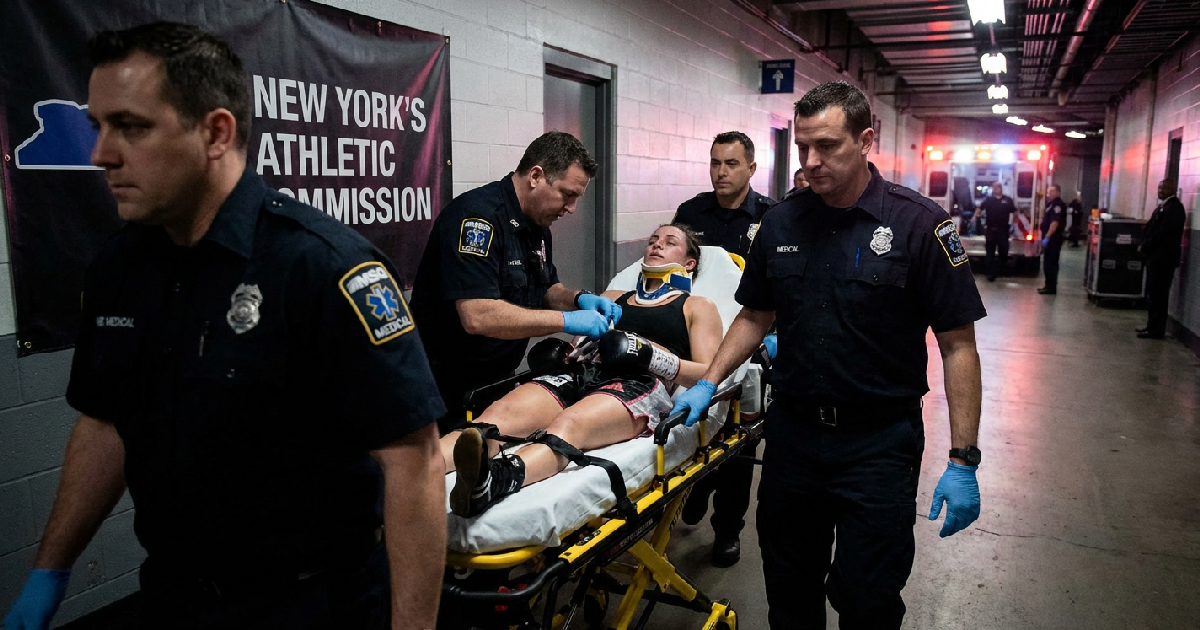
Former super middleweight titleholder Shadasia Green is reportedly recovering in an intensive care unit following a medical emergency that occurred during her recent appearance in New York. Reports indicate that Green suffered a brain bleed following the conclusion of her bout at the Madison Square Garden Theater, leading to a scene where she was eventually transported from the venue for immediate medical attention.
Green, recognized as a top-tier competitor in the 168-pound division, has shared updates regarding her status through social media channels. The fighter suggested that she experienced a loss of consciousness resulting from the injury and is currently undergoing rigorous monitoring. While the situation remains grave, her communication reflected a sense of determination as she begins what many expect to be a long path toward recovery.
Medical Response and Immediate Concerns
The bout ended when Green reportedly succumbed to a stoppage at the hands of Lani Daniels. What began as a highly anticipated competitive fixture quickly turned into a distressing situation as ringside medical staff and emergency technicians intervened. This shift from professional competition to a life-threatening medical event has once again forced the boxing community to reflect on the inherent dangers of the ring.
Traumatic brain injuries are the most significant risk in combat sports, and Green’s reported intracranial hemorrhage is a condition that requires expert neurological care. The latest boxing results and fixtures update for April 2026 has been largely clouded by news of her condition, with the primary focus shifting from division rankings to the health of the athlete. The New York State Athletic Commission typically implements an indefinite medical suspension in cases involving significant head trauma, a standard procedure designed to protect fighters from further injury.
The protocol in New York is particularly rigorous. The state’s athletic commission maintains some of the most exacting medical requirements in the United States, often making it difficult for athletes who have suffered brain trauma to receive clearance for future competition. While Green has signaled her desire to return to the sport, the regulatory framework governing professional boxing may present substantial obstacles to that goal.
The Regulatory Path and Future Prospects
The road back for any fighter following a brain bleed is complicated by both clinical recovery and licensing hurdles. Major jurisdictions often scrutinize neurological history with extreme care. We have seen instances where fighters have had to wait years or seek out different commissions after being denied licenses in primary markets like New York or Nevada. For now, talk of a return is secondary to her achieving a full recovery for day-to-day life.
Safety remains a central theme as heavyweight schedules tighten and rankings committees meet to finalize upcoming fixtures across multiple weight classes. The incident involving Green serves as a sobering reminder of the physical cost associated with the sport’s highest levels. Even for seasoned professionals who have reached the top of their divisions, the margins for safety are incredibly slim.
A Career Put on Hold
Until this medical emergency, Green’s career was on an upward trajectory. She was previously recognized as a champion in her weight class and had secured high-profile victories that solidified her standing among the world’s elite. Her success helped elevate the profile of the division, contributing to the growth of a stable that has recently seen its reach expanded through major broadcasting arrangements, such as the Sky Sports deal with Most Valuable Promotions.
Promoter Most Valuable Promotions has acknowledged the situation, though they have largely deferred to the updates provided by Green and her medical team. The promotional outfit is now navigating the reality of seeing one of its standout athletes facing a significant health crisis. For the time being, the boxing world remains in a state of watchful waiting.
In the coming weeks, neurological specialists will likely continue their evaluation to determine the long-term impact of the injury. Recovery from such events is rarely linear, and the priority remains ensuring that Green can transition safely out of intensive care. While her competitive future is uncertain, the immediate outpouring of support from fans and peers alike highlights the impact she has made on the sport during her tenure at the top.