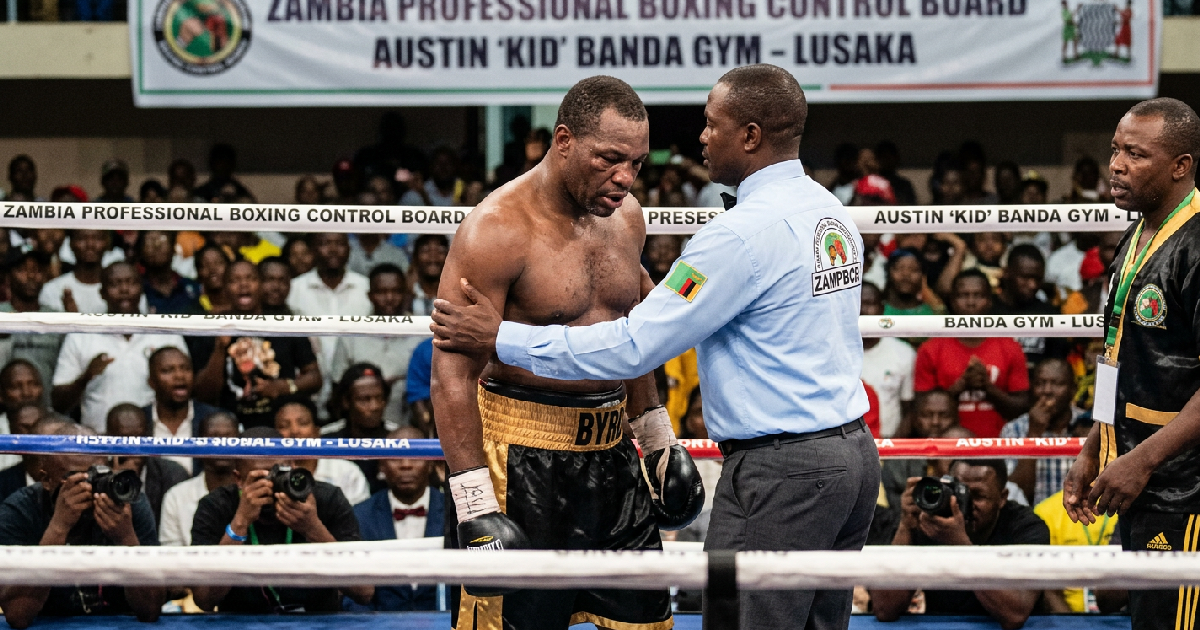
Former heavyweight champion Chris Byrd reportedly returned to professional boxing at age 55, suffering a first-round stoppage defeat in Zambia against Anthony Welsh. The reported bout, which took place 17 years after Byrd’s official retirement, marks a controversial conclusion to the veteran’s long-discussed plan to compete in the middleweight division.
World Boxing News reports that the former International Boxing Federation (IBF) and World Boxing Organization (WBO) champion was competing more than 50 pounds below his peak fighting weight. Byrd, who famously defeated Vitali Klitschko and Evander Holyfield during his heavyweight tenure, had undergone a significant physical transformation in recent years to reach the 163-pound limit.
Questions surround sanctioning of the Byrd return
The reports of Byrd’s return in Zambia have surfaced amid a broader trend of aging legends re-entering the ring. While Byrd had documented his journey back to health following years of severe neuropathy and chronic pain, the transition from regaining fitness to active professional competition has drawn significant industry concern.
According to World Boxing News, footage of the contest showed Byrd dropped early in the opening round before the referee stepped in to stop the unanswered punches. However, it is important to note that extensive live web searches on July 7, 2026, have yet to yield a specific, verifiable match record across major boxing databases for this event.
The lack of immediate official confirmation from global record-keepers highlights the complexities of aging stars seeking licenses in foreign jurisdictions. In Zambia, professional boxing is overseen by the Zambia Professional Boxing Control Board, which is responsible for vetting the medical safety and competitive viability of all participants.
This regulatory body, consisting of five members appointed by a minister, aims to supervise boxing and wrestling to prevent undesirable practices. All boxers, officials, managers, and promoters must register with the board, which also holds the authority to halt or prohibit contests. This structure is meant to safeguard fighters and the sport, yet questions persist on how a 55-year-old former heavyweight was cleared to compete at middleweight after such a long layoff.
Long-term health struggles led to middleweight shift
Chris Byrd, a 1992 Olympic silver medalist, spent much of his prime fighting far above his natural weight class. He previously revealed that “eating his way up” to heavyweight resulted in eleven years of suffering from nerve damage. At one stage, he claimed the pain in his leg was so severe he considered amputation.
Byrd’s successful battle against these health issues became a point of inspiration for many fans. “Nobody wanted to fight me at middleweight,” Byrd previously stated regarding his initial career. “I had to make drastic changes and choices in life to get where I am today.”
His decision to pursue a professional return at 55—rather than coaching or participating in exhibitions—mirrors the recent path of Mike Tyson, who faced Jake Paul in 2024. These returns often spark debate regarding the Terence Crawford and Canelo Alvarez retirement outlook, as even the most decorated champions often find it difficult to stay away from the sport.
This deep-seated desire to compete, even after body transformations and health battles, remains a powerful draw. Byrd’s journey from severe neuropathy to a reported 163 pounds was a testament to his resilience. But translating that personal victory into a competitive boxing comeback presents a different set of challenges and risks.
Impact on the legacy of the Slickmaster
If the result against Anthony Welsh is formally ratified by official record-keepers, Byrd’s professional record would shift to 41-6-1. For a fighter who defined the “Slickmaster” persona with defensive brilliance against giants like David Tua, a first-round loss in his mid-50s represents a jarring final entry.
Refining a legacy through aged comebacks is a high-risk endeavor. We have seen other veterans attempt to defy the clock, such as Bernard Hopkins, who fought until age 51, or Oliver McCall, who at 59 recently secured a win over Stacy Frazier. But Byrd’s case is unique due to the drastic drop of 50 pounds in weight.
The reality of these bouts is that they often tarnish the image of the prime versions of these athletes. While fans appreciate seeing legends, the physical toll of a Tyson Fury August bout or a similar high-level contest involves a level of conditioning that few 55-year-olds can maintain.
Regulatory oversight and fighter safety in 2026
The reports of the Zambian event place a spotlight on global sanctioning standards. Regulatory bodies face pressure when former champions shop for commissions that will allow them to fight. While the Zambia Professional Boxing Control Board is tasked with eliminating undesirable practices, the health risks for a 55-year-old are inherently high.
Other heavyweights of Byrd’s era have taken different paths. Hasim Rahman is reportedly eyeing a comeback in New York for a charity event later this month, illustrating that the urge to compete remains a constant thread among former titleholders.
Ultimately, the boxing community views Byrd’s reported result as a cautionary tale. While he regained his mobility and health, the ring remains an unforgiving environment. The hope among peers and historians is that Byrd prioritizes the physical recovery he fought so hard to achieve over the lure of the squared circle.
This sentiment is particularly relevant given the recent history of older fighters in the ring, where the desire for one more fight often outweighs the potential consequences. The long-term implications for a fighter’s health and public image are often overlooked in the pursuit of a comeback. This underscores the need for stringent oversight by governing bodies worldwide, balancing a fighter’s ambition with their well-being.